



Examining the CFPB’s Arbitration Rule
Legal experts break down the Consumer Financial Protection Bureau’s new arbitration rule and how it could affect your dealership.

On July 10, the Consumer Financial Protection Bureau announced a new arbitration rule banning companies (called “providers” in the rule) from using pre-dispute arbitration agreements to prohibit consumers from seeking class relief in a court. The new rule follows two CFPB “studies” that were transparent attempts to justify what the bureau’s staffers were determined to do all along — end the use of arbitration agreements in consumer financial transactions.
In the Dodd-Frank Act, Congress instructed the bureau to study the use of arbitration provisions in consumer financial contracts and to take action based on those studies, including anything from regulation of the provisions to an outright ban on them.
Lawyers are still wrestling with the 700-plus page rule and considering issues such as whether the rule permits the financing of a vehicle service contract — sold in both cash and credit transactions — containing an arbitration agreement barring class relief.
We don’t know what the bureau was thinking when developing the rule, but it’s likely it was aware that dealers and finance companies would be reluctant to use an arbitration agreement that permitted class relief. It’s also likely the bureau did not want to risk the political backlash an outright ban on the use of mandatory pre-dispute arbitration agreements (otherwise permitted by the Federal Arbitration Act) might entail. So, wielding a scalpel rather than a chainsaw, the bureau came up with a rule that permitted mandatory, pre-dispute arbitration for individual cases, but also permitted class actions in court.
As an added deterrent from using arbitration, the bureau has mandated onerous reporting requirements for companies invoking arbitration. The requirements, which direct regular redacted submissions to the bureau of arbitration and court documents, will likely be an operational nightmare for companies.
Why do car dealers care about the new rule? Because, beginning in the ’90s, dealers and the finance companies that buy retail installment sales agreements and leases from them began to incorporate mandatory arbitration agreements into their credit sale and leasing transactions.
They did so primarily because a well-drafted and consumer-friendly arbitration agreement provided a very strong first line of defense against class action lawsuits. The principal strength of arbitration agreements was language prohibiting the consumer from seeking class relief.
Plaintiffs’ lawyers suing businesses such as car dealerships often attempt to leverage the settlement value of their clients’ individual cases by asserting or attempting to assert claims on behalf of the individual and others who are “similarly situated” — magic legal words that mean, “this is a class action.”
The rule’s impact will vary depending on the identity of the dealer or creditor involved and the facts of the transactions at hand. Dealers exempt from the bureau’s jurisdiction under Dodd-Frank will be affected indirectly by the rule, while nonexempt dealers will be impacted directly. Lawyers are still wrestling with the 700-plus page rule and considering issues such as whether the rule permits the financing of a vehicle service contract — sold in both cash and credit transactions — containing an arbitration agreement barring class relief. Suffice it to say, if your sale, finance or lease documents contain an arbitration agreement of any sort, you need to engage your lawyer.
We were predicting, pre-Trump, that the use of arbitration agreements in auto finance and lease transactions would be prohibited by the bureau. Then along came Trump, and, at about the same time, a federal court opinion, since appealed, that the bureau’s structure was unconstitutional. Then came a Trump-issued executive order that might or might not apply to an “independent agency” like the bureau, freezing new federal rules.
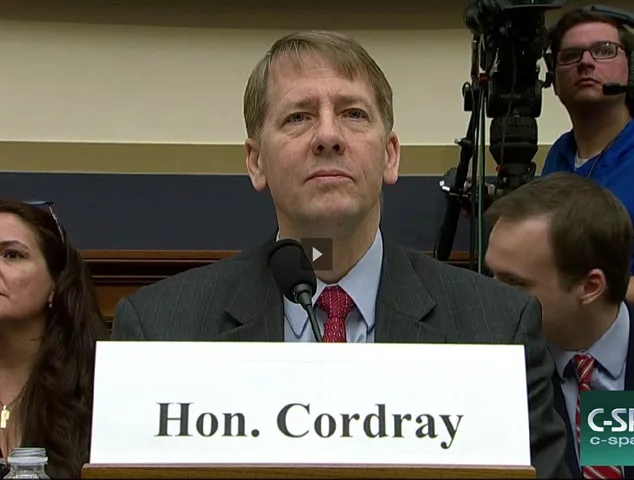
These developments gave the industry some real hope that the bureau would not make waves by issuing this rule. Perhaps CFPB Director Richard Cordray, whose term expires in July 2018, eyed the general health care and Russian meddling messes in Washington, figured Congress was scheduled to go home for the summer, and decided it was “now or never.”
The rule was published in the Federal Register on July 19, 2017. It provides that all pre-dispute arbitration agreements entered into on or after the 241st day after the publication of the rule in the Federal Register must comply with the rule. Its effective date is the 60th day after publication in the Federal Register, or Sept. 18, 2017. The compliance date is March 19, 2018.
Some are predicting Congress will overturn the rule by using its power under the Congressional Review Act or by an even more obscure process with the Federal Stability Oversight Council. Others are predicting a new director and possible delays in the compliance date. Still others are predicting legal actions. We think all of these defenses are far from sure bets and dealers and finance sources should be prepared for compliance with the rule come March.
Thomas B. Hudson and Nicole F. Munro are partners in the law firm of Hudson Cook LLP. Email them at tom.hudson@bobit.com or nikki.munro@bobit.com. Copyright CounselorLibrary.com 2017, all rights reserved. Single publication rights only, to F&I and Showroom. (7/17). HC No. 4811-2926-4459
More Auto Finance

Interest Rates Further Squeeze Auto Consumers
Last month’s hike and a potential second increase this month add to a growing list of inflation woes that could continue to dent overall car sales.
Read More →
Mind Your Process
Consistent steps taken in various aspects of the F&I office can make valuable differences over time, similar to an outline for a best-selling book.
Read More →
Top Five Credit Application Fraud Flags
Compliance audits regularly reveal bad habits that can lead to fraud charges and should have been stamped out decades ago.
Read More →
More Auto Loans for the Taking in August
Riskier categories were on the uptick for the month as lenders loosened access in several areas while balancing out the exposure in another, Cox Automotive reported.
Read More →
July Was Hot for Auto Borrowers
Credit proved readily available for many, but most loans left buyers in negative territory, Cox Automotive said.
Read More →
Dealer Lender Preferences Revealed
When lenders provide consistent, fast service, their overall satisfaction scores with dealers greatly improve, according to JD Power research.
Read More →
Auto Refi Savings Surge
Consumers with 84-month auto loan terms who refinanced saved the most on monthly payments, according to a new report by auto refinancing provider Caribou.
Read More →
Subaru Enters Lending Business
The automaker follows other brands in adding captive financing in the U.S., and says the move will strengthen its position here.
Read More →
Positive Equity Reaches Record High
Mainstream vehicle owners who bought a car seven years ago are likely to have positive equity when trading in for a new vehicle, according to second-quarter Edmunds data.
Read More →
Dealerships Are Paying the Price for Extended Car Loans
Growing negative-equity scenarios mean such lengthy terms should be addressed in a forward-looking way to make them work for the dealer and the consumer down the road.
Read More →