



Is Your Store Suffering From Cultural Lag?
Dealers must find a new unique selling proposition in a market driven by highly informed car buyers who already know your price and are more likely to be swayed by value.
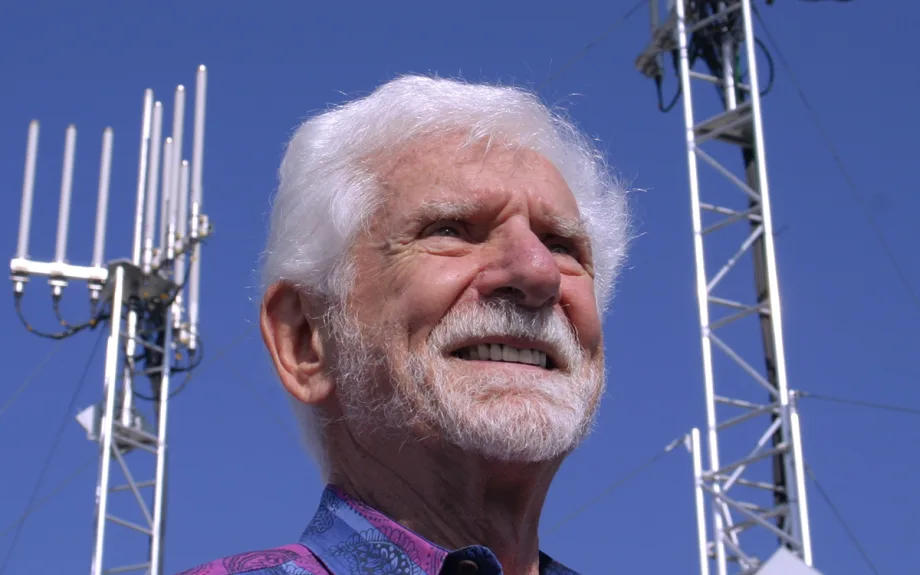
Former Motorola engineer Marty Cooper led the development of the first non-car cellphone in 1973 — and was certain the new gadgets wouldn’t replace land lines anytime soon.
Photo courtesy Martin Cooper via Wikimedia Commons
The first handheld cellular mobile phone, excluding a car phone, was invented in 1973 at Motorola by an engineering team led by Martin “Marty” Cooper. They brought it to market in 1983. Cooper was also the first person in history credited with making a handheld cellular phone call in public. It’s no surprise, then, that he is considered the father of the cellphone.
What is surprising is Cooper was convinced that cellphones would not replace local wire systems. “Even if you project it beyond our lifetimes, it won’t be cheap enough,” he said, in the 1980s.
Fast forward to more recent times and, according to aggregated data by the National Center for Health Statistics, 52.5% of homes had only wireless service during the first half of 2017.
It seems Cooper was right about the technology but wrong about its acceptance.
And he’s not alone. Simply put, new technology changes faster than new attitudes in response to the technology. In fact, there is a sociological classification for this disconnect. It’s called “cultural lag.”
So what does cultural lag have to do with selling cars?
Read: Study: Dealers and Car Buyers Want New Tech, Dealership Staff Resistant
Technology and Consumers
Consumers have taken to car shopping technology like ducks to water. They know exactly what they want and what they should spend for their desired vehicle by the time they enter the showroom, thanks to more than 13 hours of online research. They’ve checked a dealership’s ratings and reviews, and they’ve visited several third-party sites, such as Edmunds and Kelly Blue Book, not to mention Consumer Reports.
All of which means, the shield that historically protected dealership pricing information and gave a store more negotiating power has dropped.
So what does this new generation of car shoppers want? They’re looking for value.
Pricing transparency is now the rule of the day. Consumers are better informed and more empowered than ever, resulting in a cultural lag within your sales process.
They already know your price. This makes it harder for your sales team to separate your dealership from the competition. By make and model, every new vehicle costs dealers everywhere the same, to the penny.
In other words, price is no longer a viable unique selling proposition, or “USP.” With no wiggle room in any deal, dealers are lucky to break even on a new car sale.
Find Your New USP
Fortunately, a study by J. D. Power reminds us that price isn’t the most important variable for consumers. According to their study, the No. 1 reason for picking one brand over another was reliability. Price came in much lower at No. 6.
So what does this new generation of car shoppers want? They’re looking for value. The easiest and quickest way to promote value is to understand and commit to your USP, which we know must be something other than price.
Now is a good time to get your team together and brainstorm ideas for a new USP. Perhaps your new USP is free oil changes for life, free roadside assistance, or a lifetime warranty. What separates your store might be the number of awards it has won or how long it’s been an integral part of the local community.
Whatever you decide is your USP, your messaging about that brand promise must be consistent across your dealership — both online and in the store. Your USP should become the driving force behind your culture.
After all, the shortest distance between an initial sale and a repeat sale is a promise kept.
David Adcock is executive vice president of Binary Auto Solutions.
Originally posted on Auto Dealer Today
More Showroom
California Sees Quarterly Gains
California’s new-vehicle market saw a boost in hybrids in the third quarter and its first overall quarterly market gain of the year.
Read More →
New-Vehicle Prices Stay Put
Affordability pressures and model availability shaped new-vehicle sales in September, according to an analysis by Kelley Blue Book.
Read More →
EV Buyer Consideration Shifts
What drives American consumers to purchase an electric vehicle is shifting as the question moves away from Should I?' to 'Which features and experience do I want to have?'
Read More →
Year-to-Date Auto Sales Holding Their Own
A forecast through August shows that automakers have shifted strategies to keep deliveries and revenues up despite tariffs and other economic challenges.
Read More →
Slow to Robo
Ten years of polling consumers shows autonomous vehicles’ profiles have risen considerably, but even more people now want at least some level of control if they go that route.
Read More →
Dealers a Little Down
A third-quarter Cox Automotive survey finds them in a mixed mood, bummed by fallen customer traffic but encouraged by better profits, costs and EV interest.
Read More →
European EV Sales Skyrocket
The EV market on the continent held strong in July with almost 25% of new-car sales being fully electric units, a stark contrast to the U.S., where EV sales declined about 42%.
Read More →
Mitsubishi Unveils U.S. Plan
The automaker announced a strategy that includes an expanded lineup and dealership presence, along with more ‘rugged’ and electric models.
Read More →
Used Lots Getting the Business
Many consumers are seeking out the units to save money, and the demand – higher in July than normal – is keeping supply limited and prices up.
Read More →
Used Market Stabilizes
The Carfax Used Car Index noted a major drop in used-vehicle price increases in July after several months of hikes.
Read More →