



Why the Auto Warranty Industry Needs Image, Data Authentication
In-person inspections are inefficient and costly, but digital processes can pose fraud risk. Authentication solves the conflict for profits, customer satisfaction and greater competitiveness.

By embedding secure metadata and verifying authentic images that have not been altered, companies can trust the images entering their workflows.
Truepic
The auto warranty industry has a verification problem. To approve claims, providers typically choose between two flawed options: rely on costly, slow in-person inspections, or accept photos from repair facilities or third parties and risk fraud. Neither approach fits today’s fast-moving, artificial intelligence-driven world, where speed and trust are critical in an industry with rising fraud.
Problem for In-Person Inspections
Third-party inspections often take two to three business days and cost as much as $150 per claim. The delays slow vehicle throughput in retail locations, reduce service revenue, erode bottom lines, and frustrate customers, who expect fast resolutions. Add the cost of rental cars and downtime, and it’s clear why in-person inspections are no longer viable at scale. In a digital-first economy, slow and manual processes create competitive disadvantages. As a result, businesses that rely on manual inspections may find themselves losing out in a digital-first marketplace where speed, accuracy and customer experience are critical differentiators.
The Risks of Digitization
Digitization, through which dealerships and repair facilities can submit images and data—typically through online portals, applications or email—is faster and less expensive. However, digitization also introduces significant risk, including image and data fraud. Images of claims submitted by users can easily be altered, recycled from unrelated vehicles, stripped of metadata (time, date and location), or entirely synthetic and created by AI. This is a fundamental risk for industries that rely heavily on accurate visual documentation, like auto warranty, to assess vehicle condition and eligibility.
Automated Image, Data Authentication
Image and data authentication changes the game. By embedding secure metadata and verifying authentic images that have not been altered, companies can trust the images entering their workflows. The technology verifies when, where and how an image was taken and with which device. For example, it can confirm a dent was documented in an exact location on March 1, 2025, at 3:47 p.m. using a specific, authenticated smartphone—with no opportunity for tampering after the fact. That delivers the speed of digitization with the assurance of in-person inspections at a fraction of the cost.
Benefits of Authentication
In an analysis of over 75,000 recent auto warranty, inspections using image and data authentication, Truepic uncovered significant fraud indicators. In the sample analyzed, roughly 10%, or 7,474 claims, were flagged as highly suspicious—representing over $8.1 million in potential fraud. Those included: .
Walkaway claims: 5,625 cases worth more than $6.1 million in which repair shops abandoned the process when asked to provide verifiable images
Photo fraud: 1,849 claims worth about $2 million involving tampered submissions or recycled photos
Further, Truepic’s Vision platform identified recurring patterns of suspicious activity and common photo fraud techniques used:
Geolocation spoofing - falsifying the geographic location associated with an image, making it appear as though it was captured in a different place
Metadata manipulation - altering the metadata, e.g., time, date, location, embedded in an image to misrepresent its origin or context
Rebroadcast attacks - reusing or recycling previously captured photos, or by photographing an image displayed on a computer screen, e.g., taking a “picture of a picture”
Impersonation attacks - using stolen or falsified credentials to upload images to impersonate an authorized or trusted source
Object reuse - using the same physical object, referred to as the “golden part,” such as a damaged tire, and photographing it multiple times to submit fraudulent claims. Bad actors may use this tactic to submit fraudulent digital warranty claims.
Had those same inspections been done in person, they would’ve taken an additional 125,000 days and cost at least $14 million more.
Image and data authentication will soon be standard across digital workflows. In the auto industry, where speed, trust and accuracy are nonnegotiable, it's not just important but essential.
Craig Stack is founder and president of Truepic.
EDITOR’S NOTE: This article was authored and edited according to Auto Dealer Today editorial standards and style. Opinions expressed may not reflect that of the publication.
Originally posted on Auto Dealer Today
More Digital
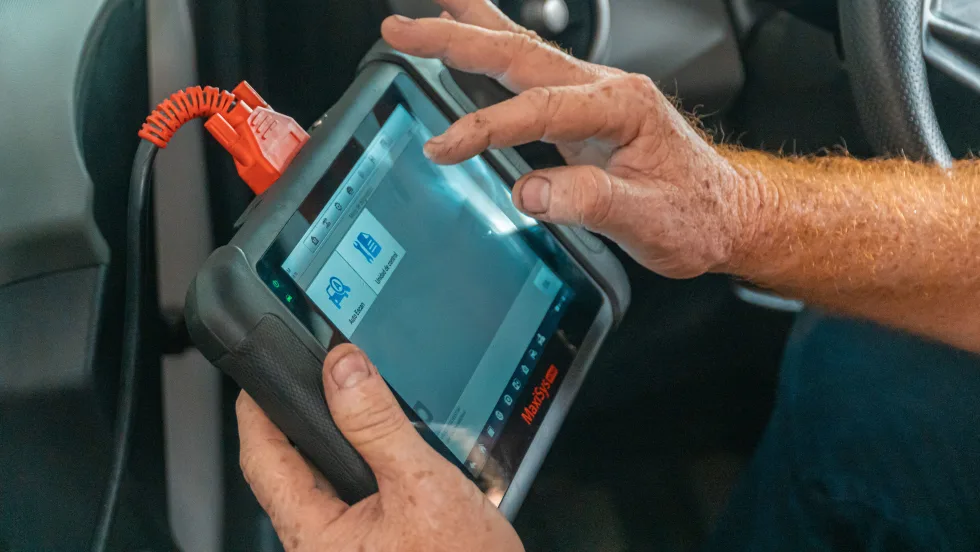
Fixed-Ops Automation Can Help Dealerships Stand Out
Technology turns everyday service repairs into lasting customer loyalty and dealer profitability.
Read More →
AI and the Auto Dealer
These are risks you can’t ignore as the technology becomes more and more of a presence in the auto retail environment.
Read More →
Data Drives Success
Dealerships that make decisions based on data rather than gut instinct or experience have a leg up on their competitors, according to a recent survey.
Read More →
AI: Facilitator, Not Fixer, in F&I
The dealerships that thrive in the years ahead will be those that embrace technology while continuing to invest in the people who make customer interactions count.
Read More →
Simple But Effective Hacking Surges
Data from the past year at U.S. auto dealerships finds that email and identity phishing are growing threat sources that can dispense with malware by exploiting trust.
Read More →
The Future of Car Dealerships
Artificial intelligence is reshaping the service-drive experience and will help retailers stay competitive.
Read More →
Structure Leads to Optimized Auto Listings
As the average car-buying journey has shifted to a blend of digital and retail, a dealership’s vehicle listings must be optimized to answer shoppers’ questions clearly and accurately.
Read More →
Real Intelligence
AI, though it presents many opportunities for productivity, efficiency and more, isn’t a one-for-one stand-in for people. It can augment human capital but not replace it altogether.
Read More →
Zurich Launches Advisor IQ for F&I Manager Coaching
The new platform uses real transaction data and artificial intelligence-driven insights to help car dealerships improve consistency and performance.
Read More →
F&I in the Digital Age
Digital retailing has not made the F&I manager obsolete. If anything, it has revealed how valuable the role can become when technology is used correctly.
Read More →