



Why We Need a New Auto Finance Paradigm
In the current economic climate, strong dealerships are surviving by finding ways to increase profits and streamline operations, and the loan approval process should be no exception.
If you think the subprime mortgage crisis created problems for the U.S. economy, get ready for the sequel: Slower job and wage growth. Gasoline prices on a non-stop climb. A credit crunch that has caused banks to hoard cash as insurance against potential losses on securities backed by subprime and other mortgages.
Economists fear these economic ills may carry over into 2009, when a second wave of disruption is expected to take hold as “option” ARMs which originated during the last gasps of the real estate boom begin to reset. (ARM is a mortgage that typically allows the buyer to choose among four payment options each month, including a payment against either the principle or the interest.)
What has been the impact on the auto industry? The news to date hasn’t been great: Although the past eight years have seen the best auto sales in U.S. history, JD Power and Associates reduced its 2008 retail sales forecast by 300,000 units and dropped its overall forecast by 4.8 percent to 14.95 million vehicles (16 million is considered a “healthy” market).
On the special finance side, the percentage of subprime auto loans more than two months delinquent hit a 10-year high in January 2008, according to Fitch Ratings, continuing a trend established in the last half of 2007. TransUnion, meanwhile, predicts auto delinquency rates will increase as much as 33 percent by the beginning of 2009.
Assessing the situation
Together, the subprime mortgage crisis and the public’s reaction to it have created a “perfect storm” of threats to the overall economy and the auto finance industry. A significant portion of the population fears spillover from the subprime mess, with one in three people being extremely or somewhat concerned their credit may be at risk, according to a recent survey.
Even with these storm clouds on the horizon, transportation is a necessary expense and most Americans still view cars as a basic necessity. In a sense, the nation’s economy literally runs on cars. As some families begin to prioritize bills, their car notes often become a higher priority, and auto industry watchers note that borrowers would rather give up their homes and seek a rental than default on an auto loan and hand over the car keys.
Rather than forgo cars, many consumers will opt to choose a comparable used model instead of trading down. Whereas with traditional lines of lending, they might have first considered brand-new BMWs, tighter credit lines may lead the same consumers to select ’06 models with 25,000 miles on them. Less costly cars might not be their first choice, but they might fit their budgets better.
And there’s still a huge market for auto loans. Approximately $575 billion in loans for new and pre-owned cars are made annually, according to the National Automotive Finance Association.
What can the nation’s nearly 22,000 new-car and 15,000-plus BHPH dealers do to manage risk in this economic environment? Avoid underwriting mistakes. In 2006, about $50 billion in auto loans were made to subprime borrowers, according to J.D. Power and Associates. The real number might be closer to $100 billion. Unlike subprime mortgages, most of these auto loans carry fixed interest rates and have no introductory “teaser” periods.
Still, it’s clear that some auto lenders loosened underwriting standards in 2006 and 2007, increasing the likelihood that borrowers who couldn’t really afford loans could still get them. This only fueled the acceleration of delinquencies. As a result, dealerships and auto lenders must now focus on ways to maximize liquidity and manage risk.
The new paradigm
BHPH dealers have begun to follow a trend set by new-car dealerships. They’re seeking new-enterprise business best practices and process advancements that improve cash flow, profitability and efficiency — business practices that can help them with accounting, cost analysis, loan portfolio management and legal and regulatory compliance.
An efficient new auto-loan paradigm would allow dealerships, banks, credit unions, hedge funds and other financial institutions to come together to securely evaluate, package, price, sell and purchase asset-backed debt.
New technologies have emerged that do just this while helping consumers by widening their car-buying and financing options, thus enabling dealers to seal deals more quickly.
What do dealers need in this regard? A transparent, stable mechanism that enables financial institutions to perform due diligence on a dealer’s loan portfolio, make an offer, write a contract and close and fund a transaction without ever setting foot in a dealership. Such a platform would prescreen dealers and financial institutions, then admit them to list or find loans to buy and sell online. Financial institutions could review loan documents in a secure document management environment, while dealers’ and customers’ privacy would be maintained, because documents are shared only with consent. The documentation process would be automated, from pickup and scanning, to the return of originals within 72 hours, to archiving.
Once due diligence is completed, the Web platform would keep track of each step of the contracting and closing process and provides a venue for communication throughout. Proceeds from the proposed transaction would be placed in an escrow account and released when the title is received by the investor. Putting the entire process online compresses the amount of time and energy it takes to ensure compliance and complete a portfolio sale, making life easier for everyone involved.
The strategic value of a new paradigm should not be overlooked. Many dealers wait to package and sell loans they’ve originated until they are strapped for cash to fund urgent business needs. By more aggressively managing their loan portfolio, they receive top dollar. Access to more cash when they need it will help them maintain a competitive edge.
Dealers can gain strategic advantage if they are able to offer a portfolio for sale at any time, set a minimum price and automatically evaluate how that price compares with similar portfolios traded in the past. Once a price and timeline have been set, they should be able to monitor bids as they come in, which would allow the dealers to respond accordingly.
Auto loan transparency is essential, too, particularly as dealerships face increased scrutiny by state and regulatory agencies. Investors, should be able to pre-select the loans they’re interested in buying based on any number of parameters. Loan terms, APR, amount financed, age of the vehicle and more all should be considered. Using these parameters, investors can identify loan portfolios that match up. This enables investors to choose to make offers only on loans that meet their criteria, and do so instantly.
The economy is in dire straits, but American consumers are resilient. Consumer spending amounts to about 70 percent of our $14 trillion economy, and car sales are the largest segment of the retail market. Any solution that streamlines and efficiently manages the auto-loan process will help dealers and consumers alike.
Mike Sheridan is the founder of Global Debt Network Inc. and president of GDNAuto, based in San Ramon, Calif. E-mail him at msheridan@special-finance.com.
More F&I

How AI-Powered Coaching Is Transforming F&I Performance
See how AI-powered coaching can turn F&I customer conversations into actionable insights that support compliance, performance and profitability
Read More →
Sell Value, Build Trust
In this video, Trent White explains why selling on value, not fear, builds lasting customer trust, reduces cancellations, and drives long-term success.
Read More →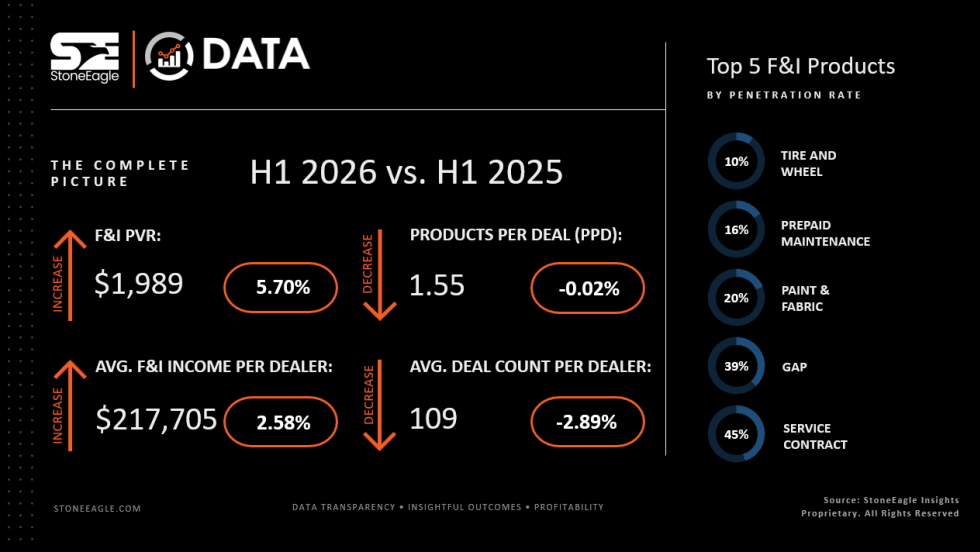
F&I Sales Give Dealers First-Half Lift
Product business shored up total profits to avoid an overall revenue tanking as product penetrations held steady, StoneEagle reported.
Read More →
Targeted Training Drives Results
Today’s technology, instead of threatening F&I managers, can actually make them better, according to an industry veteran who’s watched market setbacks roil the unprepared.
Read More →
Double the Change, Double the Chance
When an F&I manager gets a customer refusal, it’s a wise move to tweak more than one thing in the product offering.
Read More →
Just Do It
F&I managers need training, but instead of resisting application or expecting perfection, they should improve by simply acting on what they learn.
Read More →
Dealer Lender Preferences Revealed
When lenders provide consistent, fast service, their overall satisfaction scores with dealers greatly improve, according to JD Power research.
Read More →
Leading with Purpose
In this video, Trent White explains how understanding your people’s 'why' is a key leadership responsibility of F&I professionals and how that mindset drives dealership engagement, trust and performance.
Read More →
Integrating Nontraditional F&I Products
The niche presents a strategic advantage for auto dealerships as they move to adapt to fast-changing consumer expectations in today’s market.
Read More →
Trust Is Personal
Technology, no matter how efficient, can’t replace what the human F&I manager can do, which is to bridge the divide between cyberspace and the in-store experience.
Read More →