



5G Set to Transform Vehicles
Automakers hope to use 5G in big ways, such as downloading software updates on the go, updating digital maps, and sounding alerts about road conditions.

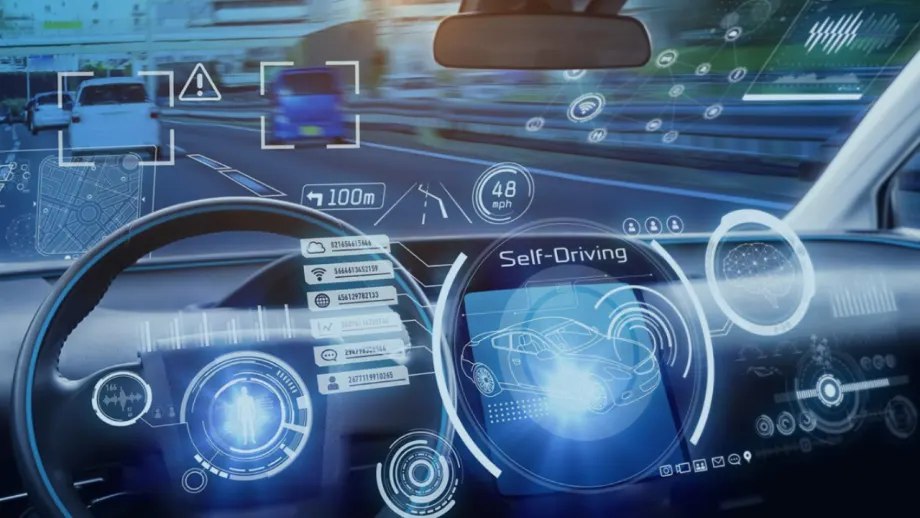
GeoSpatialWorld.com
As cell companies rollout 5G networks, automakers examine the best ways to tap their potential.
Porsche AG is running its Taycan electric sports cars on a test track in Weissach in southwestern Germany, to learn how 5G equipment built into vehicles lets them exchange data.
Porsche and other automakers have partnered with telecom carriers to build small, local 5G networks to try out the technology as they develop new car models. These networks are so new that auto makers still need to test or even design the equipment they need.
Automakers hope to use 5G in big ways, such as downloading software updates on the go, updating digital maps, and sounding alerts about road conditions. They may develop ways for vehicles to communicate with smart infrastructure such as traffic lights and buildings, so that a self-driving car knows in advance that the stoplight at the next intersection is red. Porsche is even testing how vehicles might talk to other cars on the road to alert them of road hazards.
Porsche Chief Executive Oliver Blume told the Wall Street Journal the data gathered by test vehicles will help the manufacturer design chips for autonomous vehicles and advanced driver-assistance programs.
Faster cellular networks align with the industry shift to use chips that update on the fly. In the past, companies could not update vehicle chips until the next generation of the vehicle arrived. In 2012, Tesla changed that with its Model S, which replaced distributed software with centralized computers update over the air.
Updating software constantly allows auto makers to improve vehicles continually and offer drivers on-demand features such as a heated steering wheel in the winter, or additional horsepower from the electric motor while driving in the mountains.
Vehicles are now connected to the Internet. By 2025, analysts estimate that there will be 100 million connected cars on the road world-wide.
But for updates to be fast and reliable, automakers need access to a super-fast network like 5G.
Porsche partnered with Vodafone Group PLC to build two local 5G networks: one at its research-and-development center in Weissach to test 5G technology in cars, and one at its main plant in Zuffenhausen to develop applications for high-speed data transfer.
The test networks went online in September. Porsche is building another test network in Italy.
General Motors Co. has teamed up with AT&T, which operates a large U.S. 5G cellular network. GM has promised to launch 5G technology in select models in 2024.
In a statement, GM said: “This technology will mean faster speeds for downloading music, videos and various maps for navigation services, but it also extends to vehicle updates. As over-the-air technology becomes mainstream, GM vehicles will download new updates quicker than ever as its brands launch new features for their cars, trucks and SUVs.”
Stellantis NV, which owns Chrysler, entered a joint venture with Hon Hai Precision Industry Co. (Foxconn) for a new operation known as Mobile Drive. The venture will develop digital dashboards and displays and other connected-car technologies for future models that will take advantage of 5G’s faster data transmission. Stellantis hasn’t yet announced when it will include 5G technology in its models.
Toyota Motor Corp. has partnered with Japanese telecom carrier Nippon Telegraph & Telephone Corp. to build high-capacity data networks and technology that will include creating 5G standards for the company’s connected vehicles. Toyota plans a range of applications for 5G networks, including over-the-air software updates and remote monitoring of autonomous vehicles and in-car multimedia applications. Toyota hasn’t said when it would launch a 5G-ready car.
Originally posted on Auto Dealer Today
More Digital
Fixed-Ops Automation Can Help Dealerships Stand Out
Technology turns everyday service repairs into lasting customer loyalty and dealer profitability.
Read More →
AI and the Auto Dealer
These are risks you can’t ignore as the technology becomes more and more of a presence in the auto retail environment.
Read More →
Data Drives Success
Dealerships that make decisions based on data rather than gut instinct or experience have a leg up on their competitors, according to a recent survey.
Read More →
AI: Facilitator, Not Fixer, in F&I
The dealerships that thrive in the years ahead will be those that embrace technology while continuing to invest in the people who make customer interactions count.
Read More →
Simple But Effective Hacking Surges
Data from the past year at U.S. auto dealerships finds that email and identity phishing are growing threat sources that can dispense with malware by exploiting trust.
Read More →
The Future of Car Dealerships
Artificial intelligence is reshaping the service-drive experience and will help retailers stay competitive.
Read More →
Structure Leads to Optimized Auto Listings
As the average car-buying journey has shifted to a blend of digital and retail, a dealership’s vehicle listings must be optimized to answer shoppers’ questions clearly and accurately.
Read More →
Real Intelligence
AI, though it presents many opportunities for productivity, efficiency and more, isn’t a one-for-one stand-in for people. It can augment human capital but not replace it altogether.
Read More →
Zurich Launches Advisor IQ for F&I Manager Coaching
The new platform uses real transaction data and artificial intelligence-driven insights to help car dealerships improve consistency and performance.
Read More →
F&I in the Digital Age
Digital retailing has not made the F&I manager obsolete. If anything, it has revealed how valuable the role can become when technology is used correctly.
Read More →