



Arkansas Lawyer Seeks Class Action Against GMAC
A lawsuit filed in federal court in Little Rock, Ark., claims that certain car dealers and General Motors Acceptance Corporation (GMAC) are conspiring to defraud car buyers, according to a story by Jim Lovel in the Jan. 19 edition of the Arkansas Democrat-Gazette.
Little Rock attorney Tom Thrash is representing three Arkansas men in the suit but is seeking to have it certified as a class action that could possibly include millions of car buyers across the nation.
Attorney William Edwards Jr. of Little Rock, who is representing GMAC, said on Jan. 18 that the lawsuit is without merit and should be dismissed.
At issue is the interest rate that buyers pay when financing a car purchase. Thrash claims that dealers inflate the interest rate charged by GMAC when a person buys a car and that part of the money derived from the inflated rate is returned to the dealers. Since the action is not divulged to the car buyer, it is a deceptive trade practice, he claims in the lawsuit.
Edwards counters that dealer markup is a common practice, and that GMAC doesn't conduct business differently from any other financial institution or bank.
The practice is no secret within the automobile industry and has been a significant source of income for dealers for years; recent stories in the New York Times and on NBC's newsmagazine 20/20 have drawn public attention to the issue.
Also drawing attention have been suits seeking class action status which were filed in federal court in New York against Ford Credit, and in Tennessee against GMAC and Nissan Motor Acceptance Corporation, which allege racially discriminatory practices when setting finance rates.
Lawsuits have since been filed in at least three other states, with some industry analysts cynically noting that some law firms see the litigation as a potential cash cow.
One key difference between the Arkansas suit and those in New York and Tennessee is that the Arkansas suit doesn't allege racial discrimination in dealer loan rate markup practices; it is attacking the practice itself as fraudulent.
Some industry observers point out that since dealer markup has been an accepted practice for years in F&I departments, litigants may face an uphill battle in seeking to define the practice as fraudulent. "The practice of merchants marking up their products to cover the cost of goods sold and earn a profit is as old as commerce itself," said David Robertson, executive director of the Association of Finance and Insurance Professionals (AFIP), a trade organization for automotive F&I personnel. "It is one of the cornerstones of the U.S. economy."
Many dealerships generate tens of thousands of dollars from the practice. For example, the difference between a five-year, $20,000 loan financed at 9 percent and at 12 percent is $1,704. Dealers defend the practice as compensation for offering customers the convenience of dealer-arranged financing.
However, due in large part to recent negative publicity, the practice is increasingly being attacked by consumers.
The Arkansas case may be the first to reach nationwide class-action status, according to Lovel's story in the Democrat-Gazette. Thrash said he plans to file supporting documentation for the certification within 45 days and wants to include everyone who financed a car through GMAC in the past 10 years.
"We think it [the case] meets the criteria" for class-action status, he told the Arkansas Democrat-Gazette.
Thrash and his team of attorneys also have applied for class-action status for similar cases in Tennessee. A hearing on that certification is pending but probably won't be heard before the Arkansas lawsuit, Thrash told the Democrat-Gazette.
GMAC will contest any attempt to certify the lawsuit as a class action, according to Edwards. Car buyers should pursue their claims individually in state courts, he said.
The extra cost to car buyers is small -- estimated as somewhere between $250 and $500 each -- and as a result, most buyers won't pursue the claims individually, Thrash claims.
Thrash is no novice at suing large corporations. In October 1999, he and three other attorneys won a record $1.18 billion class-action lawsuit against State Farm Insurance after suing the company for requiring body shops to use lower-priced aftermarket replacement parts when repairing insured vehicles.
State Farm has appealed the decision. An Illinois appellate court listened to arguments in the case Jan. 10, and attorneys expect a decision in April, according to Thrash.
In 1998, the most recent year for which figures are available, the value of outstanding car loans nationwide was more than $450 billion, according to Automotive News. About 75 percent of those loans are arranged through auto dealerships.
More F&I

Integrating Nontraditional F&I Products
The niche presents a strategic advantage for auto dealerships as they move to adapt to fast-changing consumer expectations in today’s market.
Read More →
Trust Is Personal
Technology, no matter how efficient, can’t replace what the human F&I manager can do, which is to bridge the divide between cyberspace and the in-store experience.
Read More →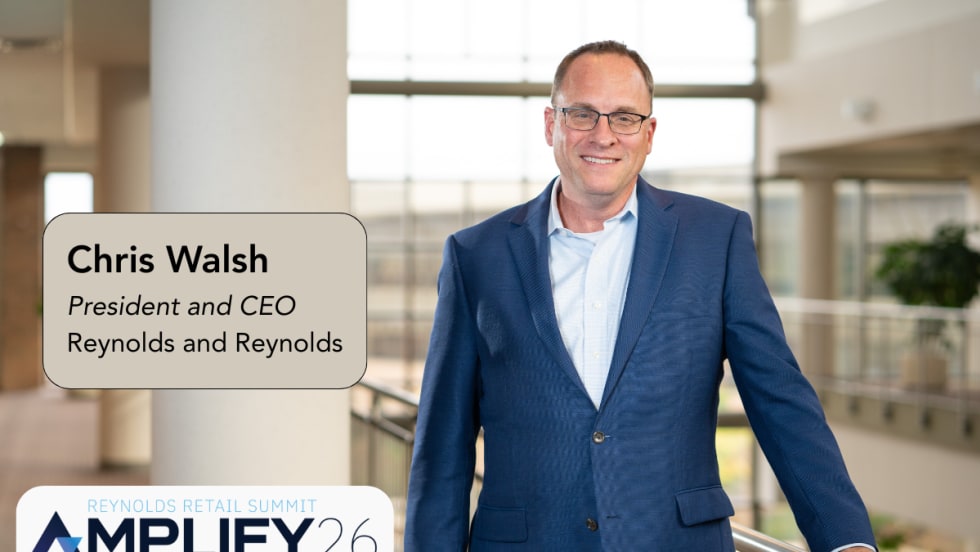
Amplify 2026 Billed as Turning Innovation Into Results
Reynolds and Reynolds says its annual retail summit will connect dealers with practical strategies, peer insight, and technology-driven ideas.
Read More →
Own Your Outcome: F&I in the Digital Customer Journey
Finance has historically been the last step in the car-buying process, but it doesn’t have to be. The customer’s journey starts long before they arrive at the dealership, and so should F&I’s involvement.
Read More →
Tariffs Could Raise Insurance Premiums
As U.S. import tariffs affect repair costs, consumers might find it more affordable to replace a damaged vehicle, according to recent Insurify tariff analysis.
Read More →
Smaller Loans, Longer Terms
The youngest generation of car buyers is more likely to finance less expensive vehicles, more than half of generation Z consumers borrowing less than $25,000.
Read More →
New Lifetime Battery F&I Product Meant to Drive Dealer Traffic
EFG Cos. offering is intended to create lifetime auto dealer engagement with customers.
Read More →
The Psychology Behind Menus That Increase Add-On Sales
There is a science to crafting a menu that gives customers confidence in the choices presented, and moving the process outside the F&I office can further boost results.
Read More →
Why Your F&I PVR Is Misleading You
Here’s a handy checklist of the numbers to track in 2026 instead.
Read More →
Auto Consumer Anxiety Presents Opportunity
A survey of U.S. drivers found the majority are concerned about finances and the economy, but those fears make many ready to buy vehicle-protection products.
Read More →