



ASC Offers Ethics Training in the Automotive Industry
More women purchase and maintain their vehicles than ever before. Yet, for many women, taking care of their car can be a daunting task — especially if they don't trust their repairman. As women impact eight out of 10 vehicle sales and purchase more than half of all Goodyear tires, automotive dealers and repairmen that understand how to interact with women stand to reap the benefits of sales and repeat business.
Alfred, N.Y.-- More women purchase and maintain their vehicles than ever before. Yet, for many women, taking care of their car can be a daunting task — especially if they don’t trust their repairman. As women impact eight out of 10 vehicle sales and purchase more than half of all Goodyear tires, automotive dealers and repairmen that understand how to interact with women stand to reap the benefits of sales and repeat business.
Skip Merrick, automotive chairman at Alfred State College, in Alfred, N.Y., created an ethics training program to help students understand the vulnerability and intimidation that many women experience when buying a car or seeking repair services.
The program is part of a required service manager/consultant course where students learn how to effectively run an automotive business. Through role-playing scenarios and real-life experiences from female students and staff, students learn how women perceive the car buying and repair process.
Merrick teaches students to:
·Understand that a woman relies on her car in different ways than a man — for example, a woman faces a potentially vulnerable and dangerous situation when her vehicle stalls
·Never use a condescending tone of voice, inappropriate language or refer to female customers by anything other than their first name
·Maintain eye contact to communicate sincerity
·Avoid using negative body language, such as folding arms, tapping a foot or checking a watch that may communicate boredom or superiority
“Instead of noticing the make and model of the car getting its oil changed, a woman looks for cleanliness, notices body language and seeks respect from whoever greets her,” said Merrick. “Many females also admit feeling ignored, talked down to, taken advantage of and even pushed out the door when they interact with dealers or repairmen. And we want to change that.”
Students also study female purchasing power in the industry, discuss that women will often drive up to 50 miles to give their business to a repair shop they trust and determine how they can implement what they learn about female customers upon getting their first job.
According to Brian Bingham, shop foreman at Mercedes-Benz of South Atlanta and Alfred State College alumnus, Merrick’s ethics training makes Alfred State College students more employable. “It’s apparent that these students receive real-life experience as a part of their education, and that’s a big part of what we look for when hiring, said Bingham. “We regularly recruit graduates from Alfred State College because we know their transition period will be short. They’re well prepared and know how to approach every type of customer, right off the bat.”
Merrick kicks off his ethics workshop by telling the following story: One of his female friends was looking for a new car. After completing the appropriate research, she decided on a particular car and dealership. As she was about to finalize the agreement by signing the contract, the dealer asked her if she needed to take the document home for her husband to sign. Needless to say, his friend was so insulted that she ended all negations with the dealership.
Alfred State College offers four separate automotive trade programs: Automotive Body Repair, Automotive Service, Heavy Equipment and Truck Diesel and Motorsports Technology. More than 110,000 square feet and 15 faculty members make up the automotive department. Students spend approximately 1,400 hours serving real customers and their fully functioning vehicles in on-campus live automotive shops. They receive a total of 1,800 hours of practical experience and classroom training to receive an associate degree in occupational studies.
More F&I
Integrating Nontraditional F&I Products
The niche presents a strategic advantage for auto dealerships as they move to adapt to fast-changing consumer expectations in today’s market.
Read More →
Trust Is Personal
Technology, no matter how efficient, can’t replace what the human F&I manager can do, which is to bridge the divide between cyberspace and the in-store experience.
Read More →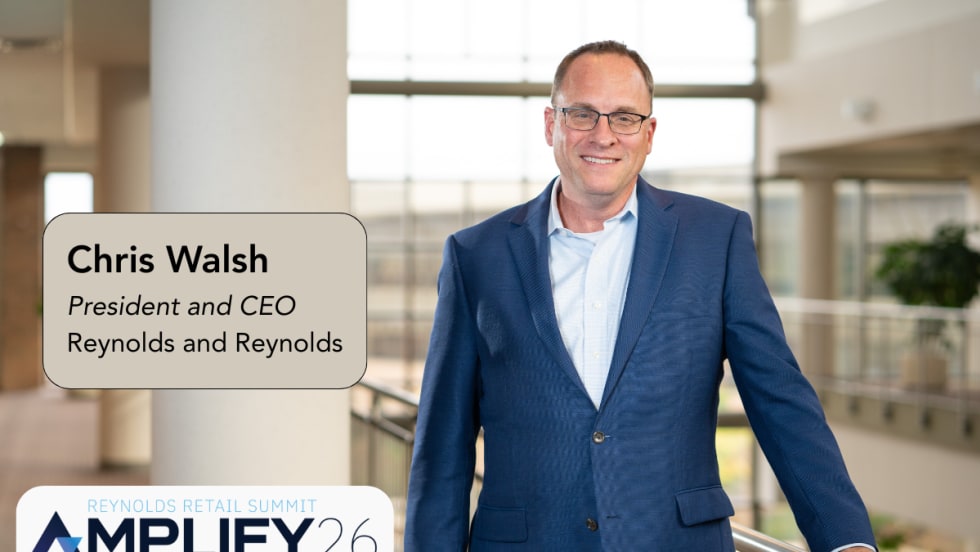
Amplify 2026 Billed as Turning Innovation Into Results
Reynolds and Reynolds says its annual retail summit will connect dealers with practical strategies, peer insight, and technology-driven ideas.
Read More →
Own Your Outcome: F&I in the Digital Customer Journey
Finance has historically been the last step in the car-buying process, but it doesn’t have to be. The customer’s journey starts long before they arrive at the dealership, and so should F&I’s involvement.
Read More →
Tariffs Could Raise Insurance Premiums
As U.S. import tariffs affect repair costs, consumers might find it more affordable to replace a damaged vehicle, according to recent Insurify tariff analysis.
Read More →
Smaller Loans, Longer Terms
The youngest generation of car buyers is more likely to finance less expensive vehicles, more than half of generation Z consumers borrowing less than $25,000.
Read More →
New Lifetime Battery F&I Product Meant to Drive Dealer Traffic
EFG Cos. offering is intended to create lifetime auto dealer engagement with customers.
Read More →
The Psychology Behind Menus That Increase Add-On Sales
There is a science to crafting a menu that gives customers confidence in the choices presented, and moving the process outside the F&I office can further boost results.
Read More →
Why Your F&I PVR Is Misleading You
Here’s a handy checklist of the numbers to track in 2026 instead.
Read More →
Auto Consumer Anxiety Presents Opportunity
A survey of U.S. drivers found the majority are concerned about finances and the economy, but those fears make many ready to buy vehicle-protection products.
Read More →