



Black Book: Retention Index Registers Second Increase in Three Months
The index’s rise in June was due in large part to falling gas prices, which helped drive the sale of used trucks, crossovers and SUVs. The downside of falling gas prices was the continued acceleration in depreciation for subcompact and compact cars.
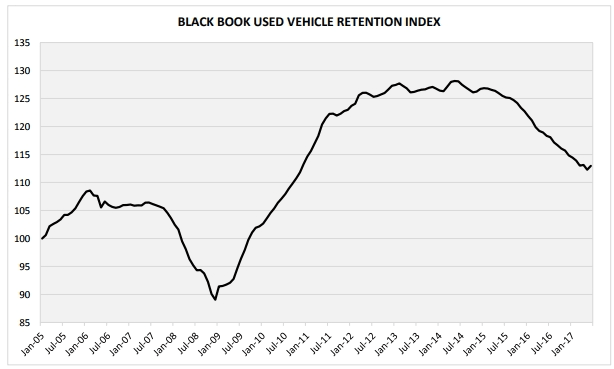
LAWRENCEVILLE, Ga. — Black Book (a div. of Hearst Business Media)’s Used Vehicle Retention Index rose modestly in June, increasing from 112.3 in May to 113.0. On a 12-month basis, the index has dropped 4.5% from last June.
It was the second time in the past three months the index registered an increase — April’s reading showed a slight increase due to a stronger-than-expected spring selling season for used vehicles. The index’s rise in June was due in large part to falling gas prices, which helped drive the sale of used trucks, crossovers and SUVs. The downside of falling gas prices was the continued acceleration in depreciation for subcompact and compact cars, the firm noted.
“In addition to falling gas prices, which are playing a role in driving a little more interest for certain trucks today, there are generally some very good deals out there for used vehicles currently,” said Anil Goyal, senior vice president of automotive valuation and analytics for Black Book. “These are the primary reasons why we are seeing some bounce off the lows in used car retention trends.”
The Index dates back to January 2005, when Black Book published a benchmark index value of 100.0 for the market. During 2008, the index dropped 14.1%. During 2011, the index rose strongly from 113.3 to 123.0 by the end of the year, as the economy picked up steam and used-vehicle values rose higher. It continued to remain relatively stable, rising slightly until May of 2014. That’s when the index peaked 128.1.
Last year, the index fell by just 6.4%.
More Auto Finance

Interest Rates Further Squeeze Auto Consumers
Last month’s hike and a potential second increase this month add to a growing list of inflation woes that could continue to dent overall car sales.
Read More →
Mind Your Process
Consistent steps taken in various aspects of the F&I office can make valuable differences over time, similar to an outline for a best-selling book.
Read More →
Top Five Credit Application Fraud Flags
Compliance audits regularly reveal bad habits that can lead to fraud charges and should have been stamped out decades ago.
Read More →
More Auto Loans for the Taking in August
Riskier categories were on the uptick for the month as lenders loosened access in several areas while balancing out the exposure in another, Cox Automotive reported.
Read More →
July Was Hot for Auto Borrowers
Credit proved readily available for many, but most loans left buyers in negative territory, Cox Automotive said.
Read More →
Dealer Lender Preferences Revealed
When lenders provide consistent, fast service, their overall satisfaction scores with dealers greatly improve, according to JD Power research.
Read More →
Auto Refi Savings Surge
Consumers with 84-month auto loan terms who refinanced saved the most on monthly payments, according to a new report by auto refinancing provider Caribou.
Read More →
Subaru Enters Lending Business
The automaker follows other brands in adding captive financing in the U.S., and says the move will strengthen its position here.
Read More →
Positive Equity Reaches Record High
Mainstream vehicle owners who bought a car seven years ago are likely to have positive equity when trading in for a new vehicle, according to second-quarter Edmunds data.
Read More →
Dealerships Are Paying the Price for Extended Car Loans
Growing negative-equity scenarios mean such lengthy terms should be addressed in a forward-looking way to make them work for the dealer and the consumer down the road.
Read More →