



Bush Book Defends Auto Bailout, Criticizes Detroit Three
Two years after leaving office, former President George W. Bush remains a harsh critic of the executives he believes led the U.S. auto industry down the path to self-destruction.
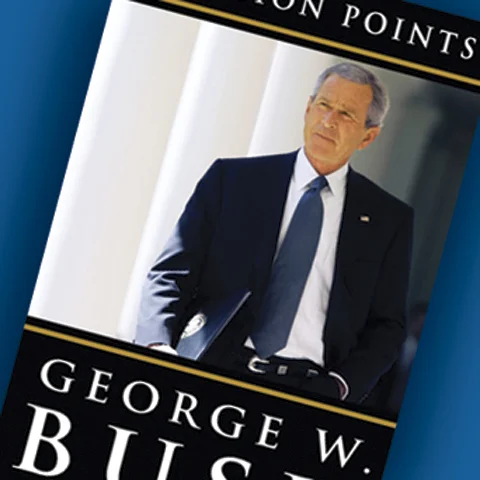
WASHINGTON — Two years after leaving office, former President George W. Bush remains a harsh critic of the executives he believes led the U.S. auto industry down the path to self-destruction. His new book, “Decision Points,” will be released today, and it includes a behind-the-scenes look at the government’s Troubled Asset Relief Protection (TARP)-enabled bailout of General Motors Co. and Chrysler LLC.
Bush has a contentious history with the domestic automakers. In his second term, he challenged them to “build a product that’s relevant” and, according to the book, rejected a request for aid from GM’s then-CEO, Rick Wagoner, shortly before the 2008 presidential election. As newly elected President Barack Obama prepared to take office, he and Bush met several times to discuss issues Obama would confront in the new year. In their first meeting, Bush says he told Obama he would not let the automakers fail.
The next week, Wagoner would join Chrysler CEO Robert Nardelli and Ford Motor Co. chief Alan Mulally in two congressional hearings to request immediate aid for GM and Chrysler and an emergency line of credit for Ford. In December, Bush would authorize a $17.4 billion bailout under the TARP, calling it “the only option.”
“I had hoped we could convince Congress to release those loans immediately, so the companies could survive long enough to give the new president and his team time to address the situation,” Bush writes. “The Senate wouldn't budge.”
Bush has since come under fire from Obama and others for not demanding more from the automakers in return for the loans. But the former president described the terms as “stringent” and forced the Detroit Three to rewrite their business plans.
Nevertheless, Bush writes, “It was frustrating to have the automakers’ rescue be my last major economic decision.”
More F&I

AI: Facilitator, Not Fixer, in F&I
The dealerships that thrive in the years ahead will be those that embrace technology while continuing to invest in the people who make customer interactions count.
Read More →
Modern Technology Objection Handling
In this video, Trent White shares how to confidently handle technology-based objections by helping customers understand the value of protection, even with modern vehicle technology.
Read More →
Consistency at Scale: Driving F&I Performance
With 75 rooftops across the Sunshine State, Morgan Auto Group has proven to Floridians that it knows a thing or two about driving performance in a competitive market. But it didn’t start at the top.
Read More →
Gitty Up on GAP
The foundational finance-and-insurance product hasn’t kept up with the latest conditions for auto dealers. Is the time ripe?
Read More →
How AI-Powered Coaching Is Transforming F&I Performance
See how AI-powered coaching can turn F&I customer conversations into actionable insights that support compliance, performance and profitability
Read More →
Sell Value, Build Trust
In this video, Trent White explains why selling on value, not fear, builds lasting customer trust, reduces cancellations, and drives long-term success.
Read More →
F&I Sales Give Dealers First-Half Lift
Product business shored up total profits to avoid an overall revenue tanking as product penetrations held steady, StoneEagle reported.
Read More →
Targeted Training Drives Results
Today’s technology, instead of threatening F&I managers, can actually make them better, according to an industry veteran who’s watched market setbacks roil the unprepared.
Read More →
Double the Change, Double the Chance
When an F&I manager gets a customer refusal, it’s a wise move to tweak more than one thing in the product offering.
Read More →
Just Do It
F&I managers need training, but instead of resisting application or expecting perfection, they should improve by simply acting on what they learn.
Read More →