



California Law Won't Affect Point Spread, Says Dealer
Some California auto dealers are very skeptical that the bill ostensibly designed to curb dealer finance markups and signed by California Gov. Gray Davis will have any such effect.
The law allows the state to track the amount of interest rate markup -- point spread or finance reserve, in industry parlance -- that auto dealers charge customers in California.
According to its authors and Gov. Davis, the bill empowers the state attorney general to take action on markups seen as “excessive.”
When a captive finance company or bank approves a loan rate which is then marked up by the dealer, the dealership makes a cash profit, known as finance reserve, from the extra interest.
“The law in no way limits dealer markup on financing,” said Fritz Hitchcock, chairman and CEO of Hitchcock Automotive Resources, which operates six dealerships in Southern California.
“The law didn’t change a thing. It’s much ado about nothing,” Hitchcock said.
“It’s a joke. It was strictly a records retention extension, period. It didn’t do a thing other than that. What do they think we do, throw deal jackets away the next day?”
The law mandates that California auto dealers keep copies of all lending contracts for at least seven years or the length of the loan -- whichever is longer. Dealerships must also provide the information upon a court order or an administrative subpoena by the California attorney general. Fines for noncompliance are $5,000 per violation.
“Many consumers are deceived into paying excessively high interest rates when purchasing a car, especially African-Americans and Latinos," Gov. Davis said July 16. "This bill will allow the attorney general to end this unfair practice that tacks on thousands of dollars to the price of a car.”
“The press release from the governor’s office is so misleading and overblown, it’s comical,” Hitchcock told F&I Management and Technology in an exclusive interview.
“In reality, for the past year to two years, depending upon the lender in the state of California, I think virtually all of them have already gone to a three-point cap,” Hitchcock, who is Southern California director for the National Automobile Dealers Association, pointed out.
“To take attention away from this budget deficit debacle up there, they’ll do anything to make noises just to get the public’s mind off the $38 billion budget deficit we have in California,” Hitchcock averred.
“The real intention, what these people are trying to do nationally and locally, is eliminate finance reserve as part of a dealership’s income stream,” Hitchcock said. “There probably isn’t a dealer in America, and especially in California, who wouldn't be in the red without F&I income.
“I hate to think this, because we go broke behind this stuff in my opinion. But what will happen is they’ll go to flat rates,” Hitchcock said. “That means your 675 FICO will get you a rate or a flat fee of 'x'; you can grind all you want. The only advantage there will be is in competition between the lenders. I’m predicting that’s where it will go long-term; I’m not advocating it in any way, shape or form. We like it just like it is.”
California state Sen. Martha Escutia, the bill's sponsor, charges that dealers sometimes use the markups to charge consumers, particularly ethnic minorities, excessive interest rates, regardless of their
creditworthiness. Dealers must retain copies of the conditional sales contract for at least seven years, or the length of loan, whichever is
longer, as well as any documents used by the seller to determine the buyer's creditworthiness.
“This piece of legislation is sending a strong
signal to the auto industry that the State of California is watching closely if predatory lending or any type of discrimination
is occurring,” Escutia said.
Several of the captive lending companies operated by automakers have been sued for the dealer markup practice, though they are not accused of directly discriminating themselves, because they typically do not know the race of the buyer; only the dealer does. Car loan applications do not indicate the race of the potential buyer, and have not done so for more than 20 years, according to Hitchcock.
More F&I

Integrating Nontraditional F&I Products
The niche presents a strategic advantage for auto dealerships as they move to adapt to fast-changing consumer expectations in today’s market.
Read More →
Trust Is Personal
Technology, no matter how efficient, can’t replace what the human F&I manager can do, which is to bridge the divide between cyberspace and the in-store experience.
Read More →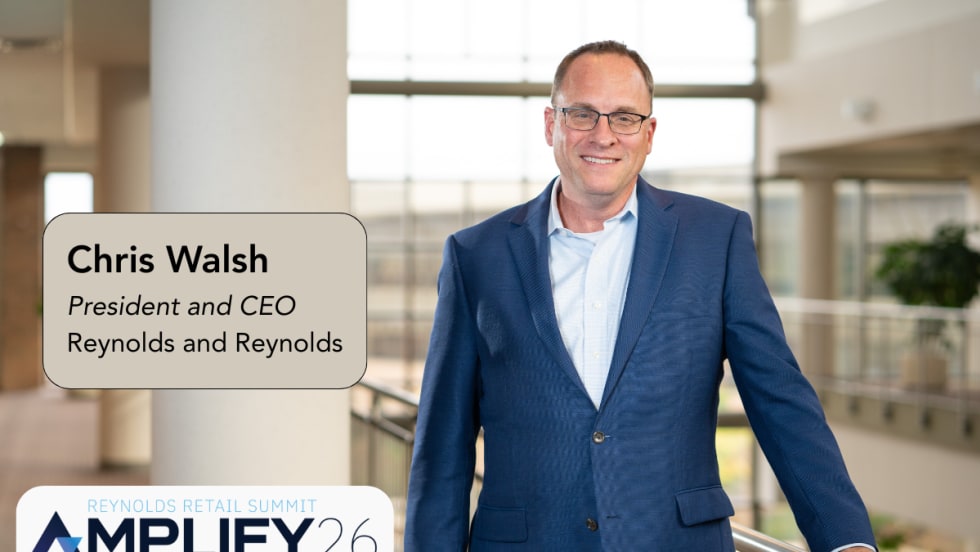
Amplify 2026 Billed as Turning Innovation Into Results
Reynolds and Reynolds says its annual retail summit will connect dealers with practical strategies, peer insight, and technology-driven ideas.
Read More →
Own Your Outcome: F&I in the Digital Customer Journey
Finance has historically been the last step in the car-buying process, but it doesn’t have to be. The customer’s journey starts long before they arrive at the dealership, and so should F&I’s involvement.
Read More →
Tariffs Could Raise Insurance Premiums
As U.S. import tariffs affect repair costs, consumers might find it more affordable to replace a damaged vehicle, according to recent Insurify tariff analysis.
Read More →
Smaller Loans, Longer Terms
The youngest generation of car buyers is more likely to finance less expensive vehicles, more than half of generation Z consumers borrowing less than $25,000.
Read More →
New Lifetime Battery F&I Product Meant to Drive Dealer Traffic
EFG Cos. offering is intended to create lifetime auto dealer engagement with customers.
Read More →
The Psychology Behind Menus That Increase Add-On Sales
There is a science to crafting a menu that gives customers confidence in the choices presented, and moving the process outside the F&I office can further boost results.
Read More →
Why Your F&I PVR Is Misleading You
Here’s a handy checklist of the numbers to track in 2026 instead.
Read More →
Auto Consumer Anxiety Presents Opportunity
A survey of U.S. drivers found the majority are concerned about finances and the economy, but those fears make many ready to buy vehicle-protection products.
Read More →