



Car Sales Are Booming, But At a Price; October Expected to be Second Biggest Month Ever
Corporate earnings are falling, unemployment is rising, consumer confidence is shaky, and the country is at a war footing at home and abroad. Yet auto sales have rarely been better, according to the New York Times.
A forecast from General Motors predicts October will be the second-biggest month ever for overall auto sales in the United States, and many analysts have offered similar outlooks, according to a story by Danny Hakim in the Times. But if the industry is on pace for one of its best sales months, the question is how it happened and how much it will all cost, not only in financial losses now but also in borrowing sales from the future.
In reality, the Big Three's zero percent interest financing plans, offered to revive sales after the Sept. 11 attacks, have evolved into a price war that is great news for car buyers and car dealers but increasingly costly for the automakers footing the bill, according to the Times.
Some environmental groups have also found fault with adomestic automakers for wrapping up their new discounts in patriotic ad campaigns at a time when the nation's dependence on the Middle East's oil is once again the subject of debate.
But for car sellers, there have been few better months than October, according to the Times.
GM led the wave of zero percent offers, which were partly inspired by the visit of Commerce Secretary Donald L. Evans and Labor Secretary Elaine L. Chao to Detroit shortly after the attacks, according to the Times. The Bush administration's focus was on jump-starting the economy, and it urged the industry to do what it could.
Shortly after the meeting, GM introduced its "Keep America Rolling" zero percent interest financing with a major ad campaign. The subtext was clear: Do your part to fight terrorism by buying American vehicles.
But when GM moved recently to extend its program past the end of the month and through at least Nov. 18, it was a bid to sustain its recent glimmer of momentum in recapturing market share. The news was not happily received by Ford Motor or the Chrysler unit of DaimlerChrysler, whose financial positions appear to many analysts to be worse than that of General Motors.
GM believes the discounts, coupled with a fresh lineup of sport utility vehicles and pickup trucks, may help turn around years of market share declines. The company needs to maintain its scale, if for no other reason than to keep up with its enormous legacy costs — GM has about 2.5 retirees per worker whose benefits and pensions it must continue to support. On the other hand, such incentives make it increasingly difficult to book a profit. Last week, the company reported a net loss of $368 million for the third quarter.
Still, GM is gaining a small amount of market share while Ford and Chrysler, which matched GM's zero percent financing offers, continue to lose ground and money, according to the Times. Top executives of both companies have expressed concern recently that the offers are pulling sales from the future and hurting profits now.
"While programs like this make the equation work for our customers, it is unsustainable for us in the longer term," Jacques Nasser, Ford's embattled CEO, wrote in a memo to employees Oct. 19. "Even without zero percent financing, our marketing costs are still far too high."
Martin Inglis, Ford's chief financial officer, said last week that incentives had risen from 11 percent of the company's revenue last year to 16 percent this year. Each percentage point increase deducts about $1 billion from the company's pretax profits, according to Inglis.
In recent forecasts, GM predicted October's seasonally adjusted annual sales rate would come in above 19 million. That would rank it right behind the record 21.2 million sales pace the industry achieved in September 1986, according to Ward's AutoInfoBank, a data service in Southfield, Mich. John Casesa, an analyst at Merrill Lynch, projects a rate of 20.2 million vehicles.
But then what? Ending a sale is always harder than starting one. When GM gave its October forecast, it also lowered its forecast for total 2002 sales of 15 million to 15.5 million units, which would be considered a mediocre year. Casesa sees 2002 sales dropping to an even worse rate of 14.6 million vehicles.
From some perspectives, increasing sales to near-record levels at a time of turmoil is questionable, especially when the Big Three are increasingly dependent on gas-guzzling SUVs and trucks. For instance, a recent cartoon in New Republic magazine depicted a man putting an "End our dependence on Arab oil!" bumper sticker on an enormous smoke-belching vehicle.
But for the Big Three, padding profits is not the pressing issue, according to the Times. Stemming losses -- and holding off their Asian and German rivals -- are their chief worries, the paper says.
A recent Morgan Stanley report pointed to Ford and GM's huge financing operations as areas of concern, for several reasons. First, the residual value of leased vehicles continues to decline as sales of new cars, and leases, increase. That influx of sales reduces the value of vehicles coming off leases that are reclaimed by Ford and GM.
Second, recent downgrades of the credit of Ford and GM make their loans to customers more expensive. Ford and GM raise money to make those loans with big bond offerings and their borrowing rates, while still quite low, will become less attractive for the companies at a time when they are charging customers less, and now in many cases, nothing, for loans. Third, the worsening economy has caused the rate of customers' defaulting on auto loans to increase.
For dealers and buyers, this is not their problem -- at least not yet, according to the Times.
And the fact remains that for some Americans shopping for a new car, there is little doubt that heartfelt patriotism is one of the main reasons they are buying now.
More F&I

Integrating Nontraditional F&I Products
The niche presents a strategic advantage for auto dealerships as they move to adapt to fast-changing consumer expectations in today’s market.
Read More →
Trust Is Personal
Technology, no matter how efficient, can’t replace what the human F&I manager can do, which is to bridge the divide between cyberspace and the in-store experience.
Read More →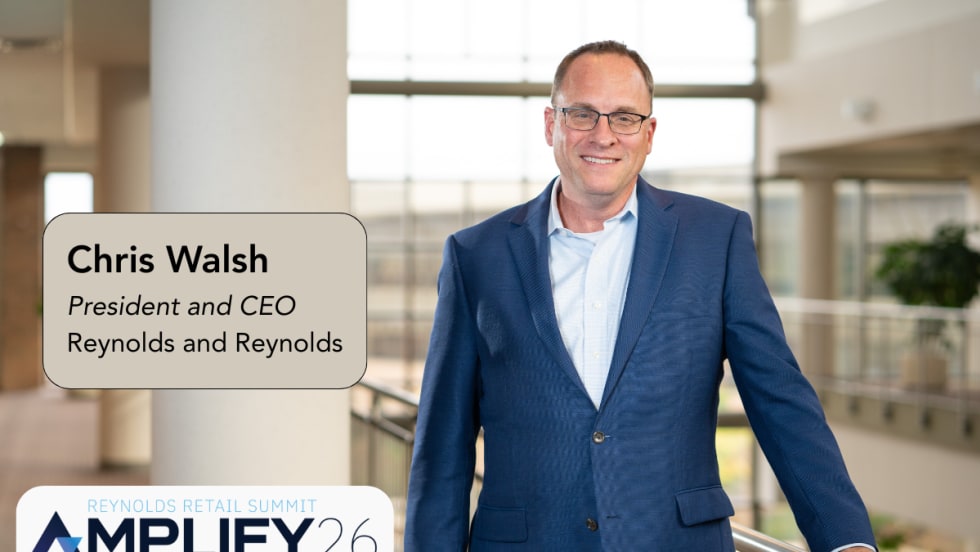
Amplify 2026 Billed as Turning Innovation Into Results
Reynolds and Reynolds says its annual retail summit will connect dealers with practical strategies, peer insight, and technology-driven ideas.
Read More →
Own Your Outcome: F&I in the Digital Customer Journey
Finance has historically been the last step in the car-buying process, but it doesn’t have to be. The customer’s journey starts long before they arrive at the dealership, and so should F&I’s involvement.
Read More →
Tariffs Could Raise Insurance Premiums
As U.S. import tariffs affect repair costs, consumers might find it more affordable to replace a damaged vehicle, according to recent Insurify tariff analysis.
Read More →
Smaller Loans, Longer Terms
The youngest generation of car buyers is more likely to finance less expensive vehicles, more than half of generation Z consumers borrowing less than $25,000.
Read More →
New Lifetime Battery F&I Product Meant to Drive Dealer Traffic
EFG Cos. offering is intended to create lifetime auto dealer engagement with customers.
Read More →
The Psychology Behind Menus That Increase Add-On Sales
There is a science to crafting a menu that gives customers confidence in the choices presented, and moving the process outside the F&I office can further boost results.
Read More →
Why Your F&I PVR Is Misleading You
Here’s a handy checklist of the numbers to track in 2026 instead.
Read More →
Auto Consumer Anxiety Presents Opportunity
A survey of U.S. drivers found the majority are concerned about finances and the economy, but those fears make many ready to buy vehicle-protection products.
Read More →