



Consumer Confidence Index Improves in October
The Conference Board's Consumer Confidence Index, which declined in September, advanced in October. The Index now stands at 81.1 (1985=100), up from 77.0 in September. The widely-watched Expectations Index rose to 90.7 from 88.5. The Present Situation Index increased to 66.8 from 59.7.
The Consumer Confidence Survey is based on a representative sample of 5,000 U.S. households. The monthly survey is conducted for The Conference Board by NFO WorldGroup. NFO is one of TNS group of companies. The cutoff date for October’s preliminary results was the 21st.
Climb in Confidence Could Boost Retail Sales
“After declining for five consecutive months, the Present Situation Index reversed course in October,” says Lynn Franco, director of The Conference Board’s Consumer Research Center. “A more favorable job market was a major factor in the turnaround. And, the belief that this trend will continue has boosted expectations. With the holiday season around the corner, this improvement in consumers’ spirits is a good omen for upcoming retail sales.”
Consumers' appraisal of present-day conditions ended a five-month slide in October. Those reporting jobs are “hard to get” eased to 33.8 percent from 35.1 percent. Those claiming jobs are “plentiful” rose to 11.8 percent from 9.9 percent. Consumers’ assessment of current business conditions also improved, with families rating conditions as “good” increasing to 17.2 percent, up from 16.2 percent. Those claiming conditions were “bad” fell to 28.4 percent from 29.5 percent.
Consumers’ short-term outlook also picked up in October. Those expecting business conditions to improve over the next six months rose to 23.2 percent from 21.3 percent. Consumers expecting business conditions to become worse edged down to 11.3 percent from 11.9 percent.
The employment outlook was also more upbeat. Those anticipating more jobs to become available in the next six months increased to 19.7 percent from 16.6 percent. Those expecting fewer jobs to become available decreased to 20.8 percent from 21.1 percent. The proportion of consumers anticipating an increase in their incomes, however, fell to 16.7 percent from 19.0 percent.
More F&I
Integrating Nontraditional F&I Products
The niche presents a strategic advantage for auto dealerships as they move to adapt to fast-changing consumer expectations in today’s market.
Read More →
Trust Is Personal
Technology, no matter how efficient, can’t replace what the human F&I manager can do, which is to bridge the divide between cyberspace and the in-store experience.
Read More →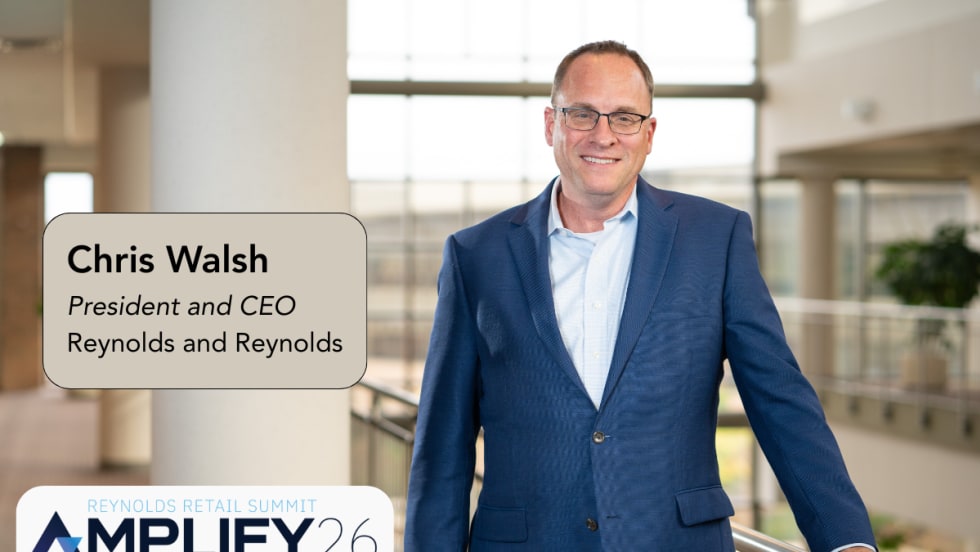
Amplify 2026 Billed as Turning Innovation Into Results
Reynolds and Reynolds says its annual retail summit will connect dealers with practical strategies, peer insight, and technology-driven ideas.
Read More →
Own Your Outcome: F&I in the Digital Customer Journey
Finance has historically been the last step in the car-buying process, but it doesn’t have to be. The customer’s journey starts long before they arrive at the dealership, and so should F&I’s involvement.
Read More →
Tariffs Could Raise Insurance Premiums
As U.S. import tariffs affect repair costs, consumers might find it more affordable to replace a damaged vehicle, according to recent Insurify tariff analysis.
Read More →
Smaller Loans, Longer Terms
The youngest generation of car buyers is more likely to finance less expensive vehicles, more than half of generation Z consumers borrowing less than $25,000.
Read More →
New Lifetime Battery F&I Product Meant to Drive Dealer Traffic
EFG Cos. offering is intended to create lifetime auto dealer engagement with customers.
Read More →
The Psychology Behind Menus That Increase Add-On Sales
There is a science to crafting a menu that gives customers confidence in the choices presented, and moving the process outside the F&I office can further boost results.
Read More →
Why Your F&I PVR Is Misleading You
Here’s a handy checklist of the numbers to track in 2026 instead.
Read More →
Auto Consumer Anxiety Presents Opportunity
A survey of U.S. drivers found the majority are concerned about finances and the economy, but those fears make many ready to buy vehicle-protection products.
Read More →