



Ford Credit Shuttering Fairlane Nonprime Unit
The volatile nonprime industry has claimed another corporate victim. The surprise closing by Ford Credit of its Fairlane Credit special finance subsidiary, announced March 7, underscores the high-risk nature of a business dedicated to vehicle buyers with the lowest credit scores.
Struggling Ford Credit said it will shutter Fairlane Credit, a unit formed more than five years ago to make vehicle loans to customers with bad credit histories. Ford Credit, which suffered heavy losses last year due to an increasing number of bad vehicle loans, will phase out Fairlane Credit this summer and roll most of its operations into its main lending operation, according to John Noone, executive vice president.
Fairlane Credit's loan portfolio of about $2.5 billion is being taken over by Ford Credit and Primus Financial Services, a subsidiary based in Franklin, Tenn. Fairlane, headquartered in Colorado Springs, Colo., since its founding in 1997, says its 360 employees are being offered jobs in the Ford Credit organization or early retirement packages.
Ford Credit, the world's largest automotive finance company, has said it is moving away from aggressive nonprime lending and slowing down growth after it was forced to reserve several hundred million dollars for credit losses in the fourth quarter.
The move is being observed closely by dealers who have used Fairlane Credit to sell cars to thousands of people with below-average credit
ratings who they might otherwise have had to turn away.
Fairlane President Jerry Heimlicher, a longtime employee of Ford Credit, is expected to retire upon completion of dissolution procedures later this year.
Fairlane was the first nonprime arm formed by an automaker's captive finance division and accounted for about 1 percent of Ford Financial's portfolio of $149 billion.
In January, Ford Motor Co. Chairman and CEO William Clay Ford Jr. announced that as a part of a reorganization program and following a loss of $297 million by Ford Credit in the fourth quarter, nonprime financing would be reduced. But there was no hint at that time that Fairlane Credit would be closed down as part of the retrenchment.
Primus Financial Services priovides primary financing for Ford-owned brandsd such as Jaguar, Land Rover, Mazda and Volvo, as well as several non-Ford-owned brands.
Bill Ford has said financing for non-Ford brands might be curtailed as well, but the scope of this strategy hasn't yet be finalized or announced.
Ford's other nonprime subsidiary, Triad Financial, of Huntington Beach, Calif., was not affected by the Fairlane move. Triad has nonprime contracts with about 8,000 franchised and independent dealers in 32 states, largely outside the Ford and Lincoln Mercury dealer networks served by Ford Credit and Fairlane Credit.
Reflecting in part the darker climate in the nonprime sector, Ford Credit took a $1.5 billion pre-tax provision for loan losses in the fourth quarter of 2001 and for the first time in many years made no dividend payment to its parent, Ford Motor Co. Instead, money was flowing in the other direction. Ford Motor in January gave a capital contribution to Ford Credit for $700 million.
Donald A. Winkler, Ford Credit's CEO of three years, was fired in December and replaced by Greg C. Smith, previously the financing company's chief operating officer and a company employee since 1973.
More F&I

Integrating Nontraditional F&I Products
The niche presents a strategic advantage for auto dealerships as they move to adapt to fast-changing consumer expectations in today’s market.
Read More →
Trust Is Personal
Technology, no matter how efficient, can’t replace what the human F&I manager can do, which is to bridge the divide between cyberspace and the in-store experience.
Read More →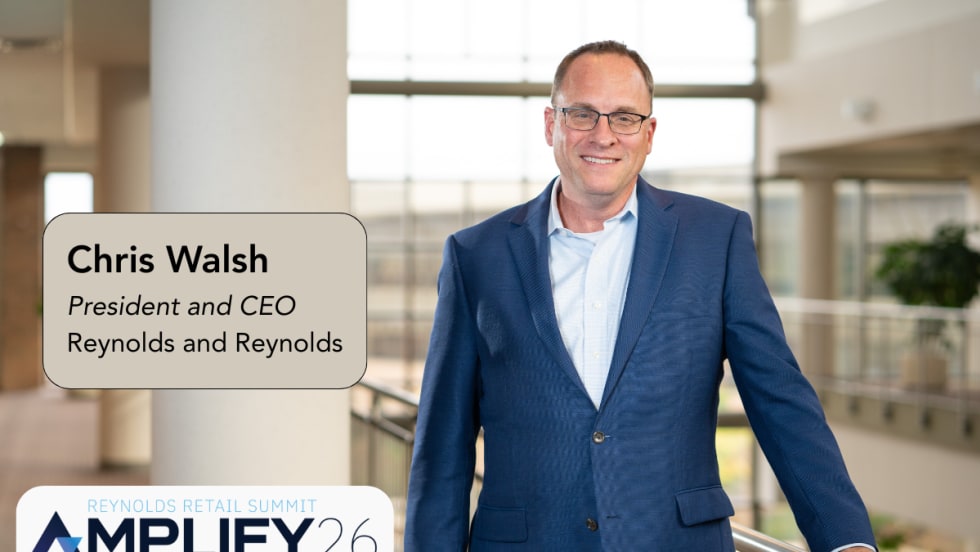
Amplify 2026 Billed as Turning Innovation Into Results
Reynolds and Reynolds says its annual retail summit will connect dealers with practical strategies, peer insight, and technology-driven ideas.
Read More →
Own Your Outcome: F&I in the Digital Customer Journey
Finance has historically been the last step in the car-buying process, but it doesn’t have to be. The customer’s journey starts long before they arrive at the dealership, and so should F&I’s involvement.
Read More →
Tariffs Could Raise Insurance Premiums
As U.S. import tariffs affect repair costs, consumers might find it more affordable to replace a damaged vehicle, according to recent Insurify tariff analysis.
Read More →
Smaller Loans, Longer Terms
The youngest generation of car buyers is more likely to finance less expensive vehicles, more than half of generation Z consumers borrowing less than $25,000.
Read More →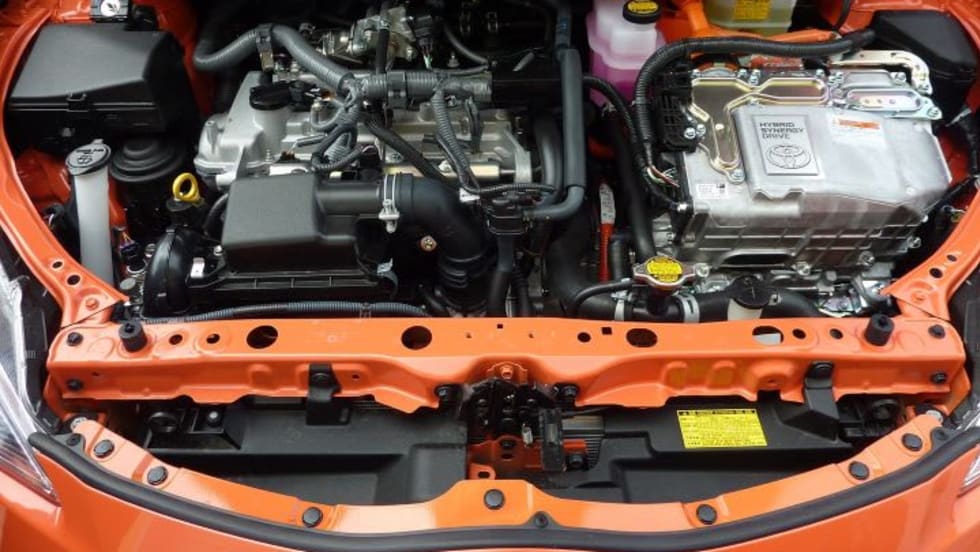
New Lifetime Battery F&I Product Meant to Drive Dealer Traffic
EFG Cos. offering is intended to create lifetime auto dealer engagement with customers.
Read More →
The Psychology Behind Menus That Increase Add-On Sales
There is a science to crafting a menu that gives customers confidence in the choices presented, and moving the process outside the F&I office can further boost results.
Read More →
Why Your F&I PVR Is Misleading You
Here’s a handy checklist of the numbers to track in 2026 instead.
Read More →
Auto Consumer Anxiety Presents Opportunity
A survey of U.S. drivers found the majority are concerned about finances and the economy, but those fears make many ready to buy vehicle-protection products.
Read More →