



GM, Ford Say No-Interest Financing Deals Responsible for Return to Showrooms
The world's two largest automakers are having some success in wooing buyers back to the showrooms with interest-free financing offers,
turning around a virtual halt in sales after the Sept. 11 terrorist attacks, according to the Washington Post.
Auto sales, however, have not reached pre-attack levels, according to industry analysts. Nor are they likely to make up for the decline that dogged the industry even before the tragedies, some industry experts said.
But the new incentives, advertised by General Motors Corp. and Ford Motor Co. late last week, offered the kick start needed to move the metal through the showrooms, according to many analysts. "It's surprising because there was so
much else going on," said Art Spinella, vice president and general manager of CNW Marketing/Research Inc. in Bandon, Ore.
Since GM announced its incentives Sept. 20, auto sales rose to 95 percent of what they were before the attacks, according to Spinella. Between Sept. 11 and Sept. 16, sales had basically stopped, he said.
In a spot survey of showroom customers in 29 markets, 18 percent of those looking at GM and Ford products Sept. 21 through Sept. 23 said they were motivated by the interest-free offers, according to Spinella. The percentage of shoppers who bought cars bounced back to the typical 30 percent range this weekend, after dipping to the teens Sept. 11 through Sept. 20, Spinella said.
The Miller Brothers Chevrolet and Olds Cadillac showroom in Ellicott City, Md., sold 15 cars on Saturday -- nearly double the usual number at this time of year, according to Bob Palmer, the dealership's general manager. Customers came to the dealership citing news reports about the financing deals, Palmer said. "The incentives just seemed to really make the difference," he said. "It just brought smiles to our faces at this very depressing time."
"Market share of North American producers would
have suffered an even greater decline without these [GM and Ford] incentives," said Paul Taylor, chief economist at the National
Automobile Dealers Association (NADA). The incentives also will keep people working in auto plants nationwide and help franchise dealerships survive, according to Taylor.
More F&I

Integrating Nontraditional F&I Products
The niche presents a strategic advantage for auto dealerships as they move to adapt to fast-changing consumer expectations in today’s market.
Read More →
Trust Is Personal
Technology, no matter how efficient, can’t replace what the human F&I manager can do, which is to bridge the divide between cyberspace and the in-store experience.
Read More →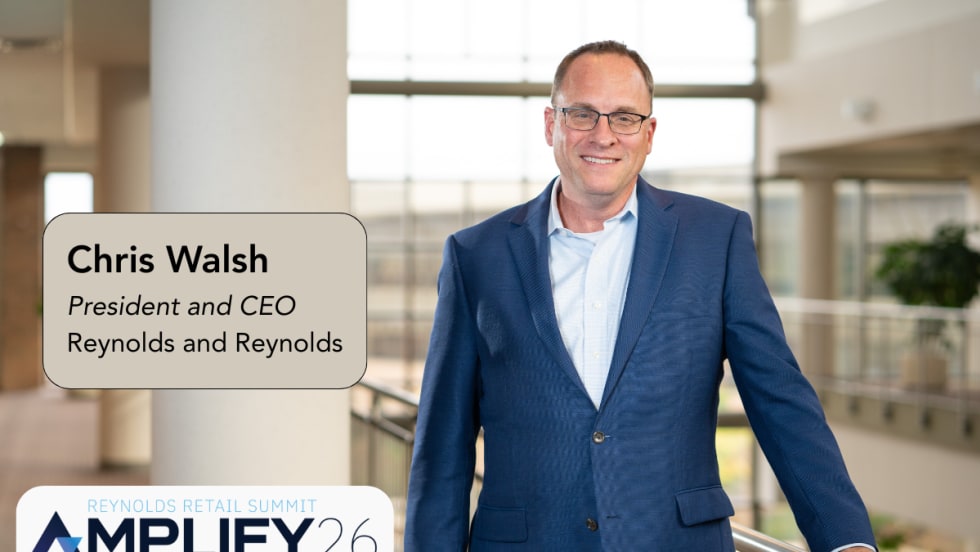
Amplify 2026 Billed as Turning Innovation Into Results
Reynolds and Reynolds says its annual retail summit will connect dealers with practical strategies, peer insight, and technology-driven ideas.
Read More →
Own Your Outcome: F&I in the Digital Customer Journey
Finance has historically been the last step in the car-buying process, but it doesn’t have to be. The customer’s journey starts long before they arrive at the dealership, and so should F&I’s involvement.
Read More →
Tariffs Could Raise Insurance Premiums
As U.S. import tariffs affect repair costs, consumers might find it more affordable to replace a damaged vehicle, according to recent Insurify tariff analysis.
Read More →
Smaller Loans, Longer Terms
The youngest generation of car buyers is more likely to finance less expensive vehicles, more than half of generation Z consumers borrowing less than $25,000.
Read More →
New Lifetime Battery F&I Product Meant to Drive Dealer Traffic
EFG Cos. offering is intended to create lifetime auto dealer engagement with customers.
Read More →
The Psychology Behind Menus That Increase Add-On Sales
There is a science to crafting a menu that gives customers confidence in the choices presented, and moving the process outside the F&I office can further boost results.
Read More →
Why Your F&I PVR Is Misleading You
Here’s a handy checklist of the numbers to track in 2026 instead.
Read More →
Auto Consumer Anxiety Presents Opportunity
A survey of U.S. drivers found the majority are concerned about finances and the economy, but those fears make many ready to buy vehicle-protection products.
Read More →