



Hispanic Loan Bias Denied By Ford Credit
Ford Credit has fired back against charges that it has discriminated against Hispanic car loan borrowers by charging them more interest than non-Hispanic customers. The bias claim is made in a Chicago federal district court suit filed on behalf of Hispanic buyers. It is the second and largest suit filed over the issue of inflated loan rates to a minority group.
The first suit was on behalf of African-American customers of Nissan Motor Acceptance Corp. and is still pending in a Nashville, Tenn., federal district court.
In response to a study of more than 6 million loans to black car buyers, authorized in the Ford Credit suit, the Ford Motor Company subsidiary declared it “would never discriminate based on age, race or ethnicity. It’s not the way we do business here at Ford.â€
The study contended that, without advising Hispanic borrowers of the inflated interest rate, in the 1997-2001 period Ford Credit collected an average payment on vehicle loans of $348 from Hispanics and $341 from non-Hispanics. Total finance charges reached an average of $5,893 on an interest rate of 13.9 percent from Hispanics, the study said, compared to $5,453 and 12.9 percent from non-Hispanics.
The suit alleges that Ford Credit boosted the rates to Hispanics regardless of their credit ratings. Dealers were told to “maintain this practice in secret,†the bill complaint states. However, in a rebuttal statement, Ford Credit says a statistician hired by the plaintiffs misrepresented numbers provided by Ford in a way suggesting discrimination.
Richard Voith, senior vice-president of EconSult, a Philadelphia financial research firm, calculated that the average loan markup assessed by Ford dealers to customers with Hispanic surnames was 3.46 percentage points, against 2.78 percentage points for loans to those with non-Hispanic names.
Ford Credit notes that the interest rate secured by a buyer depends often on the individual’s credit history and negotiating skills. It denies instructing or compelling F&I managers to charge a higher rate to Hispanic buyers, explaining that dealership personnel are free to construct their loan deals in accordance with state and federal regulations.
"Ford Credit has no direct contact with the customer during the approval process," said Ford Credit spokesman Dan Jarvis. "When we evaluate credit applications, we do not know the race, gender or ethnicity of auto buyers," he said, adding, "We simply look at objective measurable criteria, such as credit history, income-to-debt ratio and a statistical analysis of the customer's ability to make payments."
The plaintiffs in the suit, Rodriguez v. Ford Credit, hired Voith to conduct a study in the course of a motion seeking class-action status for their complaint. The motion was denied on the grounds that numerous legitimate matters influence interest rates charged and credit pricing.
More F&I

Integrating Nontraditional F&I Products
The niche presents a strategic advantage for auto dealerships as they move to adapt to fast-changing consumer expectations in today’s market.
Read More →
Trust Is Personal
Technology, no matter how efficient, can’t replace what the human F&I manager can do, which is to bridge the divide between cyberspace and the in-store experience.
Read More →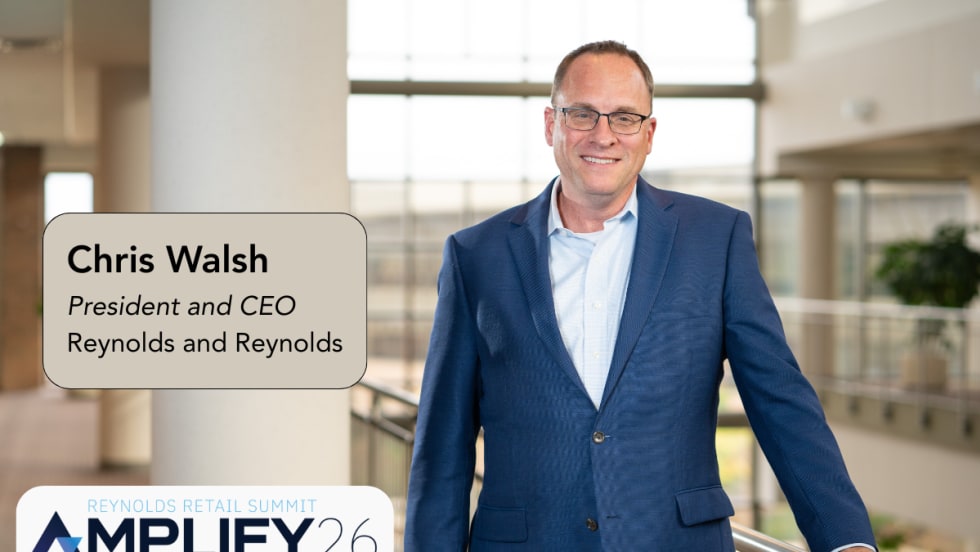
Amplify 2026 Billed as Turning Innovation Into Results
Reynolds and Reynolds says its annual retail summit will connect dealers with practical strategies, peer insight, and technology-driven ideas.
Read More →
Own Your Outcome: F&I in the Digital Customer Journey
Finance has historically been the last step in the car-buying process, but it doesn’t have to be. The customer’s journey starts long before they arrive at the dealership, and so should F&I’s involvement.
Read More →
Tariffs Could Raise Insurance Premiums
As U.S. import tariffs affect repair costs, consumers might find it more affordable to replace a damaged vehicle, according to recent Insurify tariff analysis.
Read More →
Smaller Loans, Longer Terms
The youngest generation of car buyers is more likely to finance less expensive vehicles, more than half of generation Z consumers borrowing less than $25,000.
Read More →
New Lifetime Battery F&I Product Meant to Drive Dealer Traffic
EFG Cos. offering is intended to create lifetime auto dealer engagement with customers.
Read More →
The Psychology Behind Menus That Increase Add-On Sales
There is a science to crafting a menu that gives customers confidence in the choices presented, and moving the process outside the F&I office can further boost results.
Read More →
Why Your F&I PVR Is Misleading You
Here’s a handy checklist of the numbers to track in 2026 instead.
Read More →
Auto Consumer Anxiety Presents Opportunity
A survey of U.S. drivers found the majority are concerned about finances and the economy, but those fears make many ready to buy vehicle-protection products.
Read More →