



Incentives to Rise for Next Several Months, Reports Edmunds.com
The average automaker incentive was largely unchanged in March compared with February, but incentives generally are likely to rise for the next several months as automakers try to break the sales slump, Edmunds.com predicts.
SANTA MONICA, Calif. — The average automaker incentive was largely unchanged in March compared with February, but incentives generally are likely to rise for the next several months as automakers try to break the sales slump, Edmunds.com predicts.
"Incentives are likely to rise through the spring and summer," said Jesse Toprak, executive director of Industry Analysis for Edmunds.com. “We anticipate that this will be especially true for the European automakers, as long as the euro remains strong.”
Edmunds.com estimates the average automotive manufacturer incentive in the U.S. was $2,519 per vehicle sold in March, essentially unchanged from February but up $94, or 3.9 percent, from March 2007.
Edmunds.com estimates the combined incentives spending for domestic manufacturers averaged $3,424 per vehicle sold in March, up from $3,384 in February. From February to March, European automakers increased incentives spending by $236 to $3,067 per vehicle sold; Japanese automakers decreased incentives spending by $73 to $1,295 per vehicle sold; and Korean automakers increased incentives spending by $352 to $2,126 per vehicle sold.
In March the industry's aggregate incentive spending is estimated to have totaled approximately $3.34 billion, up 13.6 percent from February 2008. Chrysler, Ford and General Motors spent an aggregate of $2.3 billion, or 67.7 percent of the total; Japanese manufacturers spent $658 million, or 19.7 percent; European manufacturers spent $290 million, or 8.7 percent; and Korean manufacturers spent $130 million, or 3.9 percent.
Among vehicle segments, large trucks had the highest average incentives, $4,368 per vehicle sold, followed by large SUVs at $4,094. Compact cars had the lowest average incentives per vehicle sold, $1,023, followed by sport cars at $1,574.
Analysis of incentives expenditures as a percentage of average sticker price for each segment shows large trucks averaged the highest, 13.6 percent, followed by large cars at 13.1 percent of sticker price. Sports cars averaged the lowest, 5.3 percent, followed by luxury sport cars at 5.7 percent of sticker price.
Comparing all brands, trends from the past year continued: BMW's Mini spent the least — virtually nothing — followed by Scion at $131 per vehicle sold. At the other end of the spectrum, Cadillac spent the most, $5,532, followed by Saab at $5,501 per vehicle sold. Relative to their vehicle prices, Dodge spent the most, 16.7 percent and Saab followed in at 15.3; Mini spent virtually nothing and Scion spent just 0.8 percent.
True Cost of Incentives for the "Big Six" Automakers
Automaker—March 2008—February 2008—March 2007
Chrysler Group—$4,142—$3,520—$4,237
Ford—$3,017—$3,317—$3,114
General Motors—$3,271—$3,328—$2,832
Honda—$1,297—$1,209—$1,157
Nissan—$2,031—$2,159—$2,043
Toyota— $898—$1,044—$714
More F&I
Integrating Nontraditional F&I Products
The niche presents a strategic advantage for auto dealerships as they move to adapt to fast-changing consumer expectations in today’s market.
Read More →
Trust Is Personal
Technology, no matter how efficient, can’t replace what the human F&I manager can do, which is to bridge the divide between cyberspace and the in-store experience.
Read More →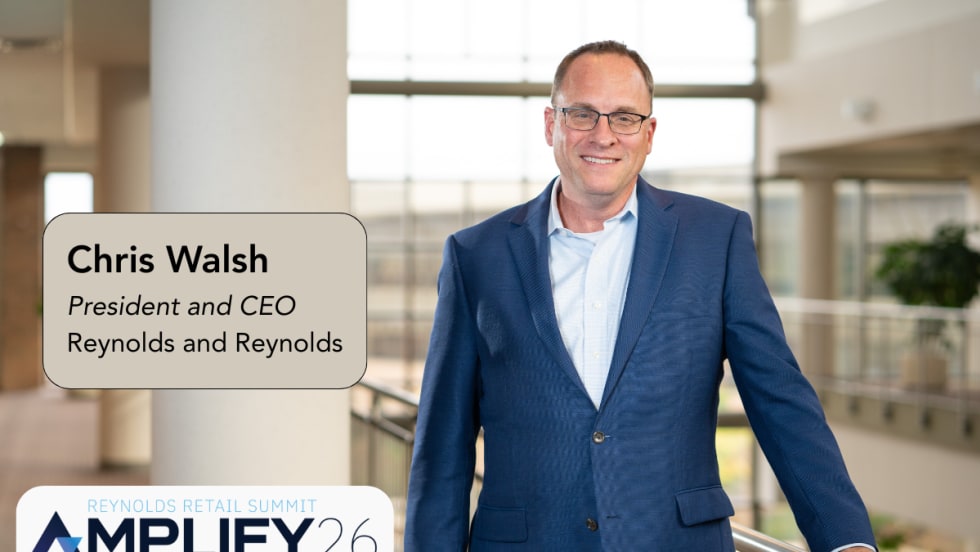
Amplify 2026 Billed as Turning Innovation Into Results
Reynolds and Reynolds says its annual retail summit will connect dealers with practical strategies, peer insight, and technology-driven ideas.
Read More →
Own Your Outcome: F&I in the Digital Customer Journey
Finance has historically been the last step in the car-buying process, but it doesn’t have to be. The customer’s journey starts long before they arrive at the dealership, and so should F&I’s involvement.
Read More →
Tariffs Could Raise Insurance Premiums
As U.S. import tariffs affect repair costs, consumers might find it more affordable to replace a damaged vehicle, according to recent Insurify tariff analysis.
Read More →
Smaller Loans, Longer Terms
The youngest generation of car buyers is more likely to finance less expensive vehicles, more than half of generation Z consumers borrowing less than $25,000.
Read More →
New Lifetime Battery F&I Product Meant to Drive Dealer Traffic
EFG Cos. offering is intended to create lifetime auto dealer engagement with customers.
Read More →
The Psychology Behind Menus That Increase Add-On Sales
There is a science to crafting a menu that gives customers confidence in the choices presented, and moving the process outside the F&I office can further boost results.
Read More →
Why Your F&I PVR Is Misleading You
Here’s a handy checklist of the numbers to track in 2026 instead.
Read More →
Auto Consumer Anxiety Presents Opportunity
A survey of U.S. drivers found the majority are concerned about finances and the economy, but those fears make many ready to buy vehicle-protection products.
Read More →