



It’s a Trap! Car Buyers Hip to Lead Capture Forms
New research from PERQ shows dealership website visitors are more likely to purchase if offered a guided online experience and increasingly wary of features designed to capture their contact information.


An analysis of thousands of dealer website visitors found true engagement drives sales and consumers are reluctant to complete lead-capture forms. Photo courtesy 20th Century Fox
INDIANAPOLIS — New research on active online car shoppers offers compelling evidence that dealers should focus on engaging and guiding consumers, rather than seeking to drive them into a lead funnel trap.
The insights are part of “Engage: No More Lead Traps! How to Improve the Online Experience to Increase Sales,” a new book from PERQ. An analysis of thousands of dealer website visitors showed that when a shopper goes through multiple interactive online experiences, he/she is three times as likely to purchase as someone who fills out just one static lead form.
What’s more, those one-and-done static form users exit the dealer website as rapidly as 40 seconds after completing the form, said Scott Hill, executive chairman and co-founder of PERQ, who co-authored the book.
“Dealership websites should not be simple lead traps,” Hill said. “And if your website is built that way, you’re losing out. Car buyers actually want to engage on dealer websites because that’s where the transaction gets complicated, and it’s where they have the questions that will actually matter to the sale. And they want answers to their questions without being forced to speak to a salesperson.”
In addition to the connection between engagement and closing rate, PERQ data shows a strong customer desire for an enterprise-level and interactive user experience. In fact, the research in the book found a 12% boost in lead conversion when originated from interactive, rather than static, lead forms. Key results from dealerships who implemented this engaged model include:
Up to 300% increase in click-to-lead conversions
Up to 200% increase in website engagement
Up to 200% increase in visitor-to-lead volume
10% to 50% increase in lead-to-close volume
5% to 15% average gross profit increase (per lead sold)
“Most dealers would never allow their showroom experience to be like the website experience,” said Russ Chandler, co-author and product marketing manager at PERQ. “Their expectation is that the sales team will engage, inform and provide a critical value to the car shopper. It’s the same online, except your website is doing the initial relationship-building. Our data shows that customers expect that kind of approach at the online retail level. It’s not about lead traps. It’s about selling cars and building customer loyalty.”
To download a copy of the book, click here.
More Showroom

Mitsubishi Unveils U.S. Plan
The automaker announced a strategy that includes an expanded lineup and dealership presence, along with more ‘rugged’ and electric models.
Read More →
Used Lots Getting the Business
Many consumers are seeking out the units to save money, and the demand – higher in July than normal – is keeping supply limited and prices up.
Read More →
Used Market Stabilizes
The Carfax Used Car Index noted a major drop in used-vehicle price increases in July after several months of hikes.
Read More →
California Hybrids Reach State Record
The Golden State still leads the country in electric-vehicle registrations, but much like the rest of the U.S. its hybrid market share is up while full electrics stabilize after a dramatic first-quarter dip.
Read More →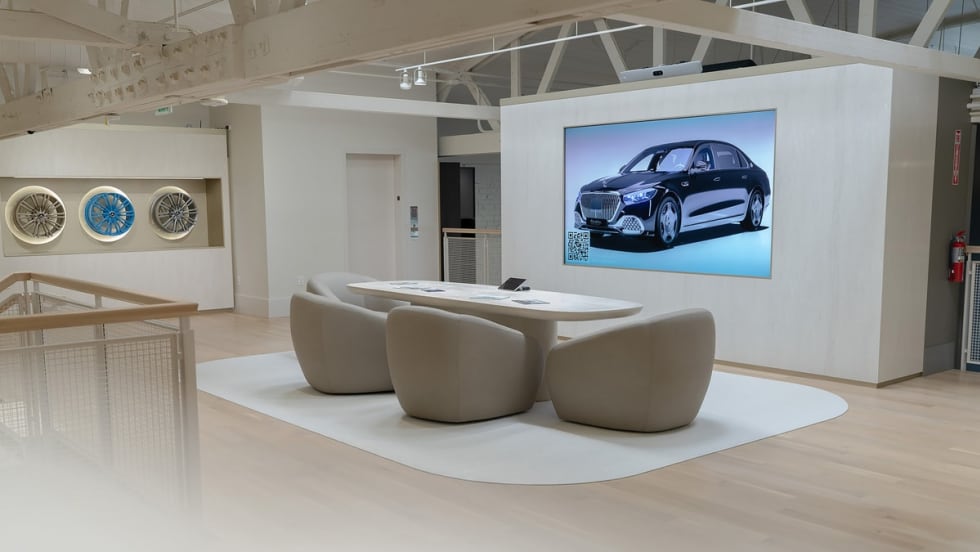
My Mercedes in the U.S.
The German brand debuted its studio dealership concept for the first time in the states in Los Angeles, tapping Americans’ penchant for creative distinctions.
Read More →
Used Sales Hit Summer Drag
The vacation season, combined with high prices, has dented deliveries and added to inventories, though supply is still slim enough to keep listings elevated.
Read More →
California Launches EV Rebate Program
Participating automakers are matching the state's $13.5 million investment in new electric-vehicle rebates scheduled to take effect later this summer.
Read More →
OEM Poll Sees Industry Evolution
Kerrigan Advisors’ survey of automakers finds that tariffs, technology, network tightening and other factors are poised to reshape auto retail.
Read More →
The Trade-In Paradox
Retailing older cars with confidence in today’s market is a matter of establishing and following a clear process that can turn greater profit for auto dealers as they aim to meet used-unit hunger.
Read More →
Focus on Vehicle Cabins
The market for interior materials will grow in coming years as automakers look to meet consumer demand while staying competitive with changeups to sourcing and included features.
Read More →