



J.D. Power: Consumers Fear Tech Failures With Autonomous Cars
Compared with 2016, 11% more Gen Z consumers and 9% more Pre-Boomers say they “definitely would not” trust automated technology, according to the firm’s 2017 U.S. Tech Choice Study.
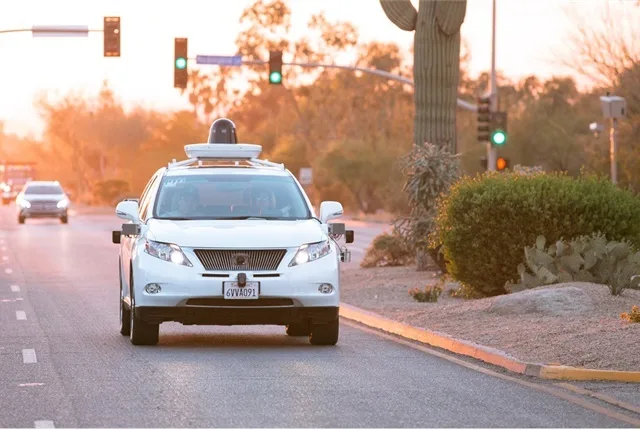
COSTA MESA, Calif. — With the exception of Gen Y, all other generational groups are becoming more skeptical of self-driving technology, according to J.D. Power’s 2017 U.S. Tech Choice Study.
According to Kristin Kolodge, executive director of driver interaction and HMI research at J.D. Power, consumer curiosity and acceptance increase the closer technology concepts get to becoming reality. That’s not the case with autonomous vehicles, however.
“With autonomous vehicles, we see a pattern where trust drives interest in the technology and right now, the level of trust is declining,” she said.
Compared with 2016, 11% more Gen Z consumers and 9% more Pre-Boomers say they “definitely would not” trust automated technology. However, similar to the 2016 study, consumers this year show great interest in collision protection and driving assistance technology.
According to the study, six of the Top 10 features that consumers were most interested in before learning the price — smart headlights, rear-view mirror cameras, emergency braking and steering system, lane change assist, camera side-view mirrors and advanced windshield display — come from those two categories.
“Along with collision mitigation, there are many benefits to autonomous vehicles, including allowing those who are unable to drive in today’s vehicles to experience freedom of mobility,” Kolodge said. “Interestingly, though, 40% of Boomers do not see any benefits to self-driving vehicles.
“Automated driving is a new and complex concept for many consumers; they’ll have to experience it firsthand to fully understand it,” she added. “As features like adaptive cruise control, automatic braking and blind-spot warning systems become mainstream, car buyers will gain more confidence in taking their hands off the steering wheel and allowing their vehicles to step in to prevent human error.”
Additional findings of the 2017 study include:
Generation gap for vehicle-controlled functions: When looking at technologies with the largest purchase intent gaps between the Gen Y/Gen Z and Boomer generations, younger consumers are far more comfortable with technologies that assume control of vehicle operating functions. Examples include allowing mobile devices to take control of infotainment systems; an in-vehicle artificial intelligence (AI)-based assistant; and autonomous driving and parking technologies.
Not a matter of price: For all five of the technologies with the largest purchase intent gap, Gen Y/Gen Z purchase intent is greater than Boomers, who say they definitely/probably are interested in a feature even before they know the price.
I’m going mobile: Gen Z has the highest interest in all alternative mobility types, including 50% indicating they are definitely/probably interested in mobility sharing/co-ownership; 52% for journey-based ownership; 56% for un6manned mobility; and 56% for mobility-on-demand.
Consumer interest in emergency braking and steering system technology: Upcoming agreements between automakers and the government will require vehicles to have emergency braking—a foundation technology for autonomous driving — as a standard feature within five years. The 31% of consumers willing to pay $700 for the advanced version of this system (adds steering) is greater than the percentage of consumers who would pay for less expensive technologies like digital key at $250; dash camera at $300; and mobile system control at $400.
Lukewarm on convenience: Consumers aren’t as enthusiastic about niche convenience technologies. Collision protection and driving assistance-related technologies comprise most of the technologies with the highest pre-price interest, while features in the entertainment and connectivity, and comfort and convenience categories show the lowest pre-price interest.
Notable convenience exception: Gen Z consumers have a fairly high interest in digital key technology, which eliminates the need for a physical key or key fob and is replaced by a smartphone or smartwatch. A total of 40% indicate they definitely would like digital key technology on their next vehicle, and 58% are willing to pay $250 for it, compared with 28% among all consumers.
More Showroom

California Sees Quarterly Gains
California’s new-vehicle market saw a boost in hybrids in the third quarter and its first overall quarterly market gain of the year.
Read More →
New-Vehicle Prices Stay Put
Affordability pressures and model availability shaped new-vehicle sales in September, according to an analysis by Kelley Blue Book.
Read More →
EV Buyer Consideration Shifts
What drives American consumers to purchase an electric vehicle is shifting as the question moves away from Should I?' to 'Which features and experience do I want to have?'
Read More →
Year-to-Date Auto Sales Holding Their Own
A forecast through August shows that automakers have shifted strategies to keep deliveries and revenues up despite tariffs and other economic challenges.
Read More →
Slow to Robo
Ten years of polling consumers shows autonomous vehicles’ profiles have risen considerably, but even more people now want at least some level of control if they go that route.
Read More →
Dealers a Little Down
A third-quarter Cox Automotive survey finds them in a mixed mood, bummed by fallen customer traffic but encouraged by better profits, costs and EV interest.
Read More →
European EV Sales Skyrocket
The EV market on the continent held strong in July with almost 25% of new-car sales being fully electric units, a stark contrast to the U.S., where EV sales declined about 42%.
Read More →
Mitsubishi Unveils U.S. Plan
The automaker announced a strategy that includes an expanded lineup and dealership presence, along with more ‘rugged’ and electric models.
Read More →
Used Lots Getting the Business
Many consumers are seeking out the units to save money, and the demand – higher in July than normal – is keeping supply limited and prices up.
Read More →
Used Market Stabilizes
The Carfax Used Car Index noted a major drop in used-vehicle price increases in July after several months of hikes.
Read More →