



Kerrigan: Dealership Buy/Sell Activity Up 38% in Q1
Despite headwinds threatening dealership profitability, Kerrigan Advisors’ first-quarter report indicates 2019 is trending toward another 200-plus transaction year for the auto retail buy/sell market.

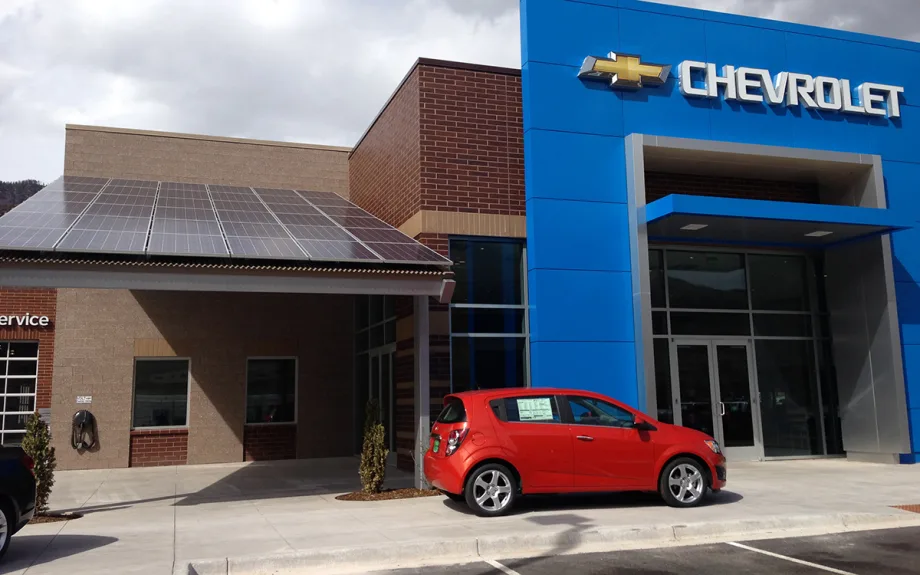
Kerrigan Advisors analysts listed Chevrolet among the franchises drawing the most attention from dealership buyers in Q1 — 95% of whom brought privately held capital to the negotiating table.
Photo courtesy General Motors Co.
IRVINE, Calif. — The 2019 auto dealership buy/sell market rocketed to a strong start in the first quarter of 2019, with 54 completed transactions, representing a 38.5% increase over Q1 2018, indicating that 2019 is on trend to be the sixth consecutive 200-plus transaction year, according to the latest Blue Sky Report by Kerrigan Advisors.
In spite of a 3.2% new-vehicle sales decline, continued profit stability and an increase in sellers coming to market are contributing to the robust outlook for the buy/sell market, said Erin Kerrigan, the firm’s founder and managing director.
“As Kerrigan Advisors predicted, 2019 is shaping up to be another solid year for buy/sells and valuations,” Kerrigan said. “In the face of a decline in new-vehicle sales, the diversity of the dealership business model continues to demonstrate its value through its ability to sustain profits. In addition, the influx of older generation sellers coming to market, coupled with private capital jumping into the void left by the publics, all add up to a promising buy/sell year.”
The first three months of the year reflect a shift in industry focus toward used vehicles, F&I, and fixed ops. At stores included in the analysis, used-vehicle gross margins were three times that of new vehicles and per-copy averages had risen 60% since 2010 — two key reasons strategic buyers and outside investors remain interested in auto retail acquisitions.
Analysts said buyers showed particular interest in high-performing dealerships representing strong franchises in growth markets. As older dealers become increasingly concerned over their ability to succeed in a consolidating, evolving auto retail industry, buyers are facing new opportunities, they added — although increasing industry debt poses a looming risk.
The report also found far more buyers among privately held dealer groups: Public groups sold 18 franchises and bought only five, decreasing their spending by 68.6% year-over-year, while private buyers accounted for 95% of all transaction in Q1.
According to the report, the healthy economy and strong financial markets means there continues to be a high rate of complex multidealership transactions. Among the franchises being acquired, domestics continued to grow their buy/sell market share, while import nonluxury franchises saw their market share decline, primarily driven by Hyundai, Kia, Mazda, Nissan, and Volkswagen.
Interest in top domestic franchises, such as Chevrolet and Ford, as well as top nonluxury imports, including Toyota, Honda, and Subaru, remain high.
Image upgrades required by OEMs are sending sellers to market, analysts noted, but because these sellers are unwilling to invest the capital required to become facility-compliant, their dealerships will sell at a lower blue-sky value in 2019.
“In the face of all these positives in the market, it must be noted that the outlook is less promising for some players, especially weaker, lower performing franchises with low buyer demand who are finding it more difficult to find a buyer, particularly at a strong price,” noted Ryan Kerrigan, managing director of Kerrigan Advisors. “Another factor to watch is that dealership rents appear to have peaked, with Q1 2019 showing a decline for the first time in 10 years. We expect that many dealers are realizing that their businesses can no longer support these high rent levels and, as rents fall, real estate values often follow.”
Originally posted on Auto Dealer Today
More F&I

AI: Facilitator, Not Fixer, in F&I
The dealerships that thrive in the years ahead will be those that embrace technology while continuing to invest in the people who make customer interactions count.
Read More →
Modern Technology Objection Handling
In this video, Trent White shares how to confidently handle technology-based objections by helping customers understand the value of protection, even with modern vehicle technology.
Read More →
Consistency at Scale: Driving F&I Performance
With 75 rooftops across the Sunshine State, Morgan Auto Group has proven to Floridians that it knows a thing or two about driving performance in a competitive market. But it didn’t start at the top.
Read More →
Gitty Up on GAP
The foundational finance-and-insurance product hasn’t kept up with the latest conditions for auto dealers. Is the time ripe?
Read More →
How AI-Powered Coaching Is Transforming F&I Performance
See how AI-powered coaching can turn F&I customer conversations into actionable insights that support compliance, performance and profitability
Read More →
Sell Value, Build Trust
In this video, Trent White explains why selling on value, not fear, builds lasting customer trust, reduces cancellations, and drives long-term success.
Read More →
F&I Sales Give Dealers First-Half Lift
Product business shored up total profits to avoid an overall revenue tanking as product penetrations held steady, StoneEagle reported.
Read More →
Targeted Training Drives Results
Today’s technology, instead of threatening F&I managers, can actually make them better, according to an industry veteran who’s watched market setbacks roil the unprepared.
Read More →
Double the Change, Double the Chance
When an F&I manager gets a customer refusal, it’s a wise move to tweak more than one thing in the product offering.
Read More →
Just Do It
F&I managers need training, but instead of resisting application or expecting perfection, they should improve by simply acting on what they learn.
Read More →