



Lawmakers To Pursue Disclosure of Insurance-Totaled Vehicles
Hoping to provide dealerships with better tools to spot problem vehicles before they come into inventory, Senator Trent Lott (R-Miss.), Rep. Cliff Stearns (R-Fla.), and other Congressional leaders pledged at a Dec. 7 press conference to continue their efforts to pass total-loss disclosure legislation when the new Congress convenes in January. Lott said he plans to reintroduce legislation in the 110th Congress to reduce title fraud and title washing on insurance-totaled vehicles.
Washington, D.C. – Hoping to provide dealerships with better tools to spot problem vehicles before they come into inventory, Senator Trent Lott (R-Miss.), Rep. Cliff Stearns (R-Fla.), and other Congressional leaders pledged at a Dec. 7 press conference to continue their efforts to pass total-loss disclosure legislation when the new Congress convenes in January. Lott said he plans to reintroduce legislation in the 110th Congress to reduce title fraud and title washing on insurance-totaled vehicles.
“The more consumers hear about the danger caused by rebuilt wrecks, the more they want Congress to do something about it,” said David Regan, vice president of legislative affairs for NADA. “With more than five million vehicles totaled by insurance companies just last year — more than half a million of them coming from the Gulf Hurricanes of 2005 — something has to be done to permanently notify consumers about these severely damaged vehicles.”
The goal of the legislation is to get total loss information into the public domain more comprehensively and faster than it is today. Officials from the NADA said dissemination of this information is hampered because laws regarding what is deemed a total loss vary by state. The new legislation would push a separate stream of data into the public domain by requiring insurance companies to make vehicle data commercially available to information vendors such as Experian, CARFAX and AutoCheck.
“Experian and CARFAX are dependant on the state, and not all insurance-totaled vehicles are titled by the state,” added Regan. “If all insurance companies report this data, then that would be more data going into the system that what’s coming through from the DMV.”
Due to water damage, severe accident, theft, etc., insurance companies may declare a vehicle a “total loss,” but each year thousands of these vehicles are sold at salvage auctions and rebuilt and re-enter the market with clean titles.
Lott and a bipartisan list of colleagues sponsored S. 3707, the Passenger Vehicle Loss Disclosure Act, to require that insurance companies permanently red-flag totaled, flooded or stolen vehicles in the 109th Congress. S. 3707 is related to a similar bill introduced by Rep. Stearns, H.R. 6093, in the House of Representatives.
Aside from permanently red flagging severely damaged vehicles, the bill would require insurance companies to reveal the reason for the total loss (flood, collision, stolen, etc.), the date of total loss, the odometer reading on that date, and whether or not the airbag deployed.
Both the House and the Senate bills would also attack motor vehicle title fraud at the core by disclosing total-loss information before a vehicle is sold at salvage auction, rebuilt, and returned to the market. This federal legislation would not, however, preempt state titling laws or require changes in state laws.
Last month, Seattle-based insurance company, PEMCO, announced that it would voluntarily disclose vehicle flood-damage information to the public. The NADA also released a letter signed by a coalition of automotive organizations, pledging their support for passage of total-loss disclosure legislation.
“The goal of this legislation is simple — if a vehicle is totaled, the VIN should be disclosed to the public,” Regan added. “Armed with total-loss information, consumers, businesses, dealers, auto auctions — anyone buying used cars or accepting trade-ins for a new vehicle — should be able to easily identify one of these rebuilt wrecks, even if the title was washed.”
More Digital
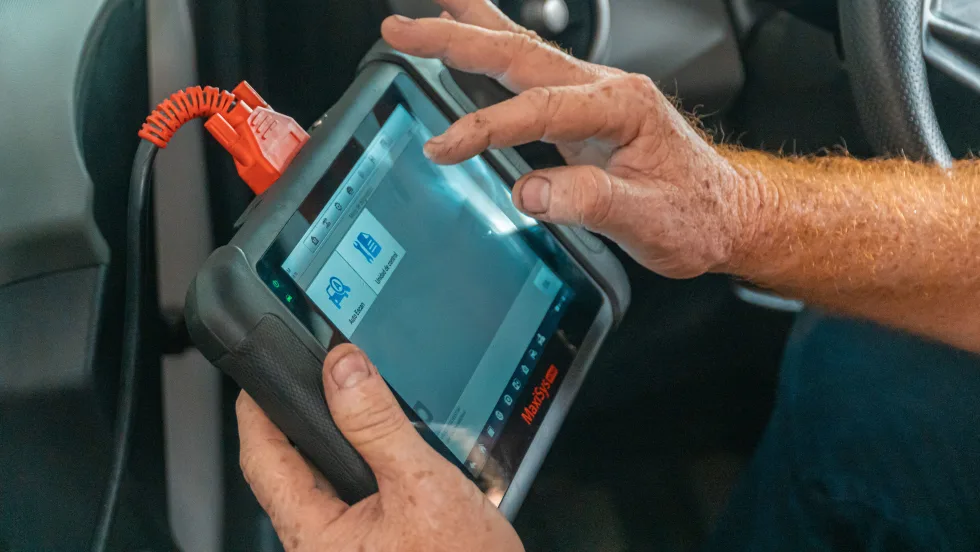
Fixed-Ops Automation Can Help Dealerships Stand Out
Technology turns everyday service repairs into lasting customer loyalty and dealer profitability.
Read More →
AI and the Auto Dealer
These are risks you can’t ignore as the technology becomes more and more of a presence in the auto retail environment.
Read More →
Data Drives Success
Dealerships that make decisions based on data rather than gut instinct or experience have a leg up on their competitors, according to a recent survey.
Read More →
AI: Facilitator, Not Fixer, in F&I
The dealerships that thrive in the years ahead will be those that embrace technology while continuing to invest in the people who make customer interactions count.
Read More →
Simple But Effective Hacking Surges
Data from the past year at U.S. auto dealerships finds that email and identity phishing are growing threat sources that can dispense with malware by exploiting trust.
Read More →
The Future of Car Dealerships
Artificial intelligence is reshaping the service-drive experience and will help retailers stay competitive.
Read More →
Structure Leads to Optimized Auto Listings
As the average car-buying journey has shifted to a blend of digital and retail, a dealership’s vehicle listings must be optimized to answer shoppers’ questions clearly and accurately.
Read More →
Real Intelligence
AI, though it presents many opportunities for productivity, efficiency and more, isn’t a one-for-one stand-in for people. It can augment human capital but not replace it altogether.
Read More →
Zurich Launches Advisor IQ for F&I Manager Coaching
The new platform uses real transaction data and artificial intelligence-driven insights to help car dealerships improve consistency and performance.
Read More →
F&I in the Digital Age
Digital retailing has not made the F&I manager obsolete. If anything, it has revealed how valuable the role can become when technology is used correctly.
Read More →