



Manheim Releases 2004 Used Car Market Report
Record 43.6 Million Vehiclesd Retailed; Report Highlights How Remarketers Use Technology to Maximize Efficiency
In a year when incentives kept new-car sales high and prices low, used-car sales more than held their own, with a record 43.6 million vehicles retailed in 2003 at a value of $370 billion, according to Manheim's 2004 Used Car Market Report.
Released Jan. 31 at the annual convention of the National Automobile Dealers Association, the Report takes an in-depth look at the remarketing industry, which is defined as the total business-to-business infrastructure and all the interacting transactions that ultimately support the nearly 44 million used vehicles retailed each year. This year's Report also highlights how the industry is using technology to find new and better ways to sell vehicles at every stage of the remarketing cycle.
"In 2003, the auction industry partnered with remarketers to take technology in remarketing to the next level," said Dean Eisner, president and CEO of Manheim. "The industry developed and deployed a range of innovations that allow remarketers to sell vehicles at a faster pace, with more safeguards, and these services have strengthened the overall value of the used-car market."
According to Eisner, the broad market coverage and technological expertise of Manheim allow it to expedite the entire remarketing process. "We can help you sell that car -- at any stage of the process," Eisner said at the Jan. 31 press conference.
The 2004 Report also provides an overview of remarketing in 2003, including detailed analysis and comprehensive data on both the retail and wholesale sectors. Highlights include:
Rental: A decline in air travel prompted rental fleet downsizing, but quicker cycling kept new-vehicle sales to the rental market (and the remarketing of end-of-service vehicles out of the market) at nearly 1.7 million units for the year.
Leasing: New vehicle leases in 2003 fell to less than half their 1999 peak. The reduction in new lease originations will significantly reduce off-lease volumes in 2004 and beyond.
Fleet: The total number of fleet vehicles in operation, excluding rental, has declined in each of the past five years, but still remains above 10 million units. Fleet managers, like other remarketers in 2003, employed new technologies, selective reconditioning, and other methods of efficient remarketing to help offset faster vehicle depreciation.
Repossessions: The number of vehicle repossessions rose to 1.7 million in 2003 and reflected the past willingness of lenders to finance less creditworthy customers, according to Tom Webb, Manheim's chief economist and author of the Report.
Dealers: Franchised and independent dealers retailed nearly 30 million used vehicles, with certification programs growing and continuing to boost used-vehicle sales. Buy-Here Pay-Here dealers had a record year and were active both as buyers and as sellers in the auction lanes.
The 2004 Report includes a special section on technology, titled Better Decisions Faster, which explores how services such as Simulcast, CyberSuite and Dealer Exchange can -- and have, according to Manheim -- enhanced the value of the used-vehicle market.
"If you can increase your audience so that someone bids up the price by just $100, that is $100 more you make on that vehicle," Eisner said. "This is the way that we are using technology to raise the values that dealers and consignors can achieve."
The section cites specific examples of how the wealth of existing and emerging technology serves to provide greater connectivity for remarketing professionals, easier access to vehicles and faster speeds to request and receive data.
"Remarketing is a highly demanding profession," Webb said. "It requires executive skills and decision-making, which, when utilized effectively with the aid of technology, can provide enormous benefits to manufacturers, rental car companies, fleet operators, financial institutions, and dealers."
More F&I
Integrating Nontraditional F&I Products
The niche presents a strategic advantage for auto dealerships as they move to adapt to fast-changing consumer expectations in today’s market.
Read More →
Trust Is Personal
Technology, no matter how efficient, can’t replace what the human F&I manager can do, which is to bridge the divide between cyberspace and the in-store experience.
Read More →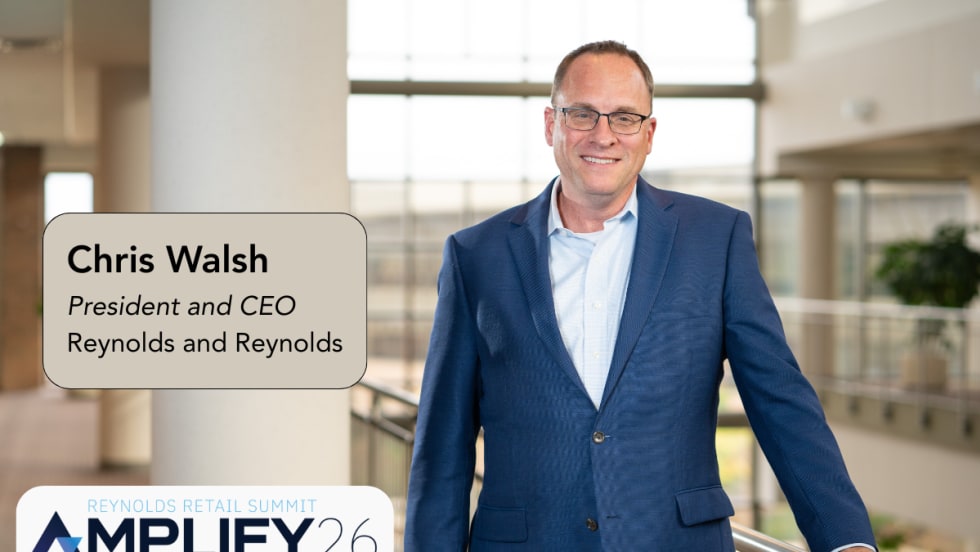
Amplify 2026 Billed as Turning Innovation Into Results
Reynolds and Reynolds says its annual retail summit will connect dealers with practical strategies, peer insight, and technology-driven ideas.
Read More →
Own Your Outcome: F&I in the Digital Customer Journey
Finance has historically been the last step in the car-buying process, but it doesn’t have to be. The customer’s journey starts long before they arrive at the dealership, and so should F&I’s involvement.
Read More →
Tariffs Could Raise Insurance Premiums
As U.S. import tariffs affect repair costs, consumers might find it more affordable to replace a damaged vehicle, according to recent Insurify tariff analysis.
Read More →
Smaller Loans, Longer Terms
The youngest generation of car buyers is more likely to finance less expensive vehicles, more than half of generation Z consumers borrowing less than $25,000.
Read More →
New Lifetime Battery F&I Product Meant to Drive Dealer Traffic
EFG Cos. offering is intended to create lifetime auto dealer engagement with customers.
Read More →
The Psychology Behind Menus That Increase Add-On Sales
There is a science to crafting a menu that gives customers confidence in the choices presented, and moving the process outside the F&I office can further boost results.
Read More →
Why Your F&I PVR Is Misleading You
Here’s a handy checklist of the numbers to track in 2026 instead.
Read More →
Auto Consumer Anxiety Presents Opportunity
A survey of U.S. drivers found the majority are concerned about finances and the economy, but those fears make many ready to buy vehicle-protection products.
Read More →