



March Sales Down 3.1% as SAAR Soars
The U.S. new-vehicle sales forecast improved to 17.42 million units in March, but sales fell 3.1% year-over-year against slowing demand fueled by higher interest rates, prices, and payments and reduced incentive spending.

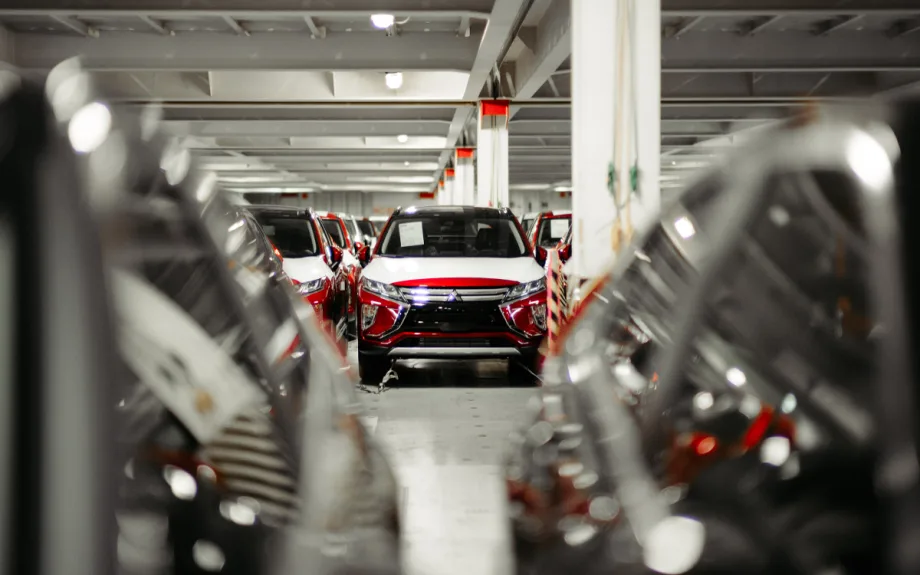
Sales of the Eclipse Cross and its Outlander stablemates helped propel Mitsubishi to a 37% year-over-year sales gain in March, leading all major manufacturers.
Photo courtesy Mitsubishi Motors North America
(Bobit) — U.S. auto dealers sold 1.61 million new light vehicles last month, an improvement on February’s 1.27 million-unit tally but a year-over-year decline of 3.1%, according to data and estimates compiled by Automotive News. Despite starting the year on three down months, forecasters raised the industry’s seasonally adjusted annualized rate to 17.42 million, up from 16.61 million in February and 17.33 million in March of last year.
Analysts agree demand has slipped in the face of higher interest rates, rising MSRPs, and tightening incentives. Those factors conspired to raise the average transaction price by 2.3%, according to Kelley Blue Book; Edmunds reports the average interest rate on a new-vehicle loan was 6.36% in March, up from 5.66% a year ago and 4.44% in March 2014.
In a statement, NADA Senior Economist Patrick Manzi added to that list waning momentum from the Trump administration’s 2018 tax cuts and uncertainty around increased tariffs for imported vehicles and parts.
“Economic growth is slowing and is expected to return to a more long-term trend level of growth around 2%. Unlike last year, the positive effects of tax cuts will be less pronounced this year. There’s uncertainty surrounding the implementation of tariffs on imported autos and auto parts,” Manzi said. “However, job gains have been steady and wage growth has been accelerating in recent months, which are both net positives for auto sales.”
Truck and utility sales helped drive Honda (4.3%), Hyundai (1.8%), Kia (10.2%), Subaru (6%), and Volkswagen (14%) to sales gains last month. But Mitsubishi put them all to shame, growing year-over-year sales by nearly 37% on the wheels of its Outlander, Outlander Sport, and Eclipse Cross CUVs.
March’s losers include General Motors (-8.3%), Ford (-5.2%), and Fiat Chrysler (-7.2%); FCA saw sales drop across each of its divisions, led by Fiat (-45.1%). Major import brands Toyota (-5.1%), Nissan (-7.2%), and Mazda (-19.1%) suffered as well.
Among highline manufacturers, BMW (2.9%), Audi (1.1%), Volvo (16.2%), Porsche (0.5%), Jaguar (12.9%), and Genesis (4.6%) all improved while Mercedes-Benz (-2.7%) and Land Rover (-13.5%) declined. Tesla continues to gain ground as it enters the mainstream, registering a 16.9% year-over-year increase.
“Results reported so far show no real surprises, given the expected trajectory for the full year and that the U.S. market has been stronger in the second half than the first for the past few years,” said Stephanie Brinley, principal automotive analyst at IHS Markit, noting that uncertainly among consumers should be eased if interest rates hold through 2019. “With automakers seeming to hold the line on incentives, we may also be seeing [the] impact of less to draw consumers into showrooms in the first quarter. As the year plays out and more new products arrive, we may still see some bright moments.”
Originally posted on Auto Dealer Today
More Showroom

California Sees Quarterly Gains
California’s new-vehicle market saw a boost in hybrids in the third quarter and its first overall quarterly market gain of the year.
Read More →
New-Vehicle Prices Stay Put
Affordability pressures and model availability shaped new-vehicle sales in September, according to an analysis by Kelley Blue Book.
Read More →
EV Buyer Consideration Shifts
What drives American consumers to purchase an electric vehicle is shifting as the question moves away from Should I?' to 'Which features and experience do I want to have?'
Read More →
Year-to-Date Auto Sales Holding Their Own
A forecast through August shows that automakers have shifted strategies to keep deliveries and revenues up despite tariffs and other economic challenges.
Read More →
Slow to Robo
Ten years of polling consumers shows autonomous vehicles’ profiles have risen considerably, but even more people now want at least some level of control if they go that route.
Read More →
Dealers a Little Down
A third-quarter Cox Automotive survey finds them in a mixed mood, bummed by fallen customer traffic but encouraged by better profits, costs and EV interest.
Read More →
European EV Sales Skyrocket
The EV market on the continent held strong in July with almost 25% of new-car sales being fully electric units, a stark contrast to the U.S., where EV sales declined about 42%.
Read More →
Mitsubishi Unveils U.S. Plan
The automaker announced a strategy that includes an expanded lineup and dealership presence, along with more ‘rugged’ and electric models.
Read More →
Used Lots Getting the Business
Many consumers are seeking out the units to save money, and the demand – higher in July than normal – is keeping supply limited and prices up.
Read More →
Used Market Stabilizes
The Carfax Used Car Index noted a major drop in used-vehicle price increases in July after several months of hikes.
Read More →