



Maturities Stretching, Delinquencies Increasing, Says NAF Association
Loan maturities stretched out in 2006, but so did delinquency rates, according to the National Automotive Finance (NAF) Association's annual survey.
Loan maturities stretched out in 2006, but so did delinquency rates, according to the National Automotive Finance (NAF) Association’s annual survey.
Conducted by Benchmark Consulting International — which surveyed a record 28 finance companies — the study revealed that 76 percent of new-car contracts were written at longer than 60 months. Sixty-five percent of contracts booked by banks and holding company subsidiaries were more than 60 months. That percentage dropped to 27 percent for contracts booked by independent financing companies.
The study also showed that year-over-year delinquency rates were significantly higher across the board in 2006, which NAF officials attributed to the 14 new respondents to this year’s survey.
However, looking at the data, account delinquency rates for small and medium respondents jumped from 6.2 percent in 2005 to 14.6 percent last year. Larger respondents saw account delinquency rates go from 6.8 percent in 2005 to 8 percent last year.
Weighted average origination ratios were down across the board, the study also showed, indicating the increased competition in the non-prime segment. However, the study found that data from 2005 and 2006 revealed a cumulative increase in originations of 13 percent in dollars and 12 percent in accounts. Despite the growth, nearly 75 percent of non-prime originations cluster in a credit score of 500 to 679.
Looking at originations, one-third of booked deals fell in the nonprime 550-619 FICO range, while 125 percent fell in the prime and super-prime range of 620 and above. Fifty-two percent fell in the high-risk and super high-risk categories of below 550.
Independent financing companies, which the study called small or medium respondents, also bought deeper than banks and holding company subsidiaries, with the average credit score for the independents being 485, an increase from 479 reported in 2005. The average credit score for banks and holding company subsidiaries, or what the study deemed larger respondents, was 591, an increase from the 589 average reported last year.
Origination dollars and accounts financed also showed year-over-year increases, as did portfolio dollars and accounts, which increased only slightly. Bankruptcy dollars and charge-offs based on bankruptcy decreased, which could be attributed to the changes in bankruptcy laws instituted at the end of 2005. Average monthly repossessions and dollar loss per repossessed unit increased 8 percent compared to 2005.
Despite participation being at a record high, the response rate for the survey has decreased over the last few years. Divided into categories based on size, independent finance companies made up 64 percent of the respondents this year. Banks or holding company subsidiaries made up the second largest group with 25 percent. Seven percent of respondents were manufacturers captive finance companies and 4 percent were dealer captive finance companies.
More F&I

Integrating Nontraditional F&I Products
The niche presents a strategic advantage for auto dealerships as they move to adapt to fast-changing consumer expectations in today’s market.
Read More →
Trust Is Personal
Technology, no matter how efficient, can’t replace what the human F&I manager can do, which is to bridge the divide between cyberspace and the in-store experience.
Read More →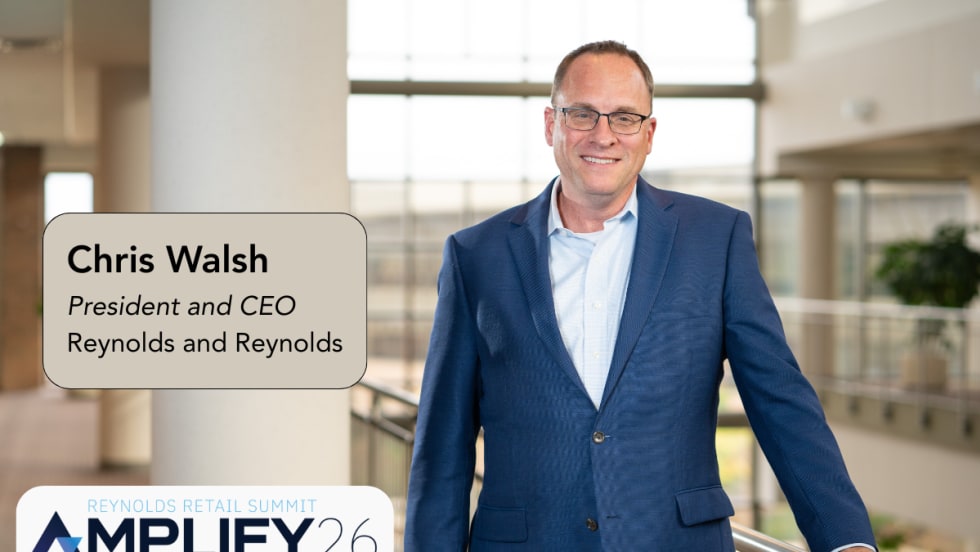
Amplify 2026 Billed as Turning Innovation Into Results
Reynolds and Reynolds says its annual retail summit will connect dealers with practical strategies, peer insight, and technology-driven ideas.
Read More →
Own Your Outcome: F&I in the Digital Customer Journey
Finance has historically been the last step in the car-buying process, but it doesn’t have to be. The customer’s journey starts long before they arrive at the dealership, and so should F&I’s involvement.
Read More →
Tariffs Could Raise Insurance Premiums
As U.S. import tariffs affect repair costs, consumers might find it more affordable to replace a damaged vehicle, according to recent Insurify tariff analysis.
Read More →
Smaller Loans, Longer Terms
The youngest generation of car buyers is more likely to finance less expensive vehicles, more than half of generation Z consumers borrowing less than $25,000.
Read More →
New Lifetime Battery F&I Product Meant to Drive Dealer Traffic
EFG Cos. offering is intended to create lifetime auto dealer engagement with customers.
Read More →
The Psychology Behind Menus That Increase Add-On Sales
There is a science to crafting a menu that gives customers confidence in the choices presented, and moving the process outside the F&I office can further boost results.
Read More →
Why Your F&I PVR Is Misleading You
Here’s a handy checklist of the numbers to track in 2026 instead.
Read More →
Auto Consumer Anxiety Presents Opportunity
A survey of U.S. drivers found the majority are concerned about finances and the economy, but those fears make many ready to buy vehicle-protection products.
Read More →