



Onyx Acceptance Reports Fourth Quarter Earnings
Onyx Acceptance Corporation has announced its financial and operational results for the quarter and year ended Dec. 31, 2000.
Net income and earnings per diluted share for the quarter were $887,290 and $0.17 respectively, compared to $2.6 million and $0.41 for the fourth quarter of 1999. Net income and earnings per diluted share for the year ended Dec. 31, 2000 were $5.8 million and $1.00 respectively, compared to $9.8 million and $1.50 for the same period in 1999.
The reduction in net income and earnings per share was the result of an increase in the off balance sheet loss reserve rate coupled with interest rate spread compression on contracts securitized during the year, according to a company statement. The company increased its reserve rate to counter the increase in delinquency experienced during the second half of the year.
The reduction in the interest rate spread during the fourth quarter was principally due to management's decision to increase its focus on credit quality, according to a company statement. As a result, the weighted average annual percentage rate for contracts securitized during the fourth quarter decreased to 13.95 percent, compared to 15.16 percent during the third quarter of 2000. These factors reduced the gain on sale as a percentage of contracts securitized to 1.55 percent for the fourth quarter of 2000, compared to 3.44 percent for the same period in 1999. For all of 2000, the gain on sale as a percentage of contracts securitized was 2.62 percent, compared to 3.72 percent for the same period in 1999.
Total revenues decreased slightly to $23.9 million during the fourth quarter of 2000, compared to $24.6 million in the same period in 1999. For the year ended 2000, total revenues were $100.9 million, compared to $94.7 million for the same period in 1999. The increase in total revenue for the year was the result of a significant increase in service fee income, according to a company statement.
Service fee income for the entire year of 2000 increased 64.4 percent to $47.5 million from $28.9 million for 1999. For the quarter, service fee income was $14.7 million compared to $9.1 million for the same period of 1999, an increase of 61.5 percent. Higher service fees, late fees and document fees related to the growth in the serviced portfolio was the predominant reason for the increase in service fee income, according to a company statement. The average serviced portfolio for the three months ended Dec. 31, 2000 was $2.6 billion, compared to $2.0 billion for the same period in 1999. For the year, the average serviced portfolio was $2.5 billion compared to $1.7 billion for 1999.
During the fourth quarter, the company recorded a gain on sale of contracts of $6.2 million, or 26.0 percent of total revenues, compared to $13.4 million or 58.1 percent of fourth quarter 1999 revenues. For the year, the company recorded a total gain of $45.0 million, or 44.6 percent of total revenue, compared to $53.9 million or 56.9 percent for all of 1999. The reduction of the gain was due to an increase in the loss reserve rate and reduced net interest rate spread on the securitizations in 2000 compared to the same periods in 1999. This reduction is in line with the company's decision to become less reliant on the initial gain-on-sale for its reported financial results.
Contract purchases for the quarter and year ended Dec. 31, 2000 were $401.2 million and $1.7 billion respectively, compared to $428.4 million and $1.56 billion for the same periods in 1999. The reduction in volume for the fourth quarter reflects management's ongoing focus on credit quality and the intense competition for near prime business in the current market.
Off balance sheet reserves as a percentage of securitized assets increased to 4.6 percent as of Dec. 31, 2000, compared to 4.4 percent as of Dec. 31, 1999.
Net interest income for the quarter was $3.0 million compared to $2.1 million for the same period in 1999. For the year, net interest income was $8.3 million, compared to $11.9 million for all of 1999. The reduction in net interest income for the year was principally due to the prefunded structure of all four securitizations executed in 2000 compared to only one prefunded securitization executed in 1999. A prefunded securitization reduces the time period that contracts are held for sale, and, as a result, reduces the interest income earned on the related contracts.
Operating expenses totaled $20.4 million or 3.10 percent of average serviced contracts for the fourth quarter of 2000, compared to $18.3 million or 3.61 percent for the same period in 1999. For the year, total operating expenses were $84.3 million or 3.43 percent, compared to $71.0 million or 4.10 percent for the same period in 1999.
Total delinquencies as a percentage of the period-end serviced portfolio increased to 4.14 percent from 2.81 percent at year-end 1999. Annualized net charge-offs as a percent of the average servicing portfolio increased to 2.42 percent during the fourth quarter of 2000, from 2.09 percent for the same period in 1999. For the year, net charge-offs were 2.30 percent compared to 1.85 percent for 1999. The delinquency rates have been impacted by the transfer of east-coast accounts to the St. Louis, Mo., collection center before the staff was fully trained and capable to handle the additional work load, according to a company statement. "Management believes that the company's overall delinquency will improve in the forthcoming quarters as the new collection center becomes fully staffed and trained," the statement reads.
During the fourth quarter, the company purchased 258,273 shares of its common stock as part of its stock repurchase program authorized by its Board of Directors in May of 2000. As of Dec. 31, 2000, the company had retired approximately 1.2 million shares of its common stock, and had expended approximately $5.3 million in connection with this program. Repurchases may continue from time to time at prevailing market prices, through open market or unsolicited negotiated transactions, depending upon market conditions, according to a company statement. "The company may discontinue purchases at any time that management determines additional purchases are not warranted," the statement reads.
More F&I

Integrating Nontraditional F&I Products
The niche presents a strategic advantage for auto dealerships as they move to adapt to fast-changing consumer expectations in today’s market.
Read More →
Trust Is Personal
Technology, no matter how efficient, can’t replace what the human F&I manager can do, which is to bridge the divide between cyberspace and the in-store experience.
Read More →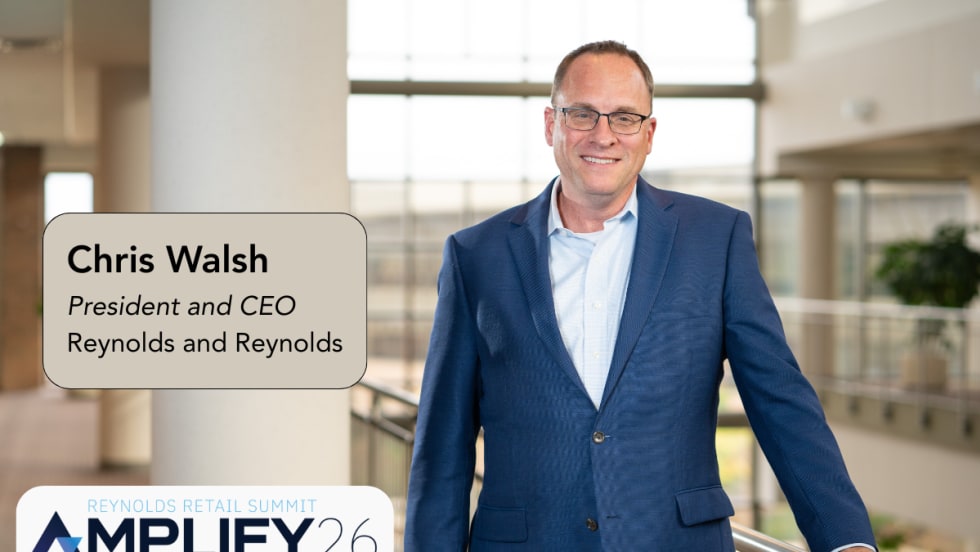
Amplify 2026 Billed as Turning Innovation Into Results
Reynolds and Reynolds says its annual retail summit will connect dealers with practical strategies, peer insight, and technology-driven ideas.
Read More →
Own Your Outcome: F&I in the Digital Customer Journey
Finance has historically been the last step in the car-buying process, but it doesn’t have to be. The customer’s journey starts long before they arrive at the dealership, and so should F&I’s involvement.
Read More →
Tariffs Could Raise Insurance Premiums
As U.S. import tariffs affect repair costs, consumers might find it more affordable to replace a damaged vehicle, according to recent Insurify tariff analysis.
Read More →
Smaller Loans, Longer Terms
The youngest generation of car buyers is more likely to finance less expensive vehicles, more than half of generation Z consumers borrowing less than $25,000.
Read More →
New Lifetime Battery F&I Product Meant to Drive Dealer Traffic
EFG Cos. offering is intended to create lifetime auto dealer engagement with customers.
Read More →
The Psychology Behind Menus That Increase Add-On Sales
There is a science to crafting a menu that gives customers confidence in the choices presented, and moving the process outside the F&I office can further boost results.
Read More →
Why Your F&I PVR Is Misleading You
Here’s a handy checklist of the numbers to track in 2026 instead.
Read More →
Auto Consumer Anxiety Presents Opportunity
A survey of U.S. drivers found the majority are concerned about finances and the economy, but those fears make many ready to buy vehicle-protection products.
Read More →