



Rising Consumer Confidence, Employment Lead to Improved Vehicle Sales in 2010, Says NADA Economist
U.S. light-vehicle sales will reach just short of 12 million units in 2010 as credit becomes more available and consumer confidence improves with rising employment, said Paul Taylor, chief economist for the National Automobile Dealers Association.
ORLANDO, Fla.– U.S. light-vehicle sales will reach just short of 12 million units in 2010 as credit becomes more available and consumer confidence improves with rising employment, said Paul Taylor, chief economist for the National Automobile Dealers Association.
“Industry sales will increase to 11.9 million light vehicles for 2010,” Taylor said.
Speaking at the NADA Convention & Exposition in Orlando, Taylor reported that sales of crossover utilities and small and midsize cars improved in January compared to the same month last year. January sales of crossovers, the only vehicle segment whose sales improved in 2009, were up about 14 percent compared to January 2009, Taylor said. Sales of midsize cars are also gaining, he said, outpacing last year’s monthly result by about 21 percent.
Hybrid vehicle sales declined in 2009 but less than the overall industry. Toyota continues to lead the way, accounting for more than two-thirds of hybrid sales in 2009.
Developments in 2009 also had an impact on automakers’ shares of the market. Taylor reported that General Motors and Chrysler both lost market share in 2009 as they underwent bankruptcies and slowed production. Ford Motor Co. and Hyundai improved their respective shares of the market by producing small, fuel-efficient cars and crossovers.
One bright spot for the industry in 2009 was “cash for clunkers,” giving sales a big boost in the fourth quarter. “‘Cash for clunkers’ made new-vehicle ownership possible for many consumers who have never purchased a new car before,” Taylor said. “It was also a boon for dealers, who saw showroom traffic increase dramatically. Many new cars and trucks were sold to buyers who did not have a qualifying ‘clunker’ trade-in,” Taylor added.
Slow new-car sales in 2008 and 2009 contributed to a shortage of used cars that lifted used-car prices, Taylor said. According to data provided to NADA through a partnership with the National Auto Auction Association, the average price of one- to five-year-old vehicles improved last year in every segment. “And strong used-car prices help new-car sales,” Taylor said.
Jonathan Banks, senior director of editorial and data services for NADA Used Car Guide, reported that all used-vehicle segments posted double-digit percentage increases year-over-year in January, compared to the low points experienced during 2009. He said that values on most segments are in line or above pre-recessionary levels.
Looking ahead, Banks said the economic fundamentals point to a strong used-car market in 2010.
“Used-vehicle supply, even with the expected million-plus increase in trade-ins, will remain relatively low,” he said. “Economic fundamentals point to improved demand, and more constraint on new-car production should keep those transaction prices in check. Seasonality effects are expected, but will be muted since used-vehicle prices are positioned relatively high compared to prices during the past five years.”
Banks added that gas prices remain the “wild card” factor for the year, as some forecasters expect fuel prices to reach and top $3 per gallon. He noted that NADA will monitor that metric and make adjustments to forecasts, if necessary.
On the Toyota situation, Banks said its values are expected to experience above-average deterioration during the next six months and settle in at a lower premium, compared to substitute models with comparable quality. “In the short-term, there will be a potential lift in competitive prices as dealers migrate towards other options,” he added. “This has already been witnessed in the new car side for both retail and fleet sales.”
More F&I

Integrating Nontraditional F&I Products
The niche presents a strategic advantage for auto dealerships as they move to adapt to fast-changing consumer expectations in today’s market.
Read More →
Trust Is Personal
Technology, no matter how efficient, can’t replace what the human F&I manager can do, which is to bridge the divide between cyberspace and the in-store experience.
Read More →
Amplify 2026 Billed as Turning Innovation Into Results
Reynolds and Reynolds says its annual retail summit will connect dealers with practical strategies, peer insight, and technology-driven ideas.
Read More →
Own Your Outcome: F&I in the Digital Customer Journey
Finance has historically been the last step in the car-buying process, but it doesn’t have to be. The customer’s journey starts long before they arrive at the dealership, and so should F&I’s involvement.
Read More →
Tariffs Could Raise Insurance Premiums
As U.S. import tariffs affect repair costs, consumers might find it more affordable to replace a damaged vehicle, according to recent Insurify tariff analysis.
Read More →
Smaller Loans, Longer Terms
The youngest generation of car buyers is more likely to finance less expensive vehicles, more than half of generation Z consumers borrowing less than $25,000.
Read More →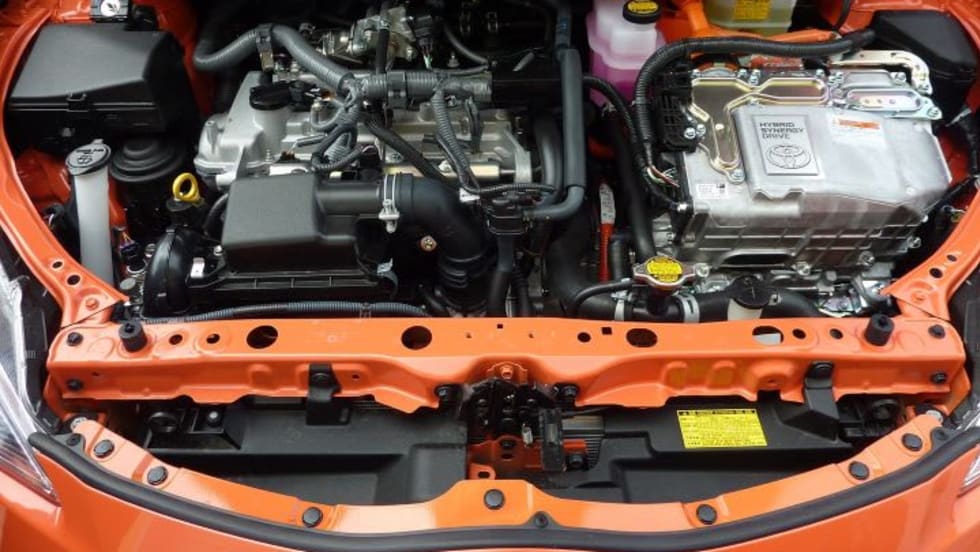
New Lifetime Battery F&I Product Meant to Drive Dealer Traffic
EFG Cos. offering is intended to create lifetime auto dealer engagement with customers.
Read More →
The Psychology Behind Menus That Increase Add-On Sales
There is a science to crafting a menu that gives customers confidence in the choices presented, and moving the process outside the F&I office can further boost results.
Read More →
Why Your F&I PVR Is Misleading You
Here’s a handy checklist of the numbers to track in 2026 instead.
Read More →
Auto Consumer Anxiety Presents Opportunity
A survey of U.S. drivers found the majority are concerned about finances and the economy, but those fears make many ready to buy vehicle-protection products.
Read More →