



Special Financing Rates Have Become Less Attractive to Automotive Dealers
Dealer Satisfaction Remains at Historically High Levels
Special automotive financing rates offered as consumer incentives by manufacturers have begun to lose their luster with dealers, according to the J.D. Power and Associates 2003 Dealer Attitude Study(SM) released Dec. 23.
The study finds that just 51 percent of dealers now consider special financing rates, such as zero percent financing, a very effective incentive -- down from 71 percent of dealers in 2002.
The percentage of dealers preferring special finance rates over other options has declined dramatically, from 35 percent in 2002 to 14 percent in 2003. Instead, dealer cash is now viewed as a very effective incentive by 64 percent of dealers and is the preferred incentive for an overwhelming 60 percent of dealers.
"Discounted financing and other incentives successfully helped maintain positive momentum for the industry over the past two years, but special financing rates may no longer draw the attention of buyers as they once did, and dealers are welcoming alternative incentives," Dennis Galbraith, senior director of research at J.D. Power and Associates.
Dealer satisfaction with manufacturers remains at historically high levels, continuing a strong turnaround from extremely low levels experienced in 2000. The Dealer Satisfaction Index average has increased for the third consecutive year to an industry average of 111 points in 2003, up from 108 in 2002.
Lexus continues to set the satisfaction benchmark with dealers, ranking highest in the index at 168 points. Toyota (142), Saturn (141), BMW (138) and Volvo (137) follow in the rankings, respectively.
Dealers' satisfaction with domestic manufacturers continues to improve dramatically over 2001 levels, yet still trails the Asian and European brands overall. Both Asian and European manufacturers experienced small declines in dealer satisfaction over 2002. General Motors brands have experienced satisfaction improvements in every domestic division except Saturn, while Ford experienced gains in its Ford, Lincoln and Mercury brands. However, DaimlerChrysler's Chrysler, Dodge and Jeep brands are all experiencing declining satisfaction among their dealer networks.
Although most foreign brands are witnessing declining dealer satisfaction, Infiniti, Kia and Volvo brands improved in dealer relations over 2002. Saab has improved more than any other brand-from 108 index points in 2002 to 128 in 2003. On the other end of the scale, Mitsubishi has experienced the greatest drop in dealer satisfaction -- falling from a very respectable 122 in 2002 to 91 in 2003 -- with satisfaction dropping most notably in the area of profitability.
"As the distribution link between manufacturers and the consumers who drive their vehicles, dealers are essential to manufacturers and a good relationship with the dealer network is cherished by virtually all brands," Galbraith said. "As we have seen, dealer relations can quickly sour, which is why manufacturers must not take for granted continuous, good communications with their dealers."
The study finds that dealers tend to be most concerned about product, price and costs. The most frequently recommended methods of improving dealer relations include an elimination of what dealers perceive as an effort to shift costs to them; an increase in the margin between MSRP and invoice; and the introduction of new, more marketable products.
The 2003 Dealer Attitude Study is based on responses from 2,968 dealers surveyed in September and October 2003.
About J.D. Power and Associates
Headquartered in Westlake Village, Calif., J.D. Power and Associates is an ISO 9001-registered global marketing information services firm operating in business sectors including market research, forecasting, consulting, training and customer satisfaction.
The firm's quality and satisfaction measurements are based on responses from millions of consumers annually.
For more information, visit www.jdpower.com.
More F&I

Integrating Nontraditional F&I Products
The niche presents a strategic advantage for auto dealerships as they move to adapt to fast-changing consumer expectations in today’s market.
Read More →
Trust Is Personal
Technology, no matter how efficient, can’t replace what the human F&I manager can do, which is to bridge the divide between cyberspace and the in-store experience.
Read More →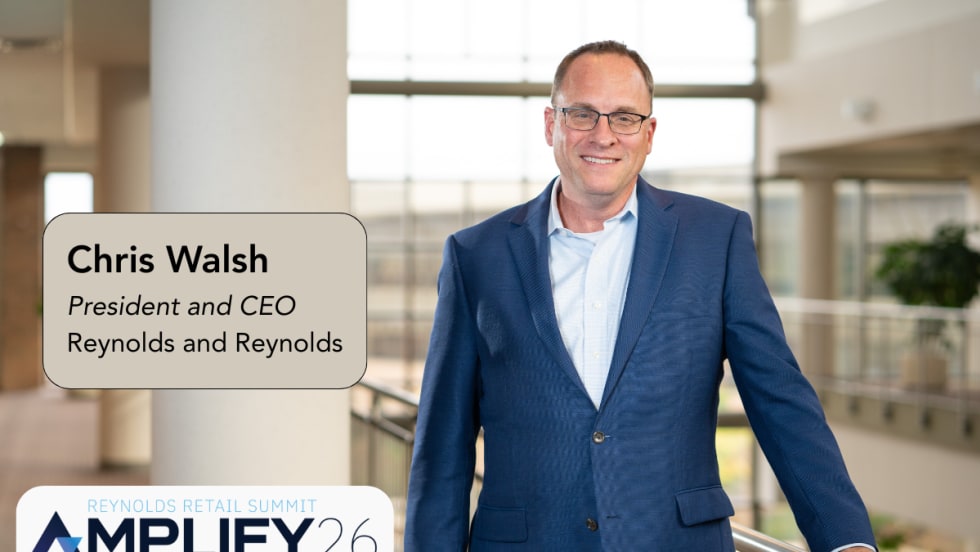
Amplify 2026 Billed as Turning Innovation Into Results
Reynolds and Reynolds says its annual retail summit will connect dealers with practical strategies, peer insight, and technology-driven ideas.
Read More →
Own Your Outcome: F&I in the Digital Customer Journey
Finance has historically been the last step in the car-buying process, but it doesn’t have to be. The customer’s journey starts long before they arrive at the dealership, and so should F&I’s involvement.
Read More →
Tariffs Could Raise Insurance Premiums
As U.S. import tariffs affect repair costs, consumers might find it more affordable to replace a damaged vehicle, according to recent Insurify tariff analysis.
Read More →
Smaller Loans, Longer Terms
The youngest generation of car buyers is more likely to finance less expensive vehicles, more than half of generation Z consumers borrowing less than $25,000.
Read More →
New Lifetime Battery F&I Product Meant to Drive Dealer Traffic
EFG Cos. offering is intended to create lifetime auto dealer engagement with customers.
Read More →
The Psychology Behind Menus That Increase Add-On Sales
There is a science to crafting a menu that gives customers confidence in the choices presented, and moving the process outside the F&I office can further boost results.
Read More →
Why Your F&I PVR Is Misleading You
Here’s a handy checklist of the numbers to track in 2026 instead.
Read More →
Auto Consumer Anxiety Presents Opportunity
A survey of U.S. drivers found the majority are concerned about finances and the economy, but those fears make many ready to buy vehicle-protection products.
Read More →