



Tesla vs. Firetruck: Feds to Investigate Latest Incident
Tesla’s ‘Autopilot’ setting has once again drawn interest from regulators after a Model S plowed into a parked firetruck.
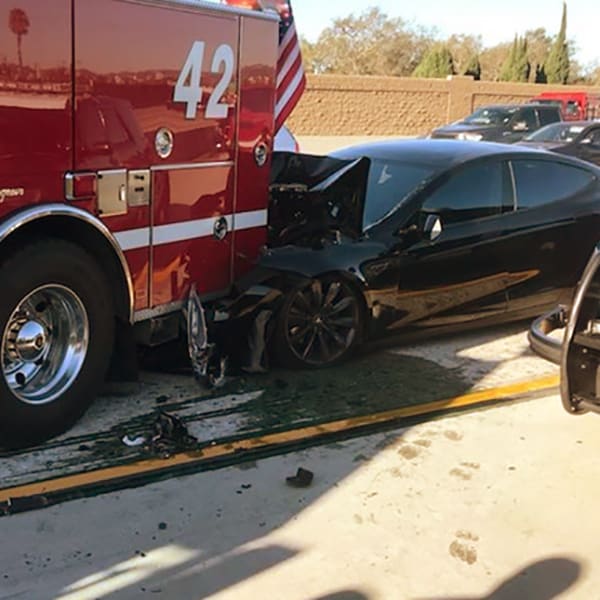
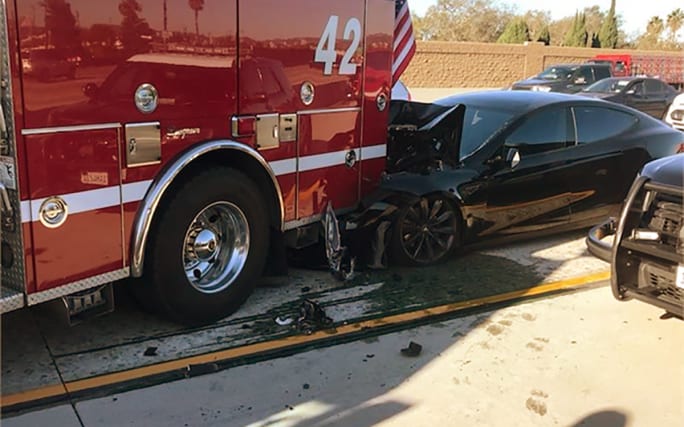
The driver of a Tesla Model S said the car was in “Autopilot” mode when it crashed into a fire truck in Culver City, Calif., on Jan. 22. Photo courtesy Culver City Fire Department via Twitter
CULVER CITY, Calif. — Two federal safety agencies have opened investigations into why a Tesla Model S — which the driver said was operating in “Autopilot” mode — plowed into a firetruck parked on the side of a Los Angeles-area freeway, according to Reuters and Bloomberg reports.
The National Highway Traffic Safety Administration (NHTSA) and the National Transportation Safety Board (NTSB) will conduct separate probes of the Jan. 22 crash, focusing primarily on the performance of the car’s advanced driver-assistance systems and the driver’s actions. The collision occurred while Culver City firefighters were assisting with the cleanup of an earlier crash on the 405 freeway.
Though the Tesla Model S was traveling 65 miles per hour, nobody was injured in the crash, according to a tweet that the Culver City Firefighters union sent out shortly after the accident.
A Tesla Model S in Autopilot — or semi-autonomous — mode uses advanced driver assistance systems, but still falls well short of industry criteria for what’s considered a fully automated vehicle. The driver, according to Tesla, still needs to be fully attentive.
This isn’t the first time a crash involving a Tesla in Autopilot mode has drawn federal scrutiny.
Last September, NTSB ruled that the probable cause of a 2016 fatal crash involving a Tesla Model S 70D was a truck driver’s failure to yield the right of way and the Tesla driver’s “inattention due to over-reliance on vehicle automation.” Months earlier, NHTSA had also concluded that the Tesla sedan had no safety defects that contributed to the deadly collision in Florida.
If NHTSA’s probe into the California crash uncovers a vehicle safety defect, the agency can direct Tesla to issue a safety recall to resolve the problem.
More Showroom

Mitsubishi Unveils U.S. Plan
The automaker announced a strategy that includes an expanded lineup and dealership presence, along with more ‘rugged’ and electric models.
Read More →
Used Lots Getting the Business
Many consumers are seeking out the units to save money, and the demand – higher in July than normal – is keeping supply limited and prices up.
Read More →
Used Market Stabilizes
The Carfax Used Car Index noted a major drop in used-vehicle price increases in July after several months of hikes.
Read More →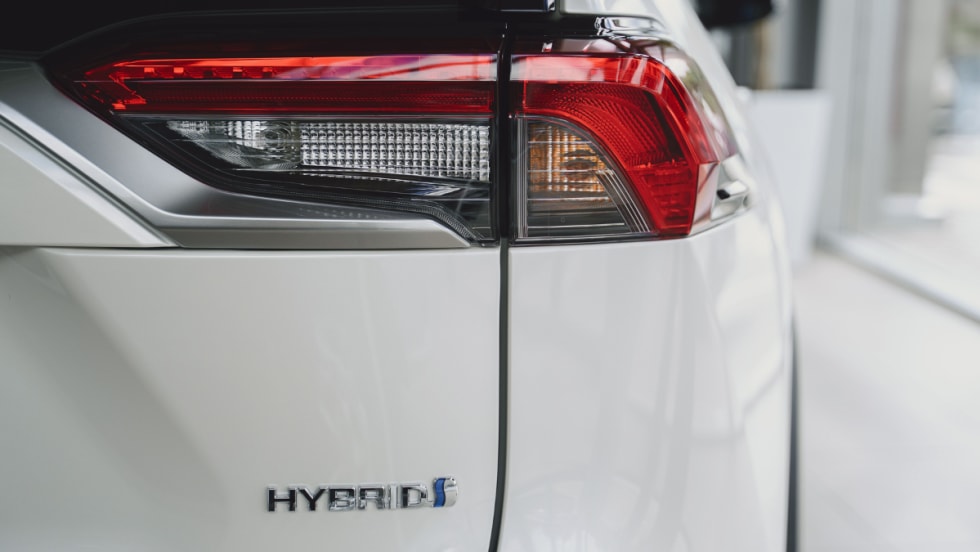
California Hybrids Reach State Record
The Golden State still leads the country in electric-vehicle registrations, but much like the rest of the U.S. its hybrid market share is up while full electrics stabilize after a dramatic first-quarter dip.
Read More →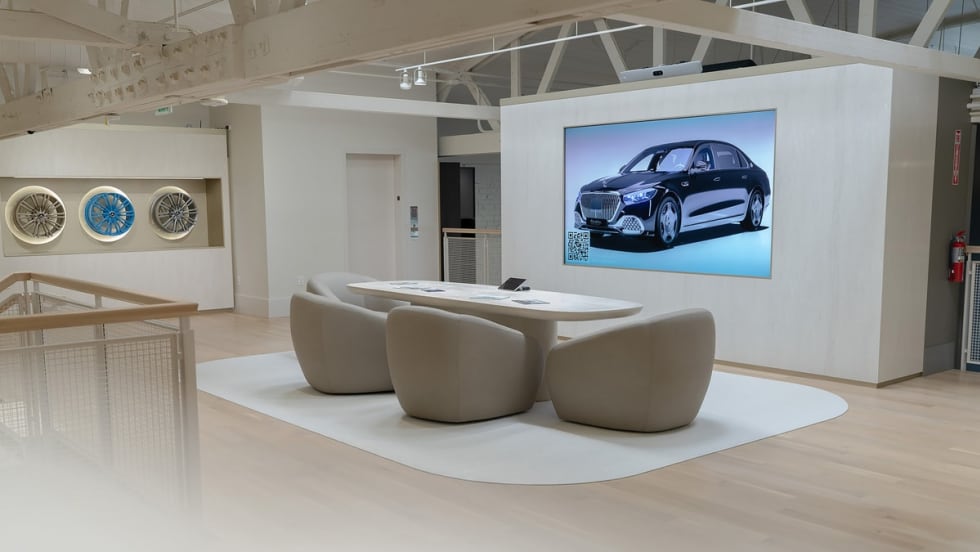
My Mercedes in the U.S.
The German brand debuted its studio dealership concept for the first time in the states in Los Angeles, tapping Americans’ penchant for creative distinctions.
Read More →
Used Sales Hit Summer Drag
The vacation season, combined with high prices, has dented deliveries and added to inventories, though supply is still slim enough to keep listings elevated.
Read More →
California Launches EV Rebate Program
Participating automakers are matching the state's $13.5 million investment in new electric-vehicle rebates scheduled to take effect later this summer.
Read More →
OEM Poll Sees Industry Evolution
Kerrigan Advisors’ survey of automakers finds that tariffs, technology, network tightening and other factors are poised to reshape auto retail.
Read More →
The Trade-In Paradox
Retailing older cars with confidence in today’s market is a matter of establishing and following a clear process that can turn greater profit for auto dealers as they aim to meet used-unit hunger.
Read More →
Focus on Vehicle Cabins
The market for interior materials will grow in coming years as automakers look to meet consumer demand while staying competitive with changeups to sourcing and included features.
Read More →