



U.S. In a Recession, Says NBER
As automaker executives return to Congress today to make their second bid for $25 billion in loans, they will do so with the grim news that the nation is in a recession.
As automaker executives return to Congress today to make their second bid for $25 billion in loans, they will do so with the grim news that the nation is in a recession.
Chrysler, General Motors and Ford will present restructuring plans to reassure Congress that funding will not go to waste. However, the Big 3 will be doing so on the heels of new evidence from the National Bureau of Economic Research (NBER) that the nation isn't just in a recession, but it's been in one since December 2007.
A recession is defined as a significant decline in economic activity across the economy, lasting more than a few months. Key indicators of a recession include production, employment, real income, and more.
The payroll employment measure, which the NBER said was the most reliable, reached its peak in December 2007. It has declined every month since, according to the report. Other indicators – including real personal income, real manufacturing and wholesale-retail trade sales, industrial products, and household employment estimates – peaked between November 2007 and June 2008.
"The committee determined that the decline in economic activity in 2008 met the standard for a recession," read the report from the NBER, a non-profit research organization. "All evidence other than the ambiguous quarterly product-side measure of domestic production confirmed that conclusion."
In Texas to address the Greater Austin Chamber of Commerce, Fed Chairman Ben Bernanke talked about the crisis and the policies the Fed has implemented. Although he didn't address the news from the NBER, he said recent events have revealed a serious weakness in the financial system.
"As you know, this extraordinary period of financial turbulence is now well into its second year," he said. "Triggered by the contraction of the U.S. housing market that began in 2006 and the associated rise in delinquencies in subprime mortgages, the crisis has become global and is now affecting a wide range of financial institutions, asset classes, and markets."
Bernanke talked about the Fed's three-pronged approach to dealing with the crisis, which included the easing of monetary policy, providing support to the functioning of credit market, and use of all tools to promote financial stability.
Despite the efforts of the Federal Reserve and other policymakers, Bernanke said it was clear economic activity had weakened even before the financial crisis this past fall. The sharp falloff in consumer spending over the summer was particularly striking, he added.
According to the latest estimates, real gross domestic product declined at an annual rate of 0.5 percent in the third quarter, with personal consumption falling at an annual rate of 3.7 percent.
" ... Economic activity appears to have shifted further in the wake of the deterioration in financial conditions in September,"
he said. "Employment losses, which had been averaging about 100,000 per month for much of the year, accelerated to more than 250,000 per month, on average, in September and October, and the unemployment rate jumped to 6.5 percent in October."
Add the continued stress in the housing market, Bernanke said it is clear household spending is seriously retrenching, putting consumer spending on pace for another sharp decline. "In particular, sales of light motor vehicles fell to an annual rate of 10.5 million units in October, the lowest level since 1983, and November sales reports are downbeat," he said.
Despite all the bad news, Bernanke did offer some positives. He talked about how the pronounced declined in crude oil and other commodities have helped reverse what had been a drag on household spending. He also talked about how funding costs for banks and commercial paper issuers have dropped. Still, Bernanke said investors still remain skittish.
He added that while the near-term outlook remains weak, there are several factors that are likely to promote a return to solid gains in economic activity, including the stabilization of the housing market.
Bernanke also indicated that the Federal Reserve could provide further help by purchasing longer-term Treasury or agency securities on the open market in substantial quantities. He also said the Fed could provide backstop liquidity to financial institutions, as well as directly to certain financial markets. He concluded by saying the Fed will continue to work with the Treasury, the Federal Deposit Insurance Corporation, and other agencies to turn the crisis around.
"I have not discussed the international response to the crisis today, but policymakers abroad as well as those in the United States have taken a series of extraordinary steps to address an extraordinary situation," he said. "I'm not suggesting the way forward will be easy. But I believe that the policy responses taken here and by our international partners, together with underlying vitality and resilience of the American economy, will help restore confidence to our financial system and place our economy back on the path to vigorous growth."
More F&I

Integrating Nontraditional F&I Products
The niche presents a strategic advantage for auto dealerships as they move to adapt to fast-changing consumer expectations in today’s market.
Read More →
Trust Is Personal
Technology, no matter how efficient, can’t replace what the human F&I manager can do, which is to bridge the divide between cyberspace and the in-store experience.
Read More →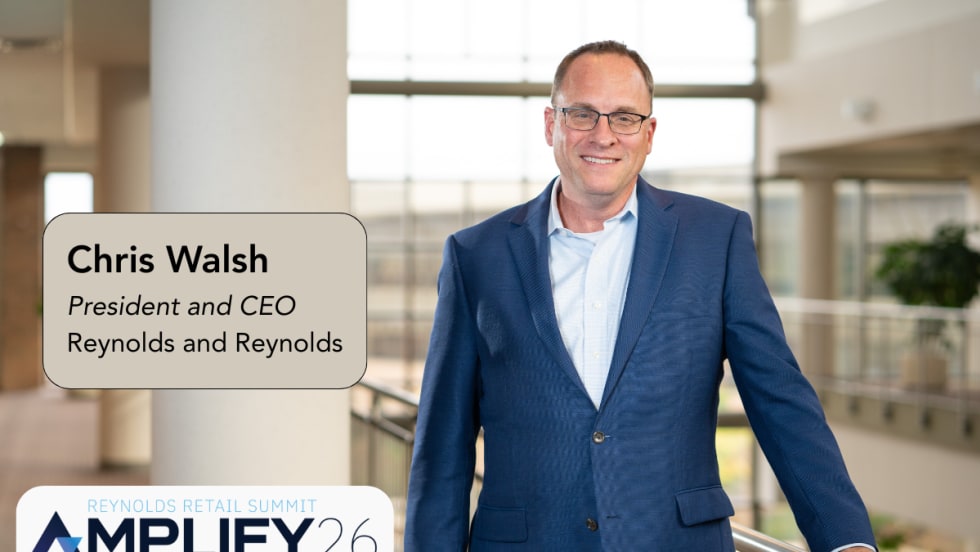
Amplify 2026 Billed as Turning Innovation Into Results
Reynolds and Reynolds says its annual retail summit will connect dealers with practical strategies, peer insight, and technology-driven ideas.
Read More →
Own Your Outcome: F&I in the Digital Customer Journey
Finance has historically been the last step in the car-buying process, but it doesn’t have to be. The customer’s journey starts long before they arrive at the dealership, and so should F&I’s involvement.
Read More →
Tariffs Could Raise Insurance Premiums
As U.S. import tariffs affect repair costs, consumers might find it more affordable to replace a damaged vehicle, according to recent Insurify tariff analysis.
Read More →
Smaller Loans, Longer Terms
The youngest generation of car buyers is more likely to finance less expensive vehicles, more than half of generation Z consumers borrowing less than $25,000.
Read More →
New Lifetime Battery F&I Product Meant to Drive Dealer Traffic
EFG Cos. offering is intended to create lifetime auto dealer engagement with customers.
Read More →
The Psychology Behind Menus That Increase Add-On Sales
There is a science to crafting a menu that gives customers confidence in the choices presented, and moving the process outside the F&I office can further boost results.
Read More →
Why Your F&I PVR Is Misleading You
Here’s a handy checklist of the numbers to track in 2026 instead.
Read More →
Auto Consumer Anxiety Presents Opportunity
A survey of U.S. drivers found the majority are concerned about finances and the economy, but those fears make many ready to buy vehicle-protection products.
Read More →