



Weekly Market Update: Insights Report
Days-to-turn for used retail listings have been increasing, as retail demand softened over the last few weeks.

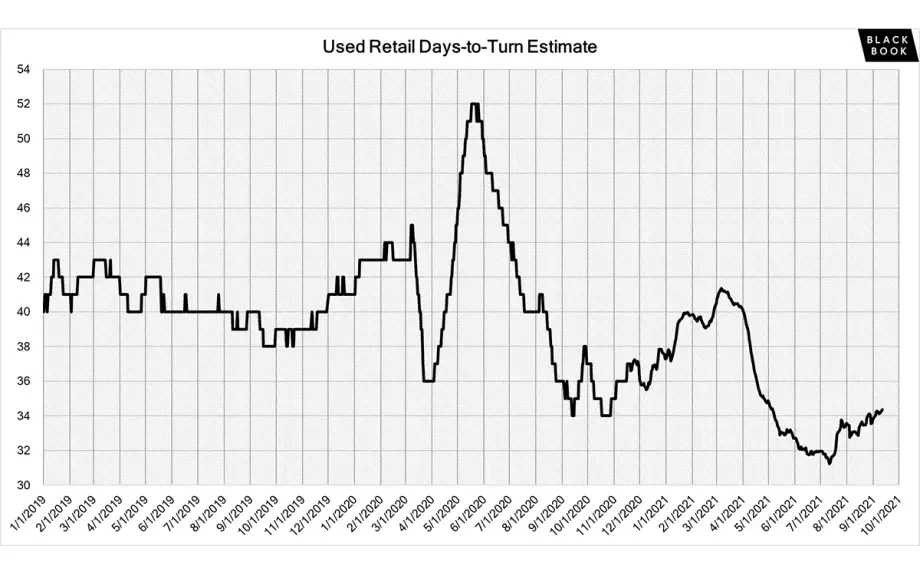
Days-to-turn for used retail listings have been increasing, as retail demand softened over the last few weeks.
Wholesale Prices, Week Ending September 11th
The wholesale market continued to gain strength this past week, with the majority of segments reporting week-over-week gains. Available wholesale inventory remains extremely limited and is pushing buyers to increase the price they are willing to pay. Dealers are anticipating demand for used vehicles to remain strong due the continued new inventory production delays and a consumer need for replacement vehicles from the damages of hurricane Ida in the South and Northeast.
This Week Last Week 2017-2019 Average (Same Week)
Car segments +0.31% +0.18% -0.22%
Truck & SUV segments +0.09% -0.02% -0.14%
Market +0.17% +0.04% -0.18%
Car Segments
On a volume-weighted basis, the overall Car segment increased +0.31%. For reference, the previous week cars increased by +0.18%.
Seven of the nine car segments reported gains last week, with Compact Car (+0.90%) having the largest increase, marking the fourth week of increases for the segment.
Full-Size and Sporty Car were the only segments to report declines, although they were minimal at -0.03% and -0.05%, respectively.
Truck / SUV Segments
The volume-weighted, overall Truck segment increased +0.09%, compared to last week’s decline of -0.02%.
The Full-Size segments, both SUVs (mainstream at -0.01% and luxury at -0.11%) and Pickups, were the only Truck segments to report declines. The SUV segments were minimal compared to the Pickups that declined by -0.42%.
Vans continued to increase, with Minivan (+0.93%) and Compact Van (+1.12%) reporting the largest increases last week.
Weekly Wholesale Index
Calendar year 2020 ended with used wholesale prices at elevated levels. With economic patterns (including the automotive market) driven by the pandemic, normal seasonal patterns (e.g., 2019 calendar year) in the wholesale market were not observed for most of the year. We saw a similar picture in 2009, at the end of the Great Recession. Calendar year 2021 has not had typical seasonality patterns as the market has had rapid increases in wholesale values for the majority of the year. After reaching record heights at the end of June, wholesale prices began to decline at a rate higher than the typical seasonal decline. As we move into the Fall season, wholesale prices are beginning to show positive movement once again.
The graph below looks at trends in wholesale prices of 2-6-year-old vehicles, indexed to the first week of the year.
Retail (New and Used) Insights
Production challenges continue for GM, Toyota, Ford, and more:
Last week, GM announced the re-opening of their Full-Size Pickup Truck production facilities, but some of their crossover plants will remain closed this week.
Toyota also announced further production cuts that will impact their October output due to shortages of microchips and other necessary parts.
A Ford plant, responsible for Mustang production, will be closed until September 20th due to a gas leak.
Chevrolet unveiled the refreshed interior of the Silverado 1500, as well as the announcement of the off-road capable ZR2 trim, competitor to the Ford F-150 Raptor and Ram 1500 TRX.
In positive news for Toyota, the automaker is set to have sales begin next month for their new Sub-Compact Crossover to be called Corolla Cross. It will slot in between the C-HR and Rav4 with have a starting price under $24,000.
Used Retail Prices
With the proliferation of ‘no-haggle pricing’ for used-vehicle retailing, asking prices accurately measure trends in the retail space. Retail demand slowed down at the end of last year, and thus resulted in declining retail asking prices for the last several weeks of 2020. As demand rebounded, retail prices have lagged slightly behind wholesale prices, but March had an accelerated growth in retail prices. In April and May, retail prices picked up speed as demand accelerated, fueled by stimulus payments, tax season, and shortages of new inventory. In June, retail prices continued to rise. After strong Spring and Summer months, retail listing prices seemed to stabilize at a level more than 24% above where we started the year.
This analysis is based on approximately two million vehicles listed for sale on US dealer lots. The graph below looks at 2-6-year-old vehicles.
Inventory
Used Retail
Current used retail listing volume is about 15% below the start of the year. Used inventory is now starting to decrease again due to a slowdown of trade-ins and lease returns.
Days-to-turn for used retail listings have been increasing, as retail demand softened over the last few weeks. The days-to-turn now sits just above 34 days, which is still lower than what is typically expected in a normal year.
Wholesale
Sales rates resumed their increases last week, as buyers flocked to the auctions to prepare their lots for the continued used market strength. This strength is a result of the production delays that has depleted new inventory as well as dealers preparing for consumers that are seeking replacement vehicles from the destruction caused by hurricane Ida.
Newer used units are seeing considerable strength as they provide dealers with new car substitutes for their customers. The overall wholesale market for 2-8-year-old vehicles increased by +0.17% last week, but 0-2-year-old increased +0.27%.
The National Auto Auction Association (NAAA) made the decision last week to postpone their annual convention that was set to be held later this month in Chicago. A new date for the convention has not been determined yet by the organization.
More Auto Finance

Interest Rates Further Squeeze Auto Consumers
Last month’s hike and a potential second increase this month add to a growing list of inflation woes that could continue to dent overall car sales.
Read More →
Mind Your Process
Consistent steps taken in various aspects of the F&I office can make valuable differences over time, similar to an outline for a best-selling book.
Read More →
Top Five Credit Application Fraud Flags
Compliance audits regularly reveal bad habits that can lead to fraud charges and should have been stamped out decades ago.
Read More →
More Auto Loans for the Taking in August
Riskier categories were on the uptick for the month as lenders loosened access in several areas while balancing out the exposure in another, Cox Automotive reported.
Read More →
July Was Hot for Auto Borrowers
Credit proved readily available for many, but most loans left buyers in negative territory, Cox Automotive said.
Read More →
Dealer Lender Preferences Revealed
When lenders provide consistent, fast service, their overall satisfaction scores with dealers greatly improve, according to JD Power research.
Read More →
Auto Refi Savings Surge
Consumers with 84-month auto loan terms who refinanced saved the most on monthly payments, according to a new report by auto refinancing provider Caribou.
Read More →
Subaru Enters Lending Business
The automaker follows other brands in adding captive financing in the U.S., and says the move will strengthen its position here.
Read More →
Positive Equity Reaches Record High
Mainstream vehicle owners who bought a car seven years ago are likely to have positive equity when trading in for a new vehicle, according to second-quarter Edmunds data.
Read More →
Dealerships Are Paying the Price for Extended Car Loans
Growing negative-equity scenarios mean such lengthy terms should be addressed in a forward-looking way to make them work for the dealer and the consumer down the road.
Read More →