



Evergreen Bank Moves to Flat Fees Due to Regulatory Pressures
Earlier this month, Evergreen Bank Group issued a statement about its decision to move to a flat fee pricing model. The move was in response to a low FDIC rating and alleged violations of the ECOA.

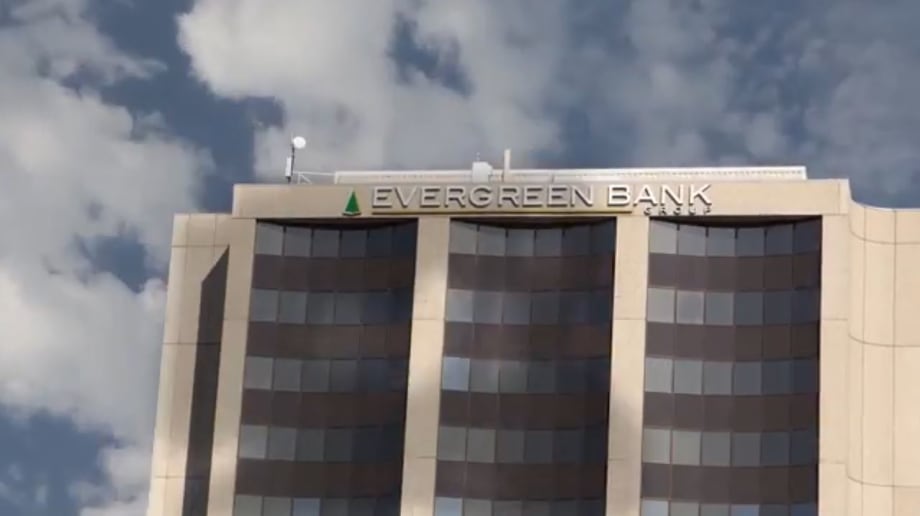
CHICAGO — Evergreen Bank Group became one of the first finance sources to adopt a flat-fee compensation model due to regulatory pressures. In a statement issued on March 4, the finance source said it eliminated discretionary pricing options for dealerships.
The statement was issued after the Federal Deposit Insurance Corp. issued the bank a low rating for its compliance with the Community Reinvestment Act (CRA). According to a public disclosure, Evergreen Bank Group’s CRA rating was “Substantial Noncompliance” due to “a substantially deficient record of helping to meet the credit needs of its assessment area, including low- and moderate-income neighborhoods, in a manner consistent with its resources and capabilities.”
The group was also charged with violations of Regulation B of the Equal Credit Opportunity Act. In a statement, the bank said the FDIC “based its findings of an alleged ECOA violation upon the much publicized and criticized theory called ‘disparate impact.’” The theory is being used by the Consumer Financial Protection Bureau (CFPB) in its investigation of the auto finance industry.
“Although the bank’s board of directors and management strongly disagree with the FDIC’s allegations that the Bank violated the ECOA and Regulation B, the bank recently opted to change its variable pricing model to a flat-fee pricing model within its indirect dealership lending program, even though variable pricing is the standard in the industry, making the bank one of the first lenders across the country to eliminate discretionary pricing options previously made available to dealerships,” the statement read, in part.
Industry associations and members of Congress have criticized the CFPB’s push for a flat fee compensation model in recent months, saying it would reduce competition and ultimately hurt consumers’ ability to secure affordable rates. At a public forum on auto lending held at the bureau’s headquarters in November, the CFPB’s Assistant Director of Fair Lending and Equal Opportunity Patrice Ficklin said the bureau does not see flat fees as an end-all solution.
The evaluation of Evergreen Bank Group covered the period between Jan. 1, 2010 and Dec. 31, 2011. It was based on a review of motorsport lending, home mortgage lending, home equity lines of credit and small business lending activities. Motorsport lending represented the largest portion of the bank’s lending activity, and such loans are originated through FreedomRoad Financial, for which Evergreen is the parent group.
“The bank’s record of motorsport lending reflects very poor penetration among individuals of different income levels,” the disclosure read. “This conclusion is based upon the very low number of motorsport loans made by the bank within its assessment area during 2010 and 2011.
“[Evergreen Bank Group] originated only one motorsport loan ($3,900) to an upper-income borrower in 2010 and one ($11,836) loan to an upper-income borrower in 2011. As this is the bank’s largest portion of the loan portfolio, it is expected that more than two loans would be originated inside the assessment area.”
Currently, the bank is in the final stages of procuring an approval for a CRA Strategic Plan to address the concerns raised about its dealership lending program.
More F&I

Why Your F&I PVR Is Misleading You
Here’s a handy checklist of the numbers to track in 2026 instead.
Read More →
Auto Consumer Anxiety Presents Opportunity
A survey of U.S. drivers found the majority are concerned about finances and the economy, but those fears make many ready to buy vehicle-protection products.
Read More →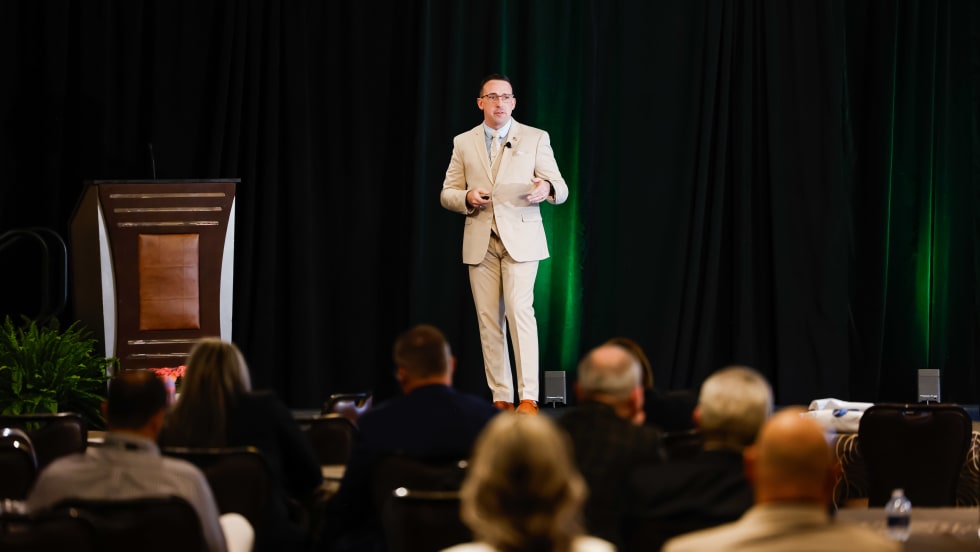
Humble and Hungry: 12 Rules for an F&I Life
Dustin Gingerich, with a decade in the F&I business under his belt, shares his thoughts on leadership, building trust with customers, and the importance of learning and innovation.
Read More →
Focus on the Opening
F&I managers must learn as much as possible about their customers, starting before they walk into their offices. The bulk of today’s consumers expect that, and good results will follow.
Read More →
F&I Reaches for the Sky
The increasingly important profit center continued making gains in the first quarter, according to StoneEagle data, ancillary products proving more popular as consumers hold onto their buys longer.
Read More →
Timing the Market Can Hurt Long-Term Program Performance
For dealer-owned reinsurance entities, avoiding volatility entirely can mean falling behind inflation and missing market rebounds that drive long term surplus growth. Missing just a handful of strong market days can materially impact cumulative returns—an important reminder for long horizon trust and investment strategies.
Read More →
The 90/10 Rule
In this video, Ryan Ruff explains the rule that elite sales professionals use to turn ordinary conversations into unforgettable customer experiences.
Read More →
Your Office Is Talking
What’s the atmosphere saying about you to your customers? You can make minor adjustments and additions that transform your space into one that creates trust with the people on the other side of the desk.
Read More →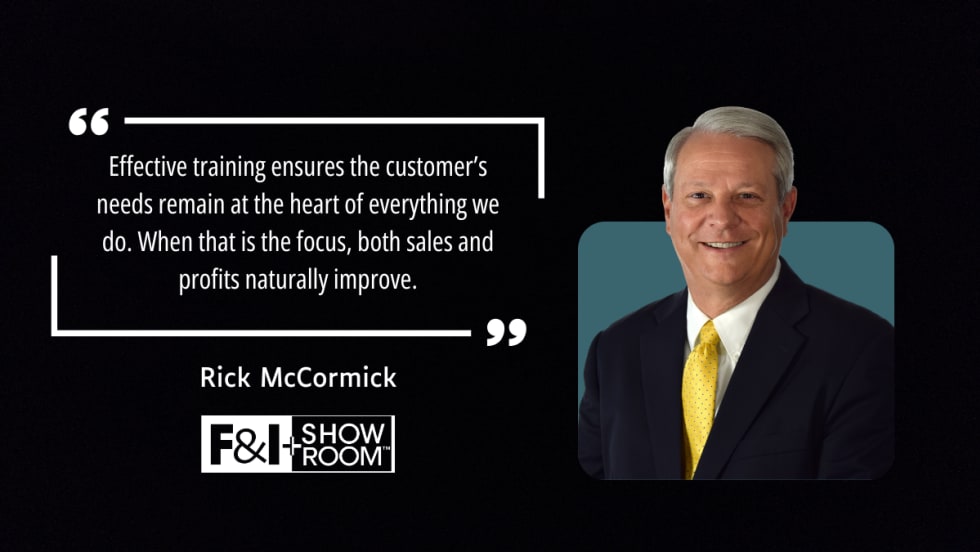
F&I Training Fundamentals
How can auto dealerships help F&I managers fulfill their vital role in the most effective ways? Industry expert Rick McCormick shares his insights on the best ways to train these professionals and help them maintain good habits.
Read More →
Not Just Any Tire Will Do
More consumers and businesses are opting for all-season options for various reasons as safety, sustainability and convenience push practical change.
Read More →