



CFPB Finalizes Proposal to Oversee Nonbank Auto Finance Companies
The CFPB finalized today its proposal to oversee nonbank auto finance companies. The finalized rule will take effect 60 days after publication in the Federal Register.

WASHINGTON, D.C. — The Consumer Financial Protection Bureau (CFPB)’s proposal to extend its supervision to any nonbank auto finance company that makes, acquires or refinances 10,000 or more loan or leases in a year has cleared its last hurdle, with the bureau publishing today its finalized rule and the examination procedures it will employ to ensure finance companies are complying with consumer financial laws. The rule will take effect 60 days after publication in the Federal Register.
The finalized rule, which officials said remained largely unchanged from the bureau’s original proposal last September, marks the first time auto finance companies will be regulated at the federal level. And under the rule, the bureau estimates it will have authority to supervise about 34 of the largest nonbank auto finance companies and their affiliated companies that engage in auto financing. These companies, according to the CFPB, originate around 90% of nonbank auto loans and leases.
“Auto loans and leases are among the most significant and complex financial transactions in a typical consumer’s life,” said CFPB Director Richard Cordray. “Today’s rule will help ensure the largest auto finance companies treat consumers fairly.”
The finalized rule also broadens the category of transactions involving asset-backed securities that are not counted toward the 10,000 transaction threshold. It also makes a minor modification to the definition of refinancing for the purpose of the threshold. The rule also defines additional automobile leasing activities for coverage by certain consumer protections afforded by the Dodd-Frank Act.
On Dec. 8, the last day of the rule’s public comment period, the American Financial Services Association submitted a memo requesting that the bureau “exercise great care” as it moved to redefine larger participants in the auto finance market. “In order to avoid creating further regulatory burdens, uncertainty and potential restriction of access to credit for auto loans, the CFPB should make several changes to the proposed rules,” the memo read, in part.
The association listed seven suggested changes it believed would help the bureau avoid creating regulatory burdens and potentially restricting consumers’ access to credit. Among them was a recommendation that the CFPB use the Equal Credit Opportunity Act’s Regulation Z definition of “refinancing” as opposed to its proposed expanded definition.
“The proposed definition of refinancing significantly increases the number of nonbank covered persons who may meet (and who have no way of knowing whether they meet) the proposed threshold for larger participants of the automobile financing market, but whose main business is not automobile financing,” the memo read. “Additionally, it is difficult, if not impossible, to determine whether a refinancing meets the proposed definition.”
The AFSA also asked that the bureau retain the exclusion for asset-backed securities from the definition of “annual originations” and modify the exclusion to clearly cover asset-backed securities. It also suggested that the bureau raise its larger participant threshold to 50,000 aggregate annual originations and modify the test used to determine larger participants to ensure that it truly captures the “larger” participants.
“A threshold of 10,000, coupled with the overly broad definition of refinancing, is so low that covered persons who qualify as small businesses under the Small Business Administration (SBA)’s definition could also qualify as larger participants under the proposed rule,” the AFSA stated in its December 2014 memo. “It seems contradictory that a covered person could be a small business and larger participant at the same time …”
The AFSA was still reviewing the finalized rule when contacted by F&I and Showroom.
To coincide with its new authority, the bureau updated its Supervisory and Examination Manual to provide guidance on how it will monitor the bank and nonbank auto finance companies that it supervises. Among other things, examiners will be evaluating whether auto finance companies are:
Fairly marketing and disclosing auto financing terms: The bureau will be examining auto finance companies that market directly to consumers to ensure they are not using deceptive tactics to market loans or leases. The bureau is also looking to ensure that consumers understand the terms they are getting.
Providing accurate information to credit bureaus: The bureau will assess whether information auto finance companies provide to credit bureaus is accurate. The CFPB recently took an enforcement action against an auto finance company that distorted consumer credit records by inaccurately reporting information like the consumers’ payment history and delinquency status to credit bureaus.
Treating consumers fairly when collecting debts: The bureau will assess whether auto finance companies are using illegal debt collection tactics. The Bureau will be looking to ensure that collectors are relying on accurate information and using legal processes when they collect on debts. The bureau also will review the repossession process, including the practices of third-party service providers that are employed to repossess autos.
Lending fairly: The bureau will assess whether auto finance companies’ practices comply with the ECOA and other bureau authorities protecting consumers.
More F&I

Why Your F&I PVR Is Misleading You
Here’s a handy checklist of the numbers to track in 2026 instead.
Read More →
Auto Consumer Anxiety Presents Opportunity
A survey of U.S. drivers found the majority are concerned about finances and the economy, but those fears make many ready to buy vehicle-protection products.
Read More →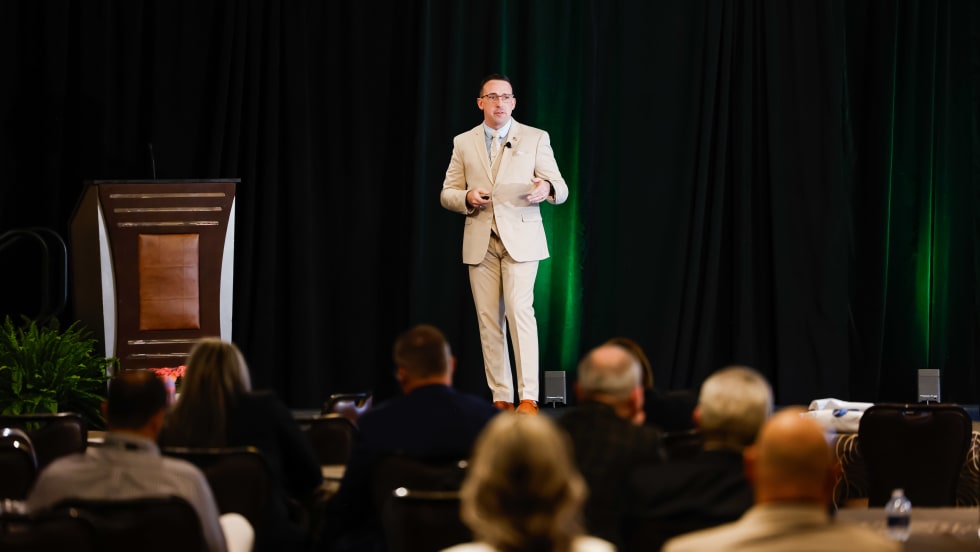
Humble and Hungry: 12 Rules for an F&I Life
Dustin Gingerich, with a decade in the F&I business under his belt, shares his thoughts on leadership, building trust with customers, and the importance of learning and innovation.
Read More →
Focus on the Opening
F&I managers must learn as much as possible about their customers, starting before they walk into their offices. The bulk of today’s consumers expect that, and good results will follow.
Read More →
F&I Reaches for the Sky
The increasingly important profit center continued making gains in the first quarter, according to StoneEagle data, ancillary products proving more popular as consumers hold onto their buys longer.
Read More →
Timing the Market Can Hurt Long-Term Program Performance
For dealer-owned reinsurance entities, avoiding volatility entirely can mean falling behind inflation and missing market rebounds that drive long term surplus growth. Missing just a handful of strong market days can materially impact cumulative returns—an important reminder for long horizon trust and investment strategies.
Read More →
The 90/10 Rule
In this video, Ryan Ruff explains the rule that elite sales professionals use to turn ordinary conversations into unforgettable customer experiences.
Read More →
Your Office Is Talking
What’s the atmosphere saying about you to your customers? You can make minor adjustments and additions that transform your space into one that creates trust with the people on the other side of the desk.
Read More →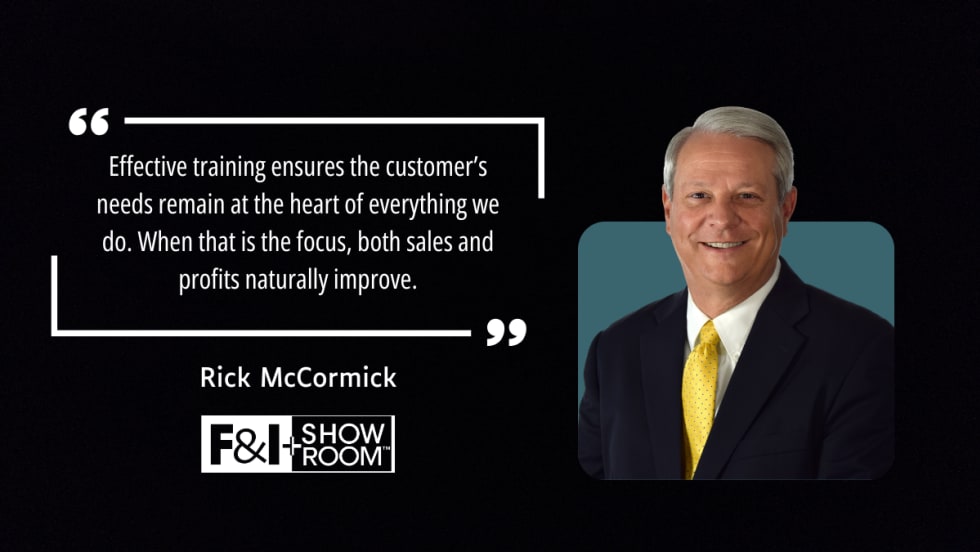
F&I Training Fundamentals
How can auto dealerships help F&I managers fulfill their vital role in the most effective ways? Industry expert Rick McCormick shares his insights on the best ways to train these professionals and help them maintain good habits.
Read More →
Not Just Any Tire Will Do
More consumers and businesses are opting for all-season options for various reasons as safety, sustainability and convenience push practical change.
Read More →