



Automotive Loyalty Reaches Highest Levels in a Decade, IHS Reports
IHS reported this week that brand loyalty among automotive brands has reached a 10-year high, with 13 brands also realizing 10-year highs in loyalty rates.
SOUTHFIELD, Mich. — Customer loyalty to automotive brands reached a 10-year high during the first quarter of 2015, according to analysis from market research firm IHS Automotive.
Brand loyalty during the first quarter was 52.8%, the firm reported. Several brands also experienced 10-year highs in loyalty rates, including Chevrolet, GMC, Infiniti, Jeep, Land Rover, Lexus, Lincoln, Mazda, Mitsubishi, Nissan, Porsche, Subaru and Volvo. Key drivers of these record results include a number of factors, said Tom Libby, manager of automotive loyalty and industry analysis at IHS Automotive.
“The increased number of different models within brands makes it easier for households that may need a different type of vehicle to maintain their loyalty,” Libby said. “In addition, the increased popularity of leasing since the downturn has helped significantly as lessees are consistently more brand loyal compared to retail owners.”
The number of models available in the U.S. market increased by 33, or 12%, from 2005 to 2015 — with much of that gain being driven by several luxury brands. The expanding model lines are providing customers returning to market with a greater number of choices, increasing the probability they will remain brand loyal.
Leasing, which is higher than at any point this decade, is another driver. It has rebounded from its decade low of 13.9% of the market in 2005 to 22.5% of the market so far in 2015 — a near 62% increase. Based on new-vehicle registrations analyzed by IHS Automotive, 24 of 32 segments reviewed had an increase in lease penetration over the decade.
“In several vehicle segments, there have been increases in leasing penetration of more than 20 percentage points,” IHS said in its report. “This leasing trend is due, in part, to greater cooperation between OEM captive finance arms and their operating divisions.”
Other contributors to higher loyalty rates include improved vehicle quality, which is keeping consumers happy with their vehicle choice over time. The improved quality is also driving up loyalty while pushing defection rates lower. Marketers also are aware that it is more cost effective to retain a customer than to conquest one, which is why OEMs are placing a greater focus on loyalty and customer satisfaction over time.
Consumers who returned to market for a new vehicle after driving brands that have been discontinued, such as Pontiac, Hummer, Mercury and Saturn, also account for some of the uptick in loyalty. Based on the IHS analysis, the number of households returning to market who had a discontinued brand in the garage has declined by 49% from 2010 to 123,388 in 2014.
OEMs are seeing the benefits from their efforts in vehicle content, expanded product lines and financing offerings to retain their customers. “While OEMs are experiencing increased retention, it's critical that they also continue their conquesting activities in order to compensate for the normal churn in their customer base,” IHS noted. “In 2014, most brands lost more customers than they kept.
“In addition, conquesting owners of competitive products will only get more difficult as the share of defectors declines,” the research firm added. “Product, marketing and financing actions will take on additional importance as brands attempt to conquest competitive owners. More specifically, among other things, understanding ownership life cycles, including the ability to predict which customers will return to market - and when - will be key competitive advantages moving forward.”
More F&I

Why Your F&I PVR Is Misleading You
Here’s a handy checklist of the numbers to track in 2026 instead.
Read More →
Auto Consumer Anxiety Presents Opportunity
A survey of U.S. drivers found the majority are concerned about finances and the economy, but those fears make many ready to buy vehicle-protection products.
Read More →
Humble and Hungry: 12 Rules for an F&I Life
Dustin Gingerich, with a decade in the F&I business under his belt, shares his thoughts on leadership, building trust with customers, and the importance of learning and innovation.
Read More →
Focus on the Opening
F&I managers must learn as much as possible about their customers, starting before they walk into their offices. The bulk of today’s consumers expect that, and good results will follow.
Read More →
F&I Reaches for the Sky
The increasingly important profit center continued making gains in the first quarter, according to StoneEagle data, ancillary products proving more popular as consumers hold onto their buys longer.
Read More →
Timing the Market Can Hurt Long-Term Program Performance
For dealer-owned reinsurance entities, avoiding volatility entirely can mean falling behind inflation and missing market rebounds that drive long term surplus growth. Missing just a handful of strong market days can materially impact cumulative returns—an important reminder for long horizon trust and investment strategies.
Read More →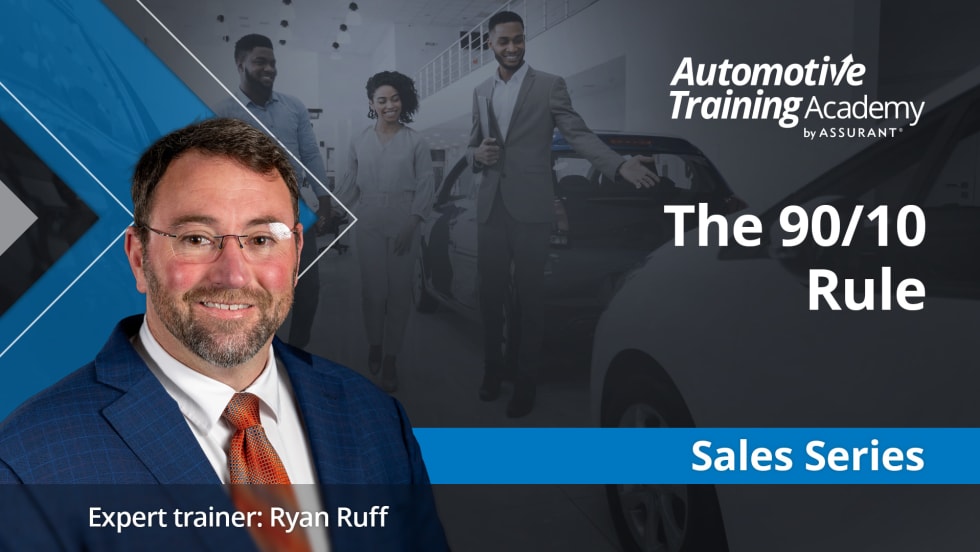
The 90/10 Rule
In this video, Ryan Ruff explains the rule that elite sales professionals use to turn ordinary conversations into unforgettable customer experiences.
Read More →
Your Office Is Talking
What’s the atmosphere saying about you to your customers? You can make minor adjustments and additions that transform your space into one that creates trust with the people on the other side of the desk.
Read More →
F&I Training Fundamentals
How can auto dealerships help F&I managers fulfill their vital role in the most effective ways? Industry expert Rick McCormick shares his insights on the best ways to train these professionals and help them maintain good habits.
Read More →
Not Just Any Tire Will Do
More consumers and businesses are opting for all-season options for various reasons as safety, sustainability and convenience push practical change.
Read More →