



Department of Defense Issues Final Military Lending Act Rule
Today, the Defense Department issued a final rule that expands the types of credit products covered by the 36% rate cap and other military-specific protections under the Military Lending Act.
WASHINGTON, D.C. — After nearly three years of study, the Department of Defense issued today the final Military Lending Act (MLA) rule. It expands the types of credit products covered by its 36% rate cap and closes loopholes the agency said allowed some lenders to skirt the law.
This rule applies the protections of the Military Lending Act to all forms of payday loans, vehicle title loans, refund anticipation loans, deposit advance loans, installment loans, unsecured open-end lines of credit and credit cards. The implementing regulation provides several significant protections extended to active duty service members and their families, including:
A 36% Annual Percentage Rate Limit: This cap, which is referred to as the Military Annual Percentage Rate (MAPR), covers all interest and fees associated with the loan. This limit now includes charges for most ancillary “add-on” products such as credit default insurance and debt suspension plans.
The MLA prohibits creditors from requiring service members to submit to mandatory arbitration and onerous legal notice requirements; waive their rights under the service members’ Civil Relief Act; provide a payroll allotment as a condition of obtaining credit (other than from relief societies); be able to refinance a payday loan; or be able to secure credit using a post-dated check, access to a bank account (other than at an interest rate of less than 36 percent MAPR), or a car title (other than with a bank, savings association or credit union).
The final rule expands the definition of credit to any closed or open-end loan within the scope of the regulation, except for loans secured by real estate or a purchase-money loan, including a loan to finance the purchase of a vehicle.
"With this action, the department takes an important stand against companies that can prey on our men and women in uniform. This new rule addresses a range of credit products that previously escaped the scope of the regulation, compromising the financial readiness of our troops,” said Deputy Secretary of Defense Bob Work. “Today, with our regulatory and enforcement partners, we stand united in support of our service members and their families.”
Congress passed the MLA in 2006 with bipartisan support to provide specific protections for active duty service members and their dependents in consumer transactions. The new rule will go into effect Oct. 1, 2015, and has a staggered compliance dates.
The department asked the public for their perspective on changing the existing rule in June 2013, and published the proposed rule in the Federal Register for public comment Sept. 29, 2014.
In developing this rule, the department consulted with the Federal Trade Commission, the Board of Governors of the Federal Reserve System, the Office of the Comptroller of the Currency, the Federal Deposit Insurance Corporation, the Consumer Financial Protection Bureau, the National Credit Union Administration, and the Treasury Department.
The MLA is implemented by the Department of Defense and enforced by the Consumer Financial Protection Bureau and other regulators. In September 2013, the CFPB released guidelines on how its examiners will identify consumer harm and risks related to MLA violations when supervising payday lenders. In November 2013, the bureau took action against a payday lender, Cash America, for extending payday loans to servicemembers and their families in violation of the MLA. In December, the bureau issued a report highlight how lenders had continued to exploit loopholes in the existing MLA rules.
“I congratulate Secretary Carter and the Department of Defense on the final rule published today. The CFPB strongly supports the department’s efforts to strengthen consumer protections for our nation’s military families,” said CFPB Director Richard Cordray. “Today’s rule will help ensure that American servicemembers get the legal protections they deserve. As one of the agencies responsible for enforcing the Military Lending Act, we stand ready to stop illegal lending to military families.”
More F&I

Why Your F&I PVR Is Misleading You
Here’s a handy checklist of the numbers to track in 2026 instead.
Read More →
Auto Consumer Anxiety Presents Opportunity
A survey of U.S. drivers found the majority are concerned about finances and the economy, but those fears make many ready to buy vehicle-protection products.
Read More →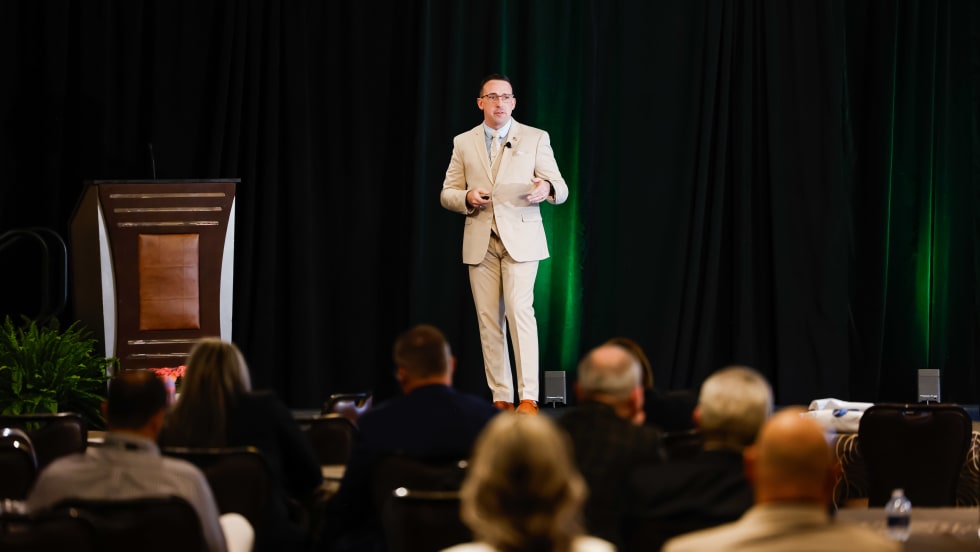
Humble and Hungry: 12 Rules for an F&I Life
Dustin Gingerich, with a decade in the F&I business under his belt, shares his thoughts on leadership, building trust with customers, and the importance of learning and innovation.
Read More →
Focus on the Opening
F&I managers must learn as much as possible about their customers, starting before they walk into their offices. The bulk of today’s consumers expect that, and good results will follow.
Read More →
F&I Reaches for the Sky
The increasingly important profit center continued making gains in the first quarter, according to StoneEagle data, ancillary products proving more popular as consumers hold onto their buys longer.
Read More →
Timing the Market Can Hurt Long-Term Program Performance
For dealer-owned reinsurance entities, avoiding volatility entirely can mean falling behind inflation and missing market rebounds that drive long term surplus growth. Missing just a handful of strong market days can materially impact cumulative returns—an important reminder for long horizon trust and investment strategies.
Read More →
The 90/10 Rule
In this video, Ryan Ruff explains the rule that elite sales professionals use to turn ordinary conversations into unforgettable customer experiences.
Read More →
Your Office Is Talking
What’s the atmosphere saying about you to your customers? You can make minor adjustments and additions that transform your space into one that creates trust with the people on the other side of the desk.
Read More →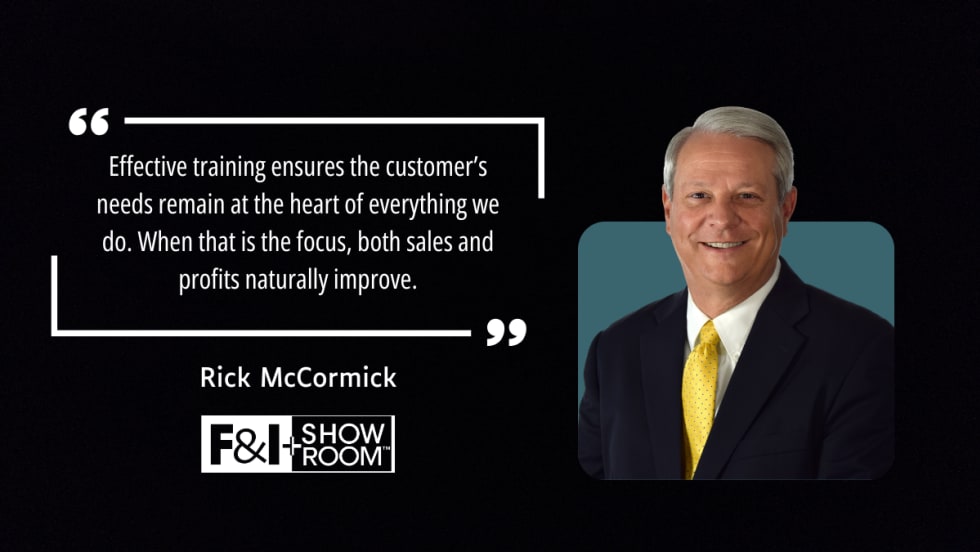
F&I Training Fundamentals
How can auto dealerships help F&I managers fulfill their vital role in the most effective ways? Industry expert Rick McCormick shares his insights on the best ways to train these professionals and help them maintain good habits.
Read More →
Not Just Any Tire Will Do
More consumers and businesses are opting for all-season options for various reasons as safety, sustainability and convenience push practical change.
Read More →