



Texas Dealers Agree to Pay $85,000 for Deceptive Advertising
Three Dallas-area dealerships have agreed to pay $85,000 to settle charges that they violated a 2014 Federal Trade Commission (FTC) administrative order that barred them from deceptively advertising the cost of buying or leasing a car.
WASHINGTON, D.C. — Three Dallas-area dealerships have agreed to pay $85,000 to settle charges that they violated a 2014 Federal Trade Commission (FTC) administrative order that barred them from deceptively advertising the cost of buying or leasing a car.
According to the FTC, New World Auto Imports Inc., New World Auto Imports of Rockwall Inc., and Hampton Two Auto Corporation — collectively known as Southwest Kia — violated the 2014 order by concealing sales and lease terms that added significant costs or limited who could qualify for vehicles at the advertised prices.
These ads, according to the regulator, were also in violation of the Truth in Lending Act and the Consumer Leasing Act, which require clear and conspicuous disclosure of credit and lease terms. Aside from the $85,000 fine, the FTC's proposed order would bar the dealership from violating both acts.
In 2014, the FTC approved final consent orders on a settlement involving 10 dealerships that engaged in deceptive advertising. Per the settlement, the dealerships were prohibited from misrepresenting the cost of leasing, financing or any other material fact about price, sale, financing or leasing of a vehicle in an advertisement.
The settlement was part of “Operation Steer Clear,” which the commission described as a nationwide sweep focusing on misleading advertising associated with the selling, financing and leasing of motor vehicles. Among the 10 dealerships targeted was Southwest Kia.
At the time, according to the FTC, Southwest Kia was advertising vehicles that consumers could purchase for low monthly payments. The dealerships, however, were hiding the fact that consumers would have a final balloon payment that would amount to more than $10,000. The dealerships also advertised that consumers could drive home a vehicle for specific low monthly payments, but failed to inform consumers that the advertised offer was for a lease and that they would owe substantially more upfront.
According to the FTC, these advertisements violated the Consumer Leasing Act and Regulation M for failing to disclose certain lease related terms. They also violated the Turth in Lending Act and Regulation Z for failing to disclose certain credit-related terms.
The recent case — filed Aug. 18, 2016, in the U.S. District Court of Texas, Dallas Division — centered on a Southwest Kia television ad and mailers. The TV ad promoted two cars for under $200 a month. But in fine print that appeared for only two seconds, the dealerships disclosed that the offer applied only to leases, not sales, and required a $1,999 payment due at signing. Similar disclosure issues were found in the mailers.
“One dealer mailed ads claiming a new car could be purchased for $179 per month, but, in print too small to read without magnification, disclosed that $1,999 would be due up front, along with tax, title and license fees, and that $8,271 would be due at the end of a 38-month financing term,” the FTC stated in its press release.
The ads, according to the regulator, targeted consumers with major credit problems. The dealerships advertised vehicles for $250 per month. However, in fine print, the dealership disclosed that the offer was based on a "4.25 annual percentage rate that few, if any, consumers with such major credit issues could obtain.”
The FTC also said Southwest Kia failed to keep records required by its 2014 order.
The commission vote to authorize staff to refer the complaint to the U.S. Department of Justice and to approve the proposed stipulated order was 3-0.
More F&I

Why Your F&I PVR Is Misleading You
Here’s a handy checklist of the numbers to track in 2026 instead.
Read More →
Auto Consumer Anxiety Presents Opportunity
A survey of U.S. drivers found the majority are concerned about finances and the economy, but those fears make many ready to buy vehicle-protection products.
Read More →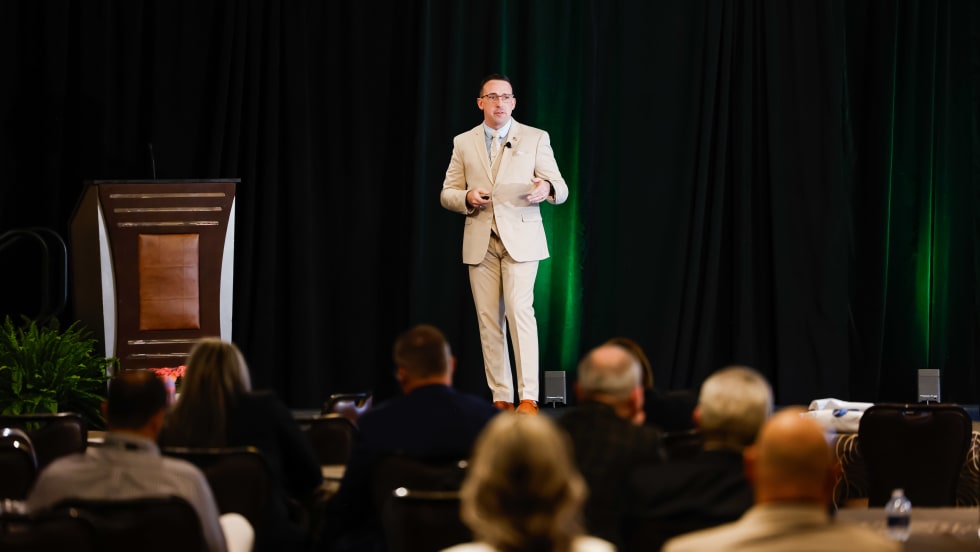
Humble and Hungry: 12 Rules for an F&I Life
Dustin Gingerich, with a decade in the F&I business under his belt, shares his thoughts on leadership, building trust with customers, and the importance of learning and innovation.
Read More →
Focus on the Opening
F&I managers must learn as much as possible about their customers, starting before they walk into their offices. The bulk of today’s consumers expect that, and good results will follow.
Read More →
F&I Reaches for the Sky
The increasingly important profit center continued making gains in the first quarter, according to StoneEagle data, ancillary products proving more popular as consumers hold onto their buys longer.
Read More →
Timing the Market Can Hurt Long-Term Program Performance
For dealer-owned reinsurance entities, avoiding volatility entirely can mean falling behind inflation and missing market rebounds that drive long term surplus growth. Missing just a handful of strong market days can materially impact cumulative returns—an important reminder for long horizon trust and investment strategies.
Read More →
The 90/10 Rule
In this video, Ryan Ruff explains the rule that elite sales professionals use to turn ordinary conversations into unforgettable customer experiences.
Read More →
Your Office Is Talking
What’s the atmosphere saying about you to your customers? You can make minor adjustments and additions that transform your space into one that creates trust with the people on the other side of the desk.
Read More →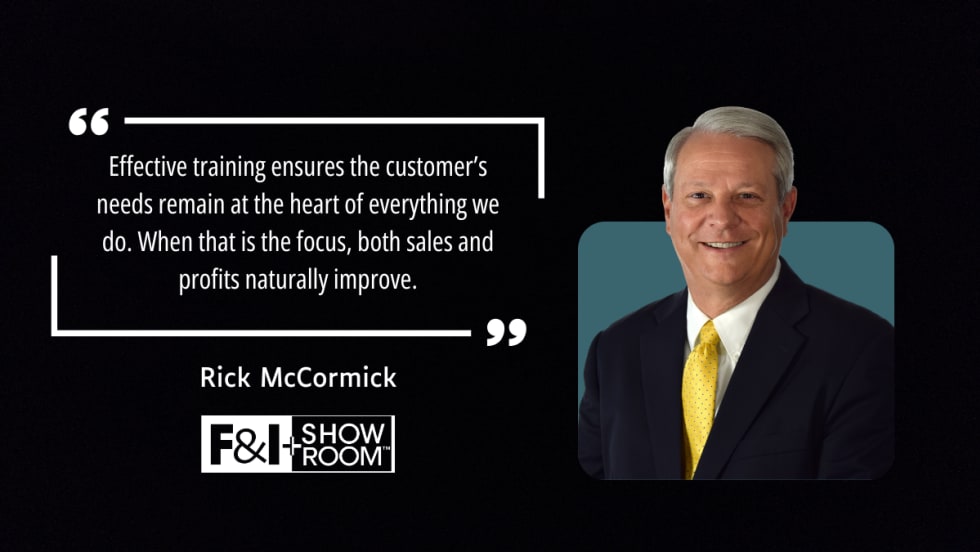
F&I Training Fundamentals
How can auto dealerships help F&I managers fulfill their vital role in the most effective ways? Industry expert Rick McCormick shares his insights on the best ways to train these professionals and help them maintain good habits.
Read More →
Not Just Any Tire Will Do
More consumers and businesses are opting for all-season options for various reasons as safety, sustainability and convenience push practical change.
Read More →