



Lithia: Right People, Pay Plans and Product Deliver Record F&I Performance in Q3
Record-setting F&I, a strong used-vehicle segment, and gains in parts and service paved the way for a year-over-year improvement in total gross profit for Lithia Motors during the period.
MEDFORD, Ore. — Record-setting F&I, a strong used-car segment, and healthy gains in parts and service paved the way for a year-over-year improvement in third quarter gross profit for Lithia Motors.
Strong performances in those segments helped to offset waning new-vehicle unit sales and declines in new- and used-vehicle profits on a per-unit basis.
“In the third quarter, the blended overall gross profit per unit was $3,449 compared to $3,405 last year, an increase of $44 per unit,” said President and CEO Bryan Deboer during the group's Oct. 21 earnings call. “This was complemented by a 3% increase in combined unit volume.
"Our store personnel have increased total gross profit while focusing on taking market share in a declining new-vehicle sales environment," he added. "To achieve this increase, we’ve experienced slightly higher selling costs.”
Total gross profit for the quarter was $323.7 million, a 4.4% gain over the year prior. As noted, the quarter’s $3,449 per-unit gross profit was, in fact, a 1.3% improvement over the year before; however, the bulk of those gains came from F&I.
F&I produced a record $1,302 in gross profit on a per-unit basis, an 8.1% improvement over the year prior. Each new vehicle sold produced $1,972 in gross profit, a 4.3% year-over-year decline. Additionally, each retail used car produced $2,344 in gross profit, a 1.5% drop compared to last year. Sales of wholesale used vehicles produced $83 in gross profit, a 43.1% improvement over the year before.
“I think the focus that we have on our F&I business has really taken hold. We’re focused on three core areas. I mean, No. 1, we’re focused on getting the right people in our F&I offices and motivating with the right pay plans that really generate additional sales for the company,” said Chris Holzshu, senior vice president and CFO. “And so, in often cases, that means providing less transactions to each F&I manager, but encouraging them to make sure they offer all the opportunities that we have for customers to protect their vehicles. … The second thing is making sure that we have the right product … and lastly on that we are adjusting our pricing.”
He added that although F&I performance was strong this quarter, they’re still work to be done. He noted that the group’s F&I gains were driven by stores with exceptional performance, but noted that the group has many stores that are struggling to get surpass $1,000 per-copy.
Although per-unit performance for the dealer group’s used segment has declined, its overall performance improved. In the third quarter, Lithia Motors posted sales of 28,322 used units on a same-store basis, an 8.5% increase over the year prior. That gain and a 1.9% increase in the average retail price for a used vehicle — $19,677 — helped offset the segment’s weaker per-unit gross profit.
Total used-vehicle retail gross profit was $66.3 million, a 6.9% year-over-year increase.
On the new-vehicle front, unit sales declined 1.7% from a year ago to 36,681. This, coupled with the segment’s per-unit gross profit results, caused total new-vehicle gross profit to fall 6% to $72.3 on a same-store basis. Additionally, the 3% increase in the average selling price of new vehicles, which was $33,792 in the third quarter, was not enough to offset the rest of the segment’s problems.
Ringing a similar bell as Group 1, which reported its third quarter performance the day prior, Lithia Motors experienced downturns in its energy-dependent markets. Sales in Alaska were down 4% and profits were down 1%. Revenue in North Dakota was also down, falling 2.7%. However, profit in the state was up 46%.
Unfortunately for the dealer group, the largest energy-dependent state in which it operates posted the biggest declines. “Texas, unfortunately still remains under pressure. Revenues were down about 5%, but earnings were down 22% in the quarter," Deboer said. "That’s not what we want to see, obviously. Our stores in Texas seem to be spending more money to maintain their current market share, and ... we hope to offset it with revenue and gross profit."
More F&I

Why Your F&I PVR Is Misleading You
Here’s a handy checklist of the numbers to track in 2026 instead.
Read More →
Auto Consumer Anxiety Presents Opportunity
A survey of U.S. drivers found the majority are concerned about finances and the economy, but those fears make many ready to buy vehicle-protection products.
Read More →
Humble and Hungry: 12 Rules for an F&I Life
Dustin Gingerich, with a decade in the F&I business under his belt, shares his thoughts on leadership, building trust with customers, and the importance of learning and innovation.
Read More →
Focus on the Opening
F&I managers must learn as much as possible about their customers, starting before they walk into their offices. The bulk of today’s consumers expect that, and good results will follow.
Read More →
F&I Reaches for the Sky
The increasingly important profit center continued making gains in the first quarter, according to StoneEagle data, ancillary products proving more popular as consumers hold onto their buys longer.
Read More →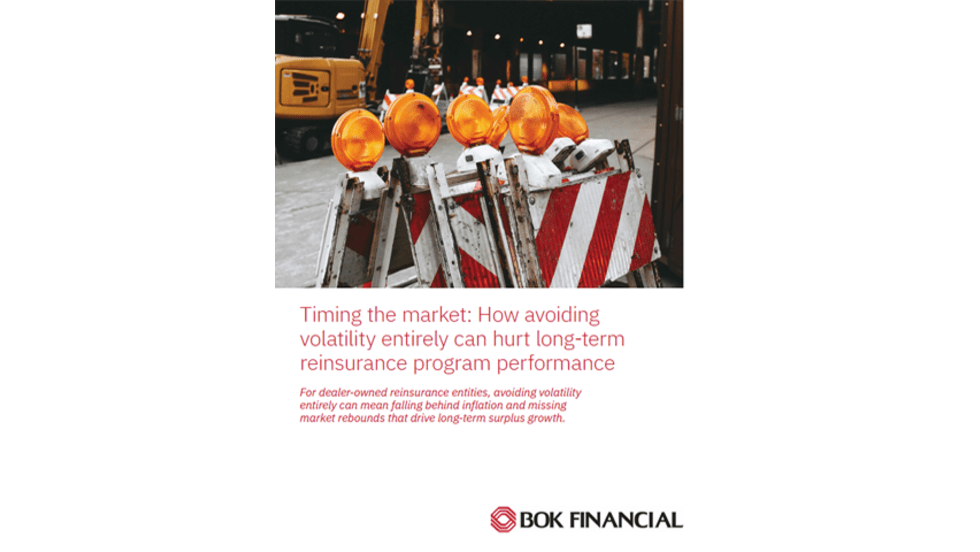
Timing the Market Can Hurt Long-Term Program Performance
For dealer-owned reinsurance entities, avoiding volatility entirely can mean falling behind inflation and missing market rebounds that drive long term surplus growth. Missing just a handful of strong market days can materially impact cumulative returns—an important reminder for long horizon trust and investment strategies.
Read More →
The 90/10 Rule
In this video, Ryan Ruff explains the rule that elite sales professionals use to turn ordinary conversations into unforgettable customer experiences.
Read More →
Your Office Is Talking
What’s the atmosphere saying about you to your customers? You can make minor adjustments and additions that transform your space into one that creates trust with the people on the other side of the desk.
Read More →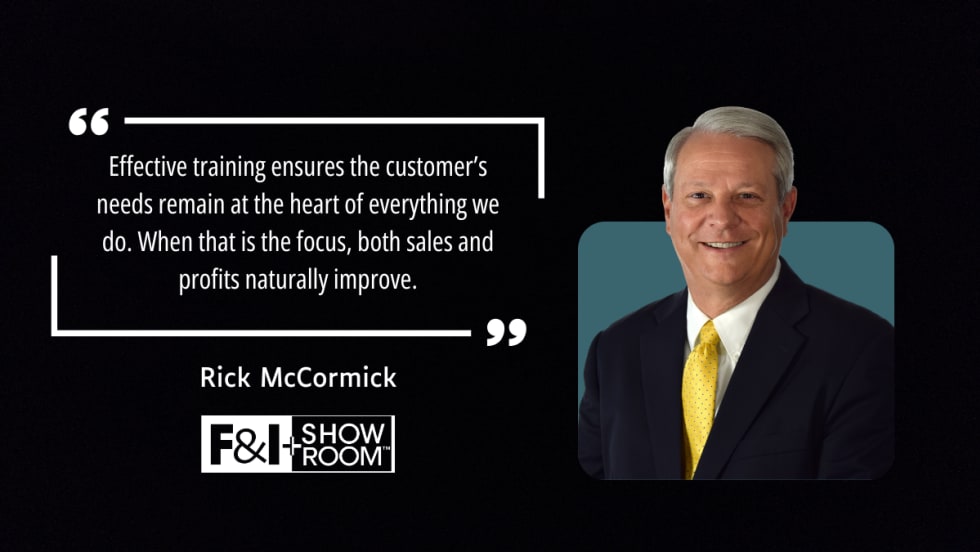
F&I Training Fundamentals
How can auto dealerships help F&I managers fulfill their vital role in the most effective ways? Industry expert Rick McCormick shares his insights on the best ways to train these professionals and help them maintain good habits.
Read More →
Not Just Any Tire Will Do
More consumers and businesses are opting for all-season options for various reasons as safety, sustainability and convenience push practical change.
Read More →