



Manheim Index Reaches Record High for Fifth Consecutive Month
The Manheim Used Vehicle Value Index reached a record high in September for the fifth consecutive month, while the SAAR rose to its highest September reading in three decades. The main driver was replacement demand caused by hurricanes Harvey and Irma.
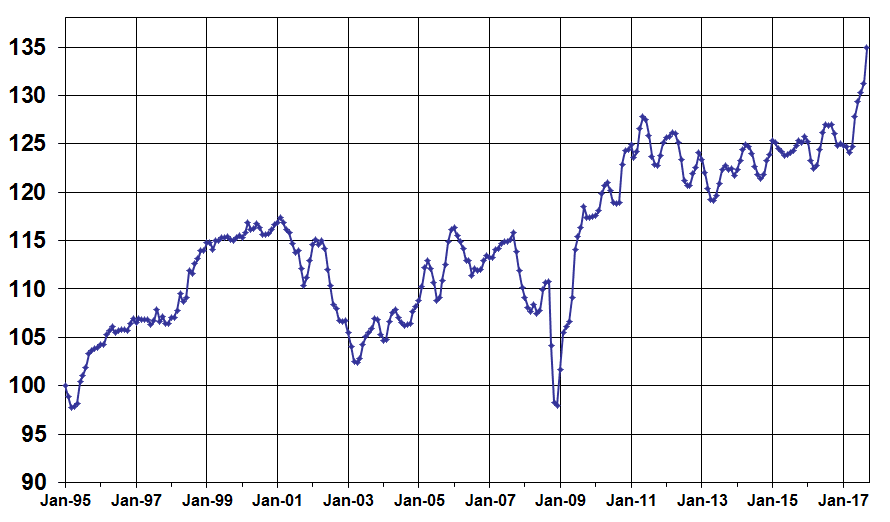
ATLANTA — The Manheim Used Vehicle Value Index reached a record high for the fifth consecutive month in September, increasing 6.3% from a year ago to 134.9. The reason, according to analysts with the firm, was replacement demand related to hurricanes Harvey and Irma, which drove up wholesale used-vehicle prices 2.77% on a month-over-month basis.
On a year-over-year basis, all major market segments realized gains in value, including midsize cars. Luxury cars, pickups, and vans, however, outperformed the overall market.
“Though wholesale market values continue to show strength as a result of growing retail demand, most of this price strength can be attributed to the recovery following Hurricane Harvey and Hurricane Irma,” the firm noted. “Replacement demand combined with a reduction in available supply is causing wholesale inventories to tighten. The impact to the wholesale market is widespread, providing additional support for the likely continued wholesale price gains for at least another month or two.”
Replacement demand was felt in the new-vehicle market as well, with September’s new-vehicle sales volume jumping 6% year over year with one more selling day compared to September 2016. And with a seasonally adjusted annual rate of 18.5 million, this was the highest September SAAR reading in three decades and the highest monthly SARR level since July 2005.
By segment, cars continued to fall out of favor with consumers, with September sales falling 3% from a year ago and all major car segments registering sales declines. In contrast, light trucks were up 12% year over year, with both the Ford F-Series and Chevy Silverado up 21% year over year.
On a year-to-date basis, new-vehicle sales are down 2% compared to the year-ago period.
Combined rental, commercial, and government purchases of new vehicles were up 7%, led by gains in commercial (up 26%), rental (up 2%), and government (up 4%) fleet channels. Overall fleet sales are down 10% for the year vs. 2006.
As for used, sales were up 8% year over year in September, with the month’s used-vehicle SAAR increasing from August’s 38.1 million read to 40.4 million units. “The retail growth in used sales is coming from vehicles less than four years old, which have grown 5% year to date versus the same period last year,” the firm said in its report. “Vehicles less than four years old represent the largest age segment of vehicles in the used-car market.”
Manheim also noted that the economy “continues to chug along” with GDP growth of 3.1% in the second quarter — the strongest quarter in more than two years. “The economy was gaining momentum this summer, and that growth would have continued in the third quarter had we not had the disruption of the severe hurricanes in August and September,” the firm said. “The hurricanes disrupted auto sales, home sales, and retail sales in August. Consumer spending had grown a robust 0.3% in July from June, but increased only 0.1% in August. Adjusted for inflation, purchases declined 0.1%, which was the first decrease since January.
“Spending is expected to rebound in subsequent months to more than make up for the August disappointments,” the firm added. “We are clearly already seeing that in auto sales.”
More Auto Finance

Mastering Credit Friction
In this video, Josh Krach explains how to turn credit friction into an advantage.
Read More →
April Less Affordable
Based on prices, reduced incentives and slower household income growth, consumers found it more challenging to buy new last month, Cox Automotive reported.
Read More →
Auto Lenders, Consumers on a Tightrope
April borrowing data shows that more consumers are bending over backward to buy vehicles, though subprime lending cooled off for the month.
Read More →
Toyota Financial Services President Replaced
Scott Cooke has served in various roles with Toyota Financial Services for over 20 years, including president and CEO, which he retires from on June 30.
Read More →
Permission or Approval: When to Notify Finance Sources
Credit card down payments, multiple vehicle purchases and even straw purchases can be completed without committing bank fraud, as long as you tell the bank first.
Read More →
At-Risk Auto Borrowers Drive Looser Credit Access
Cox Automotive’s index shows the subprime segment, long loan terms, negative-equity borrowers and down payment amounts all grew in February despite ever-higher vehicle prices.
Read More →
Auto Loan Forecast Bucks Market Trend
Auto loan originations rose over 6% year-over-year in the third quarter of 2025, but TransUnion predicts a slight decline in auto loan growth this year, making it an outlier in the company's overall lending forecast.
Read More →
Auto Credit More Plentiful
Growing access shows greater lender appetite for risk as consumers take on heavier debt burden in an inflated market.
Read More →
Auto Loans Long as Stretch Limos
More consumers, faced with ever-rising car prices, are adapting by agreeing to longer loan terms despite the cost of added interest payments.
Read More →
AutoPayPlus Launches RePayPlus
The reinsured biweekly payment program offers auto dealers with customer retention and reinsurance structure.
Read More →