



GOA Says Congress Can Review CFPB’s Guidance on Dealer Participation
The Government Accountability Office said on Tuesday that the bureau’s March 2013 bulletin on dealer participation falls under the Congressional Review Act, a decision that clears the way for the Republican-controlled Congress to repeal the bureau’s controversial guidance.

WASHINGTON, D.C. — The Government Accountability Office (GOA) said on Tuesday that the Consumer Financial Protection Bureau’s controversial March 2013 guidance on dealer participation falls under the Congressional Review Act and should have been submitted to Congress and the Comptroller General for review before it took effect.
The GOA’s conclusion, which was issued in response to Sen. Pat Toomey (R-Pa.) March 31 request that it review whether the bureau’s guidance falls under the CRA, sets the table for the Republican-controlled Congress to pass a joint resolution of disapproval under the CRA to repeal the bureau’s auto finance guidance — a process similar to the one used to repeal the bureau’s rule on forced arbitration.
“The CFPB claims that the bulletin is the type of general statement of policy that is not a rule under CRA. However … CRA requirements apply to general statements of policy, which, by definition, are not legally binding,” GOA General Counsel Thomas Armstrong wrote in his seven-page response. “The Supreme Court has described ‘general statements of policy’ as ‘statements issued by an agency to advise the public prospectively of the manner in which the agency proposes to exercise a discretionary power.’
“In other words, as stated by the D.C. Circuit Court of Appeal in Pacific Gas & Electric Company v. Federal Power Commission, a statement of policy announces the agency’s tentative intentions for the future.”
In its five-page fair lending guidance, the CFPB said it would hold lenders active in the indirect auto finance channel liable for unlawful, discriminatory pricing. It alleged that bank policies which allow auto dealers to mark up the interest rates on retail installment sale transactions as compensation for services rendered create a significant risk of unintentional, disparate impact discrimination.
The bulletin goes on to state that lenders operating in the indirect auto finance channel “should take steps to ensure that they are operating in compliance with the [Equal Credit Opportunity Act and Regulation B as applied to dealer markup and compensation policies.” It then listed a variety of steps and tools they could employ to address the bureau’s stated fair lending risks,” including “eliminating dealer discretion to mark up buy rates and fairly compensate dealers using another mechanism, such as a flat fee per transaction, that does not result in discrimination.”
Auto finance trade groups have argued that the bureau used its guidance to indirectly regulate the activities of dealers, which are exempted from the bureau’s oversight under the Dodd-Frank Act. Since issuing its guidance, the bureau has imposed millions of dollars in fines on auto finance sources, including Ally Financial, American Honda Finance Corp, and Fifth Third Bank.
Congress has attempted to kill the bureau’s guidance through the legislative route. In November 2015, for instance, the House of Representative approved the Reforming CFPB Indirect Auto Finance Guidance Act by a 332-96 vote. The bill, however, was not acted upon by the Senate before the end of the 114th Congress.
When it initially issued its guidance, the bureau argued that because it had no legal effect on regulated entities, the CRA does not apply. The GOA, however, stated in its response that the bulletin “fits squarely within the Supreme Court’s definition of a statement of policy” because it provides information on the manner in which the bureau planned to exercise its discretionary enforcement power.
And according to the GOA, the CRA “establishes special expedited procedures under which Congress may pass a joint resolution of disapproval that, if enacted into law, overturns the rule.” In a statement posted on his website, Sen. Toomey said that’s exactly what he intends to do.
“GOA’s decision makes clear that the CFPB’s backdoor effort to regulate auto loans, which was based on a dubious legal justification, did not comply with the Congressional Review Act,” said Sen. Toomey, who requested that the agency review whether the bureau’s guidance fell under the CRA in March 2017. “GOA’s decision is an important reminder that agencies have a responsibility to live up to their obligations under the law. When they don’t, Congress should hold them accountable.
“I intend to do everything in my power to repeal this ill-conceived rule using the Congressional Review Act.”
More F&I

Why Your F&I PVR Is Misleading You
Here’s a handy checklist of the numbers to track in 2026 instead.
Read More →
Auto Consumer Anxiety Presents Opportunity
A survey of U.S. drivers found the majority are concerned about finances and the economy, but those fears make many ready to buy vehicle-protection products.
Read More →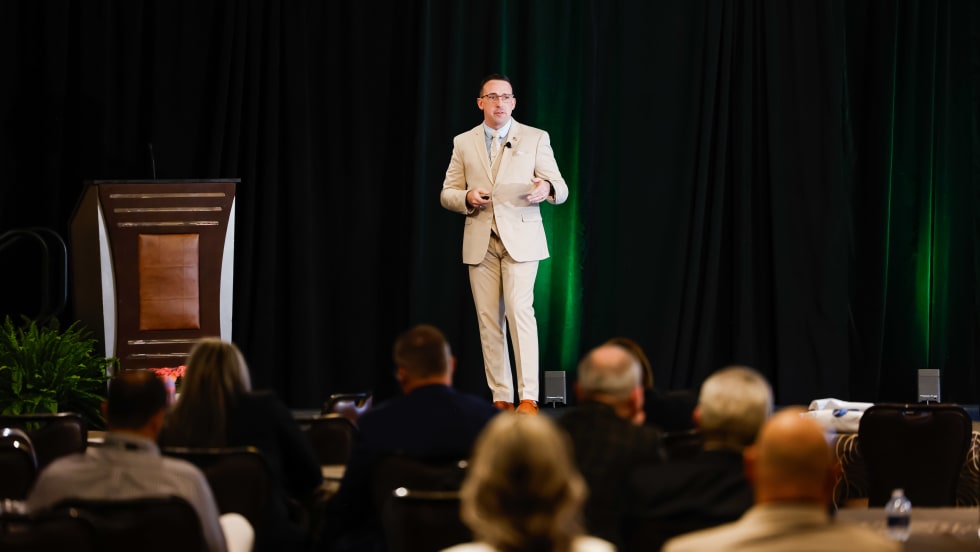
Humble and Hungry: 12 Rules for an F&I Life
Dustin Gingerich, with a decade in the F&I business under his belt, shares his thoughts on leadership, building trust with customers, and the importance of learning and innovation.
Read More →
Focus on the Opening
F&I managers must learn as much as possible about their customers, starting before they walk into their offices. The bulk of today’s consumers expect that, and good results will follow.
Read More →
F&I Reaches for the Sky
The increasingly important profit center continued making gains in the first quarter, according to StoneEagle data, ancillary products proving more popular as consumers hold onto their buys longer.
Read More →
Timing the Market Can Hurt Long-Term Program Performance
For dealer-owned reinsurance entities, avoiding volatility entirely can mean falling behind inflation and missing market rebounds that drive long term surplus growth. Missing just a handful of strong market days can materially impact cumulative returns—an important reminder for long horizon trust and investment strategies.
Read More →
The 90/10 Rule
In this video, Ryan Ruff explains the rule that elite sales professionals use to turn ordinary conversations into unforgettable customer experiences.
Read More →
Your Office Is Talking
What’s the atmosphere saying about you to your customers? You can make minor adjustments and additions that transform your space into one that creates trust with the people on the other side of the desk.
Read More →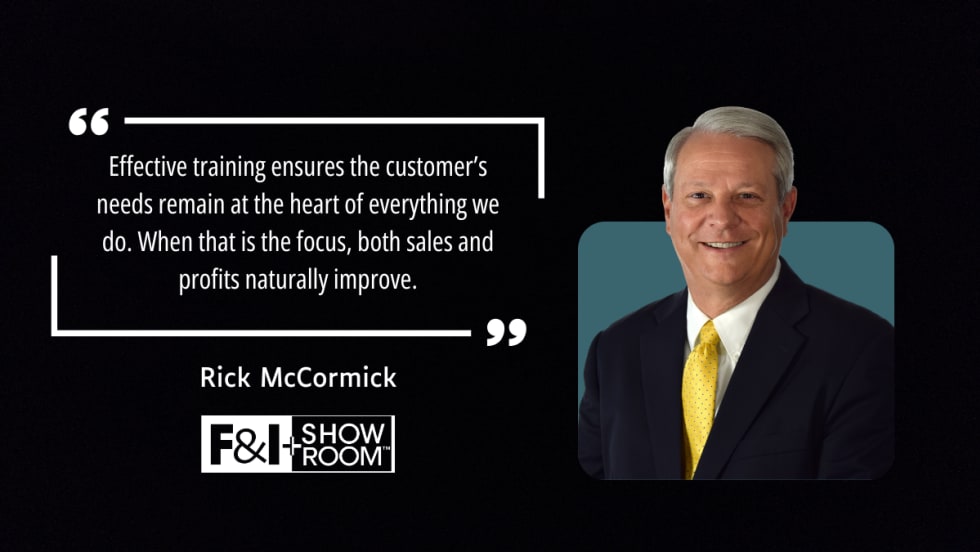
F&I Training Fundamentals
How can auto dealerships help F&I managers fulfill their vital role in the most effective ways? Industry expert Rick McCormick shares his insights on the best ways to train these professionals and help them maintain good habits.
Read More →
Not Just Any Tire Will Do
More consumers and businesses are opting for all-season options for various reasons as safety, sustainability and convenience push practical change.
Read More →