



Kerrigan: Auto Dealership Buy/Sell Market Picks Up Steam
New tax law and economies of scale help publics and consolidators buck trends to grow earnings and fuel the buy/sell market to 92% growth in the second quarter. According to the firm, the market is on track for a fifth consecutive year of more than 200 acquisitions.
IRVINE, Calif. — The new tax law and improved economies of scale and scope are among the trends that drove a robust Buy/Sell market in the second quarter, according to Kerrigan Advisors’ second quarter “The Blue Sky Report.”
After a slow start to the year, the market saw 75 transactions completed in the second quarter — a 92% increase over the first quarter. With consolidators and publicly-traded auto retailers seeing increased earnings as a result of these factors, profitability at dealerships holding steady, and dealerships embracing innovative, profit-driving business models, the dealership buy/sell advisory firm predicts that 2018 will mark the fifth consecutive year of more than 200 transactions.
“We estimate one in eight dealerships has changed hands since 2014, and we believe increasing consolidation means this number will only increase,” said Erin Kerrigan, managing director of Kerrigan Advisors. “Consolidators are leveraging significant opportunities to increase earnings with accretive acquisitions by achieving economies of scale and scope post-transaction.”
Kerrigan added that consolidators are also finding new ways to grow earnings by employing technology and streamlining their business models, changing their selling systems and introducing new products across their platforms. That’s in contracts to the ‘to-be-consolidated,’ which are squeezing more profit out of their existing business models.
“And both are being positively impacted by reduced taxes as a result of tax reform,” noted Ryan Kerrigan, managing director of Kerrigan Advisors.
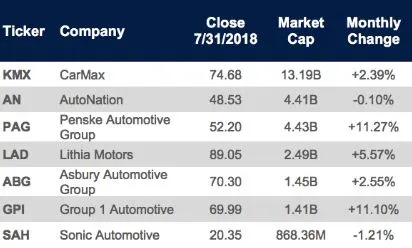
The Kerrigans, however, note that while blue sky values remained high in the second quarter, they were below 2017 levels. Part of the reason is rising interest rates and floorplan cost increases. And despite a plateauing SAAR, The Kerrigan Index, which tracks publicly-traded auto retail companies, continues to rise — indicating that Wall Street believes that scale matters and that anticipated disruptions to auto retail will disproportionately benefit the largest dealership groups.
According to the firm’s report, 114 buy/sell transactions were completed in the first half of 2018, up from 101 transactions in the prior-year period. Additionally, the number of franchises sold rose 22% over the first half of 2017.
The report also shows that the number of multi-dealership transactions increased to 33 in the first half vs. 23 in the prior-year period. The publics, according to the report, are tracking toward nearly $1 billion in U.S. acquisition spending in 2018, a level that would surpass all prior years with the exception of 2014. That’s the year Lithia Motors acquired DCH Auto Group.
Additionally, private dealership groups, according to the report, continue to represent the largest share of dealership acquirers, with only 22 of the estimated 192 franchises that changed hands in the first half of the year having been acquired by public companies.
The report also showed that dealership rents rose compared to 2017, with the average dealer now having a rent-to-gross-profit ratio of 11.2%, a 3.7% increase over 2017’s ratio.
The second quarter report also outlined three key trends Kerrigan Advisors anticipates will have a significant impact on the buy/sell market for the remainder of 2018 and into 2019. They include consolidators focus on geographic concentration, successful business models command higher blue sky values, and expense reduction becomes a major consolidation driver.
In addition to expense reduction and a focus on geographic concentration, the report emphasizes the importance of successful and innovative business models to increased valuations, citing the recent sale of Wilsonville Toyota and Wilsonville Subaru. Both dealerships effectively utilized a no-negotiation sales model, resulting in profitability far higher than industry standards.
“Buyers of dealerships today are students of auto retail. Most spend their days and nights thinking of ways to enhance their business’ profitability and strategically drive earnings growth,” said Erin Kerrigan. “Acquisition opportunities that provide an expanding group with new strategies to grow earnings will command a premium in today’s buy/sell market.”
More Auto Finance

Interest Rates Further Squeeze Auto Consumers
Last month’s hike and a potential second increase this month add to a growing list of inflation woes that could continue to dent overall car sales.
Read More →
Mind Your Process
Consistent steps taken in various aspects of the F&I office can make valuable differences over time, similar to an outline for a best-selling book.
Read More →
Top Five Credit Application Fraud Flags
Compliance audits regularly reveal bad habits that can lead to fraud charges and should have been stamped out decades ago.
Read More →
More Auto Loans for the Taking in August
Riskier categories were on the uptick for the month as lenders loosened access in several areas while balancing out the exposure in another, Cox Automotive reported.
Read More →
July Was Hot for Auto Borrowers
Credit proved readily available for many, but most loans left buyers in negative territory, Cox Automotive said.
Read More →
Dealer Lender Preferences Revealed
When lenders provide consistent, fast service, their overall satisfaction scores with dealers greatly improve, according to JD Power research.
Read More →
Auto Refi Savings Surge
Consumers with 84-month auto loan terms who refinanced saved the most on monthly payments, according to a new report by auto refinancing provider Caribou.
Read More →
Subaru Enters Lending Business
The automaker follows other brands in adding captive financing in the U.S., and says the move will strengthen its position here.
Read More →
Positive Equity Reaches Record High
Mainstream vehicle owners who bought a car seven years ago are likely to have positive equity when trading in for a new vehicle, according to second-quarter Edmunds data.
Read More →
Dealerships Are Paying the Price for Extended Car Loans
Growing negative-equity scenarios mean such lengthy terms should be addressed in a forward-looking way to make them work for the dealer and the consumer down the road.
Read More →