



Fed Cuts Interest Rates Again, Stock Market Responds
Stock are on the rise following the second quarter-point reduction to the federal funds rate in less than two months. No further cuts are planned for this year or next, guaranteeing further pressure from the White House.

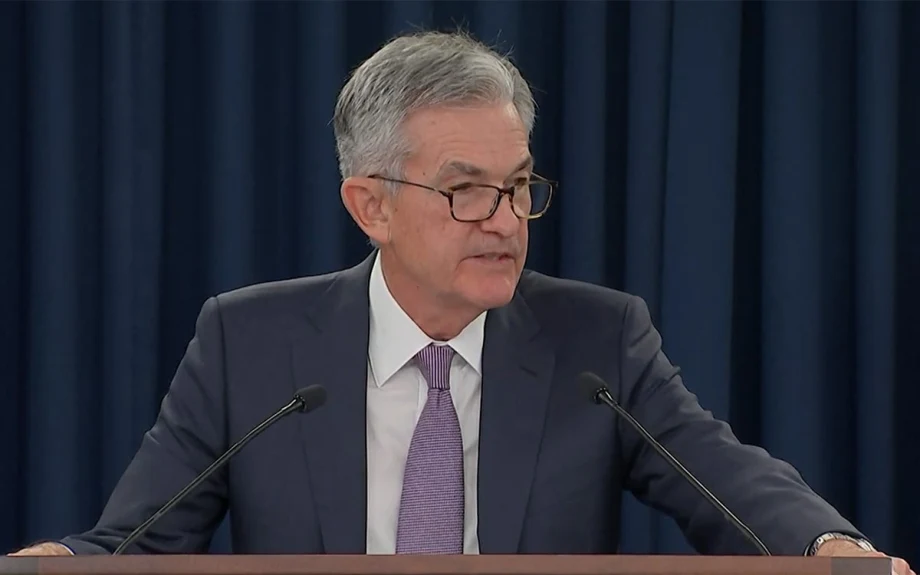
Federal Reserve Board Chairman Jerome Powell announced a quarter-point reduction to the federal funds rate Wednesday.
WASHINGTON — The Federal Reserve reduced the target federal funds rate to 1.75% Wednesday, its second quarter-point reduction since late July. The July cut was the first since 2008, but neither was unexpected. The Fed and its chairman, Jerome Powell, have pledged to take all appropriate steps to maintain consumer confidence in the face of economic uncertainty.
“There may come a time when the economy weakens and we would then have to cut more aggressively,” Powell said Wednesday. “We don’t know. We’re going to be watching things carefully, the incoming data and the evolving situation.”
Read: Cornered Fed Announces First Rate Cut Since 2008
President Donald Trump has pushed for a cut to zero or negative interest rates. In a tweet, he berated the chairman he appointed in 2017.
“Jay Powell and the Federal Reserve Fail Again,” Trump wrote. “No ‘guts,’ no sense, no vision! A terrible communicator!”
Stocks fell yesterday before rebounding to end slightly higher. Thursday morning, encouraging gains were reported by the Dow (0.3%), S&P 500 (0.3%), and Nasdaq Composite (0.5%) indices.
“We’re going to be highly independent; as always, our decisions are going to depend on the implications of incoming information.”
The official report that followed the announcement forecasted no further cuts in 2019 or 2020, but it is difficult to predict the Fed’s next move. Market watchers agree officials will likely hold further cuts in reserve as inflation remains below the central bank’s 2% target, global manufacturing rates continue to slide, and hot spots flare up in Britain (Brexit uncertainty), Germany (urgent recession fears), and China (trade war).
“We are committed to making the best decisions we can based on facts and objective analysis. Today, we decided to lower interest rates,” Powell said at a press conference. “… We’re going to be highly independent; as always, our decisions are going to depend on the implications of incoming information for the outlook. And I would also say, as we often do, that we’re not on a preset course.”
Read: Escalating Finance Costs Drive 24% Spike in TCO
Cox Automotive’s chief economist, Jonathan Smoke, said he didn’t expect the Fed’s latest move to match the impact of the July cut for auto manufacturers or dealers.
“Short-term rate policy does not directly impact longer-term rates on consumer loans like mortgages and vehicle loans,” Smoke wrote in a statement, noting a “risk premium” accounts for the divergence between auto finance and the mortgage and bond segments. “About 20% of auto finance is subprime. While the 10-year Treasury yield was dropping in August, subprime auto loan rates increased on average by more than 20 basis points.”
More Auto Finance

Interest Rates Further Squeeze Auto Consumers
Last month’s hike and a potential second increase this month add to a growing list of inflation woes that could continue to dent overall car sales.
Read More →
Mind Your Process
Consistent steps taken in various aspects of the F&I office can make valuable differences over time, similar to an outline for a best-selling book.
Read More →
Top Five Credit Application Fraud Flags
Compliance audits regularly reveal bad habits that can lead to fraud charges and should have been stamped out decades ago.
Read More →
More Auto Loans for the Taking in August
Riskier categories were on the uptick for the month as lenders loosened access in several areas while balancing out the exposure in another, Cox Automotive reported.
Read More →
July Was Hot for Auto Borrowers
Credit proved readily available for many, but most loans left buyers in negative territory, Cox Automotive said.
Read More →
Dealer Lender Preferences Revealed
When lenders provide consistent, fast service, their overall satisfaction scores with dealers greatly improve, according to JD Power research.
Read More →
Auto Refi Savings Surge
Consumers with 84-month auto loan terms who refinanced saved the most on monthly payments, according to a new report by auto refinancing provider Caribou.
Read More →
Subaru Enters Lending Business
The automaker follows other brands in adding captive financing in the U.S., and says the move will strengthen its position here.
Read More →
Positive Equity Reaches Record High
Mainstream vehicle owners who bought a car seven years ago are likely to have positive equity when trading in for a new vehicle, according to second-quarter Edmunds data.
Read More →
Dealerships Are Paying the Price for Extended Car Loans
Growing negative-equity scenarios mean such lengthy terms should be addressed in a forward-looking way to make them work for the dealer and the consumer down the road.
Read More →