


How Dealers Can Prepare for a Possible Corporate Tax Increase
With strategies in mind, dealers will be better equipped with the right participation program and F&I product portfolio to meet the needs of their business strategy.

With strategies in mind, dealers will be better equipped with the right participation program and F&I product portfolio to meet the needs of their business strategy.
IMAGE: Getty Images
Since April, there has been ongoing discussion about President Biden working with Congress on several new initiatives. This includes a major infrastructure deal as well as increasing the corporate business tax rate from 21% to somewhere between 26-28%.
While talks on both initiatives are still ongoing, auto dealership principals must keep a close eye on any changes to the corporate tax rate.
Tax Increases May Impact Both Large and Small Businesses
While President Biden’s proposed tax changes are primarily focused on the largest of global enterprises, many policy experts believe even mid-level and smaller businesses may feel the effects of a tax change. Auto retailers are still recovering from pandemic-induced shutdowns and grappling with inventory challenges affecting their bottom line.
While the Biden administration’s policies are centered on economic growth, a growing number of small business advocates are wondering how tax changes may have longer-lasting consequences for businesses such as auto retailers.
As a result, dealership principals should be thinking about a few key areas and planning for any possible changes.
Weighing Short-Term Needs Against Long-Term Strategy
Primarily, it is important for dealers to re-address their long-term strategy with short-term cash flow needs. While any tax changes at this point are still unknown, the intent is to raise long-term capital gains taxes, which raises qualified dividend rates. Increasing corporate taxes would also impact 831(b) elections, because when the federal corporate tax rates go up, the investment income under an 831(b) election would be subject to the higher tax rate. But any changes would likely take place after 2022, so dealers must discuss short-term cash flow needs with their CPAs sooner rather than later.
For many dealers this is about their future estate planning needs, so relying on advice from trusted CPAs and financial advisors is key to both short-term needs and long-term success. A popular question dealers should be asking themselves right now is: Are you in cash flow mode or long-term savings mode?
Determining the Right Participation Program
Finding the right participation program that aligns with your business strategy is key, one that satisfies both short-term needs and helps keep an eye on long-term goals.
Typically, common types of F&I products available through participation programs include extended vehicle service contracts, GAP coverage, and coverage for engine components and technology systems, which is important today, given the advanced technological features found in many vehicles now.
Profit participation programs also include retro arrangements, participating retro agreements, and insurance/reinsurance programs that are offered through different types of programs such as dealer owned warranty companies (DOWC), non-controlled foreign corporations (NCFC) and controlled foreign corporations (CFC). Dealers are boosting their F&I profits through the use of a DOWC. Besides greater profit potential on F&I sales, the additional benefit here lies in the fact that dealers can brand their own F&I offerings and build a portfolio of F&I products that caters to a variety of customers. These F&I products can range from service contracts to ancillary products.
This is especially key today, where inventory challenges have placed more emphasis on dealers selling used vehicles rather than new. This means dealers can customize the type of F&I products they carry and offer to customers, which in this case can favor more used vehicles, such as extended vehicle service contracts.
From a tax standpoint, for state law purposes, a DOWC is considered a business corporation. For federal tax purposes, the DOWC is considered an insurance company if the entity meets certain criteria. A summary of the taxation criteria for a DOWC is as follows:
Treated as an insurance company for federal tax purposes
Full expensing of acquisition costs in year incurred
100% use of net operating loss carryforwards
I.R.C. §831(b) election is available if the company meets the requirement
Qualified dividend treatment for distributions to shareholders
With these strategies in mind, auto dealers will be better equipped with the right participation program and F&I product portfolio to meet the needs of their business strategy in the event any tax changes take place in the coming years.
Matt Gibson is a vice president at Protective Asset Protection, a full-service provider of F&I programs offering vehicle protection plans, GAP, ancillary products, training and other services through vehicle dealerships.
More F&I

Why Your F&I PVR Is Misleading You
Here’s a handy checklist of the numbers to track in 2026 instead.
Read More →
Auto Consumer Anxiety Presents Opportunity
A survey of U.S. drivers found the majority are concerned about finances and the economy, but those fears make many ready to buy vehicle-protection products.
Read More →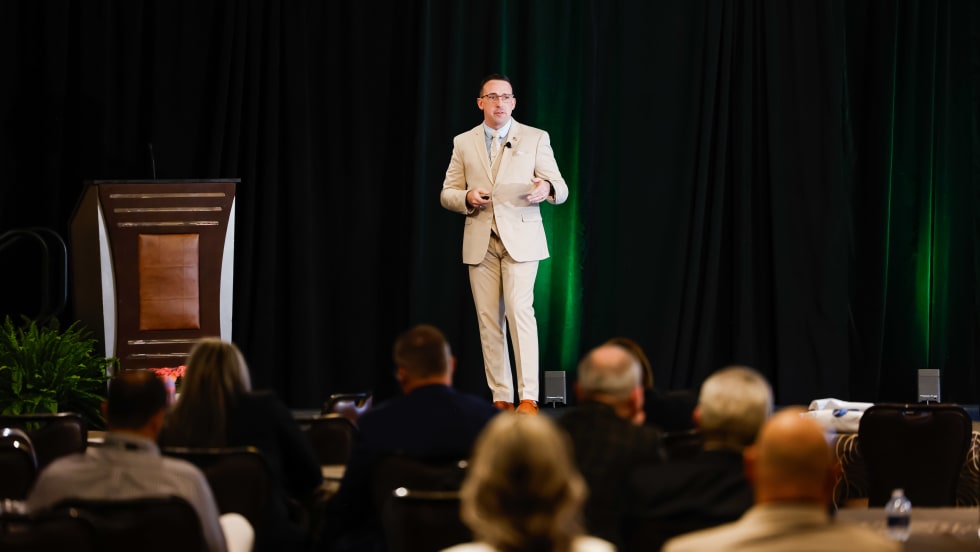
Humble and Hungry: 12 Rules for an F&I Life
Dustin Gingerich, with a decade in the F&I business under his belt, shares his thoughts on leadership, building trust with customers, and the importance of learning and innovation.
Read More →
Focus on the Opening
F&I managers must learn as much as possible about their customers, starting before they walk into their offices. The bulk of today’s consumers expect that, and good results will follow.
Read More →
F&I Reaches for the Sky
The increasingly important profit center continued making gains in the first quarter, according to StoneEagle data, ancillary products proving more popular as consumers hold onto their buys longer.
Read More →
Timing the Market Can Hurt Long-Term Program Performance
For dealer-owned reinsurance entities, avoiding volatility entirely can mean falling behind inflation and missing market rebounds that drive long term surplus growth. Missing just a handful of strong market days can materially impact cumulative returns—an important reminder for long horizon trust and investment strategies.
Read More →
The 90/10 Rule
In this video, Ryan Ruff explains the rule that elite sales professionals use to turn ordinary conversations into unforgettable customer experiences.
Read More →
Your Office Is Talking
What’s the atmosphere saying about you to your customers? You can make minor adjustments and additions that transform your space into one that creates trust with the people on the other side of the desk.
Read More →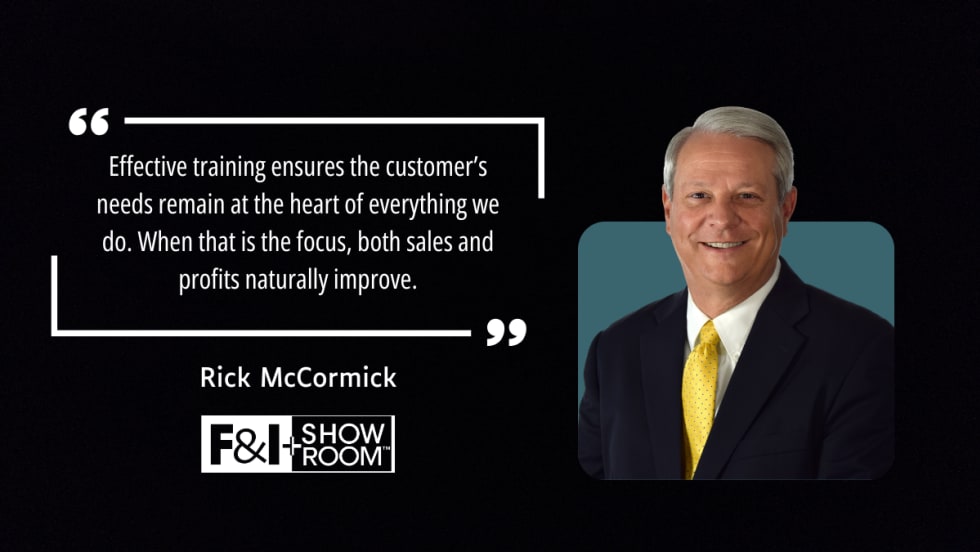
F&I Training Fundamentals
How can auto dealerships help F&I managers fulfill their vital role in the most effective ways? Industry expert Rick McCormick shares his insights on the best ways to train these professionals and help them maintain good habits.
Read More →
Not Just Any Tire Will Do
More consumers and businesses are opting for all-season options for various reasons as safety, sustainability and convenience push practical change.
Read More →