



Home EV Chargers Get Higher Scores
J.D. Power study shows progress, though Level 1 portables have a ways to go.


All home-charger segments presented more problems for consumers, the most common of which were connection problems or difficulty of use.
IMAGE: Pexels/César Baciero
Home-charging of electric vehicles improved in consumers’ eyes over the past year in stark contrast with sentiment about the public charging experience, according to a J.D. Power study.
Level 1 and Level 2 portable chargers and mounted Level 2 home chargers all scored better this year, led by the first segment, which is up by 20 points.
Having adequate home-charging capability can go a long way in increasing EV ownership satisfaction, said J.D. Power Executive Director of the EV Practice Brent Gruber in a press release on the study findings.
“Incentives and programs are also available to offset the cost of charger installations, upgrades and management of ongoing charging costs, but too few EV shoppers are taking advantage of these offerings. The industry needs to do a much better job with consumer education and awareness, and dealers are certainly in the best position to fill that role at a local level.”
Satisfaction with Level 1 portable chargers, though it improved significantly, still significantly lags that for Level 2 portables and home mounted models, scoring just 581 on a 1,000-point scale compared to their 735 and 744 for them, respectively. The Level 1 portables’ charging speed contributed the most to its lower score.
Though satisfaction with all types improved this year, all presented more problems for consumers, the most common of which were connection problems or difficulty of use. Level 1 portables also has slower than normal charging speeds.
More than a third of study respondents who own premium EVs and 29% of mass-market owners said they’re interested in paying for bidirectional charging that allows EV battery energy to be used by other devices in their homes. Meanwhile, almost half of all EV owners said they were unaware of utility incentive programs for home chargers.
Originally posted on Auto Dealer Today
More F&I
Managing Expectations
Learn how proactive communication, setting clear expectations, and providing solutions when plans change can strengthen customer trust and improve the overall service experience.

The F&I Manager's Report Card
The best managers take the time and attention to measure the behaviors behind the numbers.

AI: Facilitator, Not Fixer, in F&I
The dealerships that thrive in the years ahead will be those that embrace technology while continuing to invest in the people who make customer interactions count.

Modern Technology Objection Handling
In this video, Trent White shares how to confidently handle technology-based objections by helping customers understand the value of protection, even with modern vehicle technology.

Consistency at Scale: Driving F&I Performance
With 75 rooftops across the Sunshine State, Morgan Auto Group has proven to Floridians that it knows a thing or two about driving performance in a competitive market. But it didn’t start at the top.

Gitty Up on GAP
The foundational finance-and-insurance product hasn’t kept up with the latest conditions for auto dealers. Is the time ripe?

How AI-Powered Coaching Is Transforming F&I Performance
See how AI-powered coaching can turn F&I customer conversations into actionable insights that support compliance, performance and profitability

Sell Value, Build Trust
In this video, Trent White explains why selling on value, not fear, builds lasting customer trust, reduces cancellations, and drives long-term success.
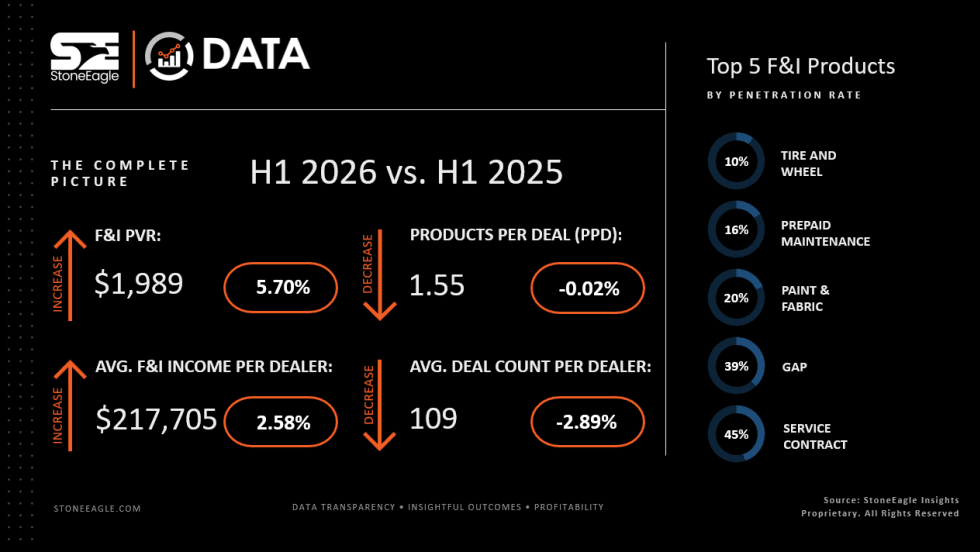
F&I Sales Give Dealers First-Half Lift
Product business shored up total profits to avoid an overall revenue tanking as product penetrations held steady, StoneEagle reported.

Targeted Training Drives Results
Today’s technology, instead of threatening F&I managers, can actually make them better, according to an industry veteran who’s watched market setbacks roil the unprepared.