



4 Steps to Selling Paint and Fab
To sell environmental protection, you need to clear up several misconceptions. Doing so will pave the way to a successful sale.


Today’s car buyer will buy what’s on the menu — that’s if you can show them why they add real value to their purchase. One product that can appeal to today’s discerning consumer is environmental protection. But before you go for the “close,” there are four steps you’ll need to take before you can sell this high-value, low-cost protection. Before we delve into these steps, be sure to read the policy on your environmental protection plan, as benefits and limitations may vary. Now let’s get to those steps.
Step 1: Always Sell the ‘Why’ First
Successful salespeople always talk about the “why” before they present the “what.” This leads the customer to make an emotional connection before you even present the solution.
Now, the natural reaction to an objecting customer is to respond with, “That surprises me that you’re not interested in environmental protection.” Unfortunately, this statement usually causes the customer to form a wall of resistance to the product before you’ve had an opportunity to help them see why it makes sense.
Instead, try this: “We not only want your buying experience to be great, we want your ownership experience to be the best you’ve ever had. We want to assure that keeping your vehicle looking ‘showroom new’ is easy, and you never have to worry about any stains inside or paint issues outside. That’s why having environmental protection is critical.”
Step 2: Sell the Difference
Manufacturers value the importance of protecting the finish on a vehicle. They protect them on the trip from the factory to the dealership with white plastic, covered carriers and even zip-up bags. There is a reason for their concern: They understand the difference. Now it’s your job to make sure your customers reach the same understanding. Many customers (and even some F&I managers) believe the paint on today’s vehicles is the same as it was 10 or 20 years ago. They also believe most protection products are nothing more than expensive wax and Scotchgard. Explaining why both perceptions aren’t correct provides a nice opportunity for you to build urgency and awareness, two critical components to getting buy-in from your customers.
The Paint: Advances in how paint is made and applied have actually made vehicles more susceptible to environmental damage. That’s because the use of waterborne, thermoset enamels and computer-controlled robots allows for paint to be applied more evenly. That means less paint is needed. It also means the cost to repair damaged paint has dramatically increased.
So, contrary to popular belief, today’s vehicles do not have “more” paint. While virtually every manufacturer now uses a polyethylene clear coat to protect the underlying color coat, the overall paint thickness is about the same. The clear coat is the final coat applied to a new vehicle to protect the base-color coat from the sun and hostile environments.
Even though the clear coat adds an additional layer, the use of high solids, waterborne paint allows for a much thinner color coat without sacrificing that glossy finish. And total paint thickness, including primer, now measures out to about 4 to 7 mils, or 4 to 7 thousandths of an inch thick. Some new vehicles may even have as little as 3 mils of total paint thickness on the roof, or the combined thickness of a piece of paper.
The thickness of the clear coat is only 1.5 to 2 thousandths of an inch. So, without some type of paint sealant, this microscopically thin clear coat is the only defense your vehicle’s base-color layer has, making it more susceptible to scratching. And once compromised, the area must be repainted or the base color will eventually fade and discolor.
Paint Protection: Today’s protection products are marvels of chemical engineering. When properly applied, they become part of the finish on a molecular level, creating an impenetrable shield that seals and protects the painted surface against acid rain, bird droppings, ultraviolet rays and tree sap. It also helps the vehicle maintain its brilliant shine, as well as resist grime and dust and those troublesome water spots.
Interior Protection: Today’s fabric and carpet protection products are marvels in their own right, forming a micro-polymer barrier around each individual fiber to prevent spills and soils from actually contacting the surfaces of the fabric and carpet fibers. As a result, grease, grime and spills simply sit on top of the surfaces so they can easily be blotted or wiped away. Many of today’s product are also formulated with transparent chemicals that absorb UV light to protect the material from sun fading. [PAGEBREAK]
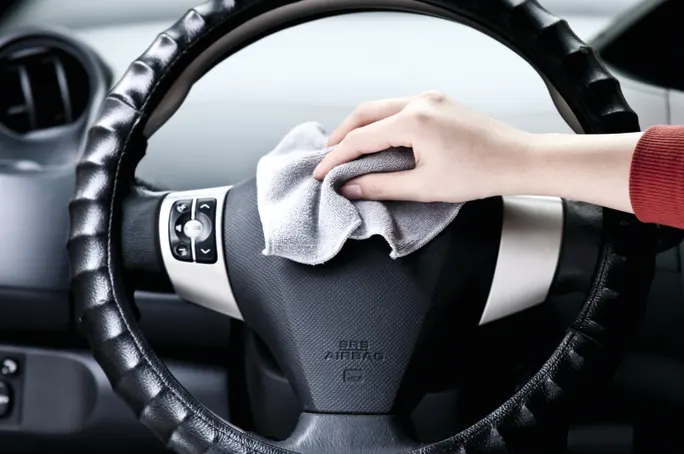
Keeping vehicles "showroom" new is a lot easier with today’s interior protection products, which form a micro-polymer barrier around each individual fiber to prevent spills and soils from contacting the carpet fibers. Some products even absorb UV light to protect the material against sun fading.
Step 3: Treat Every Customer as a Unique Individual
The big question you need to answer for your customers when selling environmental protection is: Does it make sense for me and my situation? In order to do that, you need to discover each customer’s particular need for the product. The following open-ended questions can help: “Where will this vehicle be going?” “Where will it be parked during the day and at night?” and “Do you normally trade in your vehicle or do you sell it yourself?”
You can then use the customer’s answers to build urgency in the need for the product. Here’s how it works: “Since this will be the family vehicle and since you plan to trade it in when you buy your next one, this protection will guard your vehicle against day-to-day spills and stains, which could mean a higher trade-in value down the line.”
Step 4: Make It Visual
When selling environmental protection, you must turn the value of the product into a visible benefit the customer can see. I suggest handing that white piece of plastic most manufacturers use to protect vehicles when they’re transported. A picture of a vehicle being unloaded from the covered transport truck also works. The goal here is to get the customer to understand the lengths to which a manufacturer will go to protect a vehicle as it’s being transported, which will help them see the value in the protection you offer.
Another great visual is to hand the customer a golf ball. Here’s what you say: “This is what your paint looks like under a microscope. Even though the surface appears to be uniform, there are minor pits and valleys like you see in this golf ball. When wax is present, water beads up and runs off the surface. However, most wax protection lasts six to eight weeks, and the water will no longer bead up when it wears off. So, where does the water go? It goes into these pits and valleys. And where the water goes, so goes dirt and road salts, which can eat through the clear coat and damage the vulnerable paint. That’s why environmental protection is critical, especially in your situation.” Today’s customer does not want to be sold. They want to be treated as a unique individual, and will only buy product that makes sense for their situation. So, become passionate about environmental protection by researching the product and its benefits, sell the “why,” then explain the difference in today’s paint and the products that protect it.
Lastly, explain why the protection fits their unique situation and make sure that protection is visible to the buyer. Remember, the more customers believe in the protection, the more they’ll buy.
Rick McCormick is a national account development manager for Reahard & Associates Inc., an F&I training company providing classes, workshops, in-dealership and online training. E-mail him at rick.mccormick@bobit.com.
More F&I

AI: Facilitator, Not Fixer, in F&I
The dealerships that thrive in the years ahead will be those that embrace technology while continuing to invest in the people who make customer interactions count.
Read More →
Modern Technology Objection Handling
In this video, Trent White shares how to confidently handle technology-based objections by helping customers understand the value of protection, even with modern vehicle technology.
Read More →
Consistency at Scale: Driving F&I Performance
With 75 rooftops across the Sunshine State, Morgan Auto Group has proven to Floridians that it knows a thing or two about driving performance in a competitive market. But it didn’t start at the top.
Read More →
Gitty Up on GAP
The foundational finance-and-insurance product hasn’t kept up with the latest conditions for auto dealers. Is the time ripe?
Read More →
How AI-Powered Coaching Is Transforming F&I Performance
See how AI-powered coaching can turn F&I customer conversations into actionable insights that support compliance, performance and profitability
Read More →
Sell Value, Build Trust
In this video, Trent White explains why selling on value, not fear, builds lasting customer trust, reduces cancellations, and drives long-term success.
Read More →
F&I Sales Give Dealers First-Half Lift
Product business shored up total profits to avoid an overall revenue tanking as product penetrations held steady, StoneEagle reported.
Read More →
Targeted Training Drives Results
Today’s technology, instead of threatening F&I managers, can actually make them better, according to an industry veteran who’s watched market setbacks roil the unprepared.
Read More →
Double the Change, Double the Chance
When an F&I manager gets a customer refusal, it’s a wise move to tweak more than one thing in the product offering.
Read More →
Just Do It
F&I managers need training, but instead of resisting application or expecting perfection, they should improve by simply acting on what they learn.
Read More →