



Digital Is Great, Until It’s Not
Switching to a digital menu has its benefits, but dealers can’t expect it to deliver on its promise without a plan of action.


Digital menu selling has roared into a lot of dealerships across the country. The goal is to engage customers with the digital buying experience they demand. Customers want to feel in control, and a digital menu affords that. It fits with my motto when training F&I managers on menu selling: Give control to get control.
When done correctly, it’s transparent, upfront selling that meets the customer on their terms. But in their zeal to adopt digital menus, dealers may be overlooking a key element: compliance. If F&I managers aren’t trained properly, compliance falls through the cracks and leaves dealers open to legal and regulatory issues. Without best practices, dealers also run the risk of ethical lapses among F&I team members looking to get something extra out of a deal.
Remember “Operation Ruse Control”? That was an effort by the Federal Trade Commission three years ago to clamp down on credit application fraud and deceptive practices related to add-on products and services. That should have gotten the attention of dealers and F&I managers everywhere. Did it get yours?
Hey, regulators don’t just come after dealers, as most dealer inquiries are the result of consumer complaints. And they are especially keen on going after dealers who employ deceptive practices, such as taking advantage of vulnerable groups or their bargaining powers. Those same customers also will light you up on social media and review sites when they believe they have been wronged. And that leads to a credibility problem for the dealership.
Customers buy from people they like and find credible. Digital menus are supposed to help the dealer build credibility through increased transparency. It walks the customer through the entire buying process, ensuring the customer understands all the terms of the sale.
Digital Is the Way
Digital is how customers relate today. They use their phones for most everything and are increasingly spending more time online in general. It’s the connected economy.
According to a recent Cox Automotive study, car buyers spend 60% of their time online. But the study also notes that “walking in” remains the most common initial point of contact for dealers. “Half of the car buyers do not contact the dealership prior to their first visit,” the report states, in part. “While we anticipate a future shift in this behavior as dealers begin to adopt digital retailing tools, it will remain crucial for dealers to have effective sourcing and CRM processes in place to help understand initial contacts and walk-in traffic.”
You can add the digital menu to that list of tools that will bring about that shift. It’s a great tool when used properly and bad when it’s not. Problems arise, for example, when the F&I manager skips parts of the compliance elements of these electronic tools. The customer ends up seeing some or none of them.
With the paper menu, you either have the base payment on the menu or you don’t. It’s easier to verify because it’s in full view. With the digital menu, taking the base payment off the menu is easier to do if it’s not locked down. Out of sight out of mind.
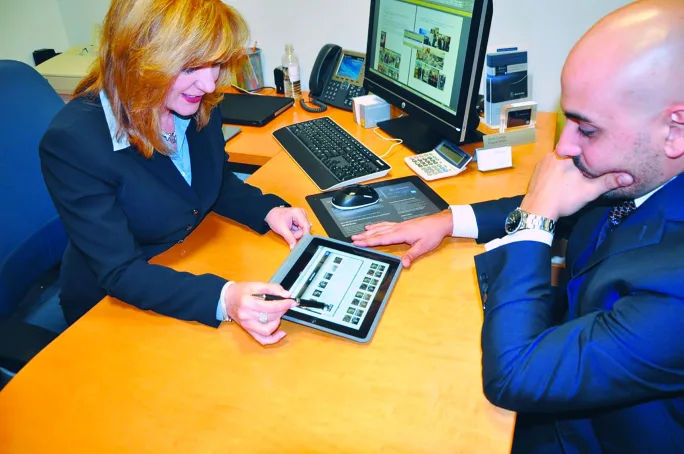
F&I managers may also be reluctant to hand an iPad to customers so they can toggle through payments and options, which defeats the purpose of these tablet menus. It’s no wonder these devices find their way into the bottom drawer of the F&I manager’s desk.

Many dealers simply make the mistake of assuming the disclosure portion of these digital sales tools is locked. Hey, technology vendors aren’t responsible for your dealership’s compliance with state and federal regulations. A watchful dealer, though, knows that a digital menu allows access to the back end to determine if the menu was used and if products were properly disclosed.
Simply installing the digital menu and handing it over to the F&I manager without the necessary training doesn’t make sense. Can you imagine what would have happened to the paper menu if it was introduced without any proper training to support it? It never would have taken off.
Training, Training, Training
Yes, like the paper menus, using digital menus still require training. The sales strategy is about letting go of the reins and understanding the benefits of a digital customer experience. Remember, we must give up control to get control. But that doesn’t mean the human factor is removed.
Darwin Automotive’s menu is a good example. Its “Driver’s Needs Analysis” option separates it from the rest of the pack. The feature requires that the F&I manager hand the iPad to the customer during the interview process. The customer answers a few questions and the system generates a specific product package based on the responses. Darwin refers to it as prescriptive selling.

The result of Darwin’s Driver’s Needs Analysis feature is increased customer engagement during the presentation. It also gives buyers the sense that the options presented are based on their actual needs and not the F&I manager’s paycheck. It’s a great concept if used correctly, because this prescriptive sales method increases the odds of a customer purchasing the products.
See, in the digital retailing world, engaged customers generally make 90% more frequent purchases and spend 60% more per transaction, according to a survey conducted by customer engagement agency SapientRazorfish. That means more profits for dealers if handled correctly.
When Trouble Arises
The digital interview feature outfitting Darwin’s digital menu can’t work as designed; however, if the F&I manager isn’t trained on it or doesn’t buy into prescriptive sales. Some producers will fool the system into validating the interview. And that’s easy to do if no one is paying attention, because it can be used without the survey feature. Heck, producers can revert to step-selling or, even worse, pack payments.
That’s why it’s critical dealers lock down the system to ensure disclosures are properly made, and that the declination form discloses itemized product pricing, payment in, and payment out — and that they match what’s on the finance contract.
Depending on the setup, the declination will stipulate the products selected and the ones declined, and that’s it. The tool should not act as a product “waiver” form. Unfortunately, some of these dealers don’t have an adequate paper trail in place to ensure everything that needs to happen in the F&I office does.
To-Do List
The digital menu can’t solve every compliance issue, but it can definitely help. That’s why it’s critical that, prior to making the investment, dealers determine whether their F&I managers will fully embrace the technology and use it to its full capacity. Dealers need to ask themselves the following questions:
1. Will my F&I manager implement the interview process and meet the customer at the sales desk? How do I envision the digital transition from sales to finance?
2. Who is training my F&I manager on presenting the digital menu? What are their qualifications?
3. Do I have a designated compliance officer in place, or do I rely on our F&I agent to monitor activity? To whom does the agent report?
4. What do I expect to gain using a digital menu that my paper menu isn’t already doing?
5. Will my F&I team use the declination menu? And what final terms will they disclose to the customer?
Remember, the digital menu provider doesn’t guarantee compliance. It’s on the dealer to ensure practices and procedures are in place and everyone understands the digital platform’s functionality and disclosures. This will go a long way toward keeping the FTC or a feisty attorney from knocking on your door. A digital menu is a great tool, but it doesn’t work miracles. The tool requires the human factor in order to increase performance and reduce liability.
Rebecca Chernek is a nationally recognized automotive industry consultant specializing in F&I training and operations. She can be reached at rebecca.chernek@bobit.com.
More Auto Finance

Interest Rates Further Squeeze Auto Consumers
Last month’s hike and a potential second increase this month add to a growing list of inflation woes that could continue to dent overall car sales.
Read More →
Mind Your Process
Consistent steps taken in various aspects of the F&I office can make valuable differences over time, similar to an outline for a best-selling book.
Read More →
Top Five Credit Application Fraud Flags
Compliance audits regularly reveal bad habits that can lead to fraud charges and should have been stamped out decades ago.
Read More →
More Auto Loans for the Taking in August
Riskier categories were on the uptick for the month as lenders loosened access in several areas while balancing out the exposure in another, Cox Automotive reported.
Read More →
July Was Hot for Auto Borrowers
Credit proved readily available for many, but most loans left buyers in negative territory, Cox Automotive said.
Read More →
Dealer Lender Preferences Revealed
When lenders provide consistent, fast service, their overall satisfaction scores with dealers greatly improve, according to JD Power research.
Read More →
Auto Refi Savings Surge
Consumers with 84-month auto loan terms who refinanced saved the most on monthly payments, according to a new report by auto refinancing provider Caribou.
Read More →
Subaru Enters Lending Business
The automaker follows other brands in adding captive financing in the U.S., and says the move will strengthen its position here.
Read More →
Positive Equity Reaches Record High
Mainstream vehicle owners who bought a car seven years ago are likely to have positive equity when trading in for a new vehicle, according to second-quarter Edmunds data.
Read More →
Dealerships Are Paying the Price for Extended Car Loans
Growing negative-equity scenarios mean such lengthy terms should be addressed in a forward-looking way to make them work for the dealer and the consumer down the road.
Read More →