



How to Sell F&I on Alt-Fuel Vehicles
Many F&I pros are struggling to keep up with battery-powered vehicles — and the customers who buy them. Expert offers a process backed by education and a consultative approach.
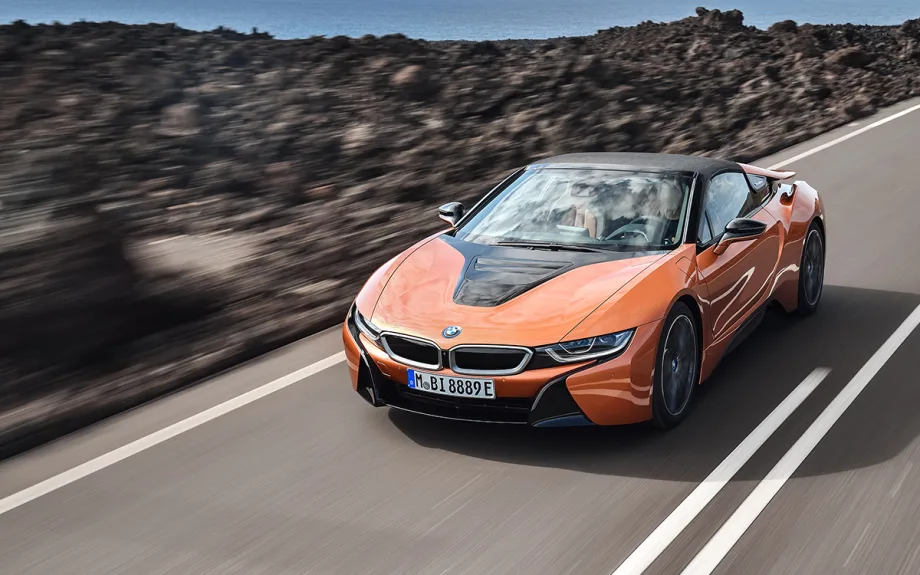
Selling F&I on vehicles such as the BMW i8 plugin hybrid may require a fresh approach.
Photo courtesy BMW Group
Current estimates put roughly 1 million electric vehicles on American roads. According to Scientific American, this milestone was achieved just this year. Proponents of the technology agree this is a small number compared to the roughly 270 million cars and trucks registered in the U.S. today. But the segment continues to grow as more of your customers focus on reducing their carbon footprint.
Electric cars and trucks are obviously built with different technology throughout — particularly among the engine components — which means servicing these vehicles can be different from traditional gas-powered cars and trucks.
This presents a new challenge to the F&I professional. Many are struggling to effectively communicate with EV buyers and help them select the right products. Let’s attack the problem with education and presentation.
Know Your Stuff
Blank contracts and four-square presentations created a high-pressure environment that once defined the F&I customer experience as frustrating and discouraging. The pressure to meet quotas drove the process.
While sales or product acceptance numbers are still critically important, the process itself has evolved. Today’s customers want to feel like they’re being educated about options, not sold a series of products under duress.
This progressive approach to F&I, coupled with the fact that EV technology is new to many EV buyers, means a consultative approach is ever more important in the F&I office.
F&I options for EVs require additional education and explanation for customers. Take, for example, the various types of EVs — there are fully electric vehicles, gasoline-electric hybrids, and plugin hybrids. Then there are the increasingly popular “mild” hybrids, which are powered by a gasoline engine with an automatic start-stop feature that shuts it down when the vehicle is not in motion.
It is important that F&I managers have full comprehension of each type of vehicle. You must be able to properly explain the differences in warranty coverage and service contract options.
This will only grow in importance as the world of alternate fuel vehicles grows and likely becomes more complex. According to HIS Markit, the share of EV cars and trucks is expected to reach 7.6% of all new-unit sales by 2026. This compares to just 1.2% of sales in 2018. What’s more, the number of available EV models is expected to grow to 133 by 2026. Heading into 2019, there were 18.
Sell Your Products
The emphasis of coverage and F&I service contract options depends greatly on the type of vehicle the customer just purchased.
Manufacturer warranties place a different emphasis on parts belonging to gas- and battery-powered vehicles. What’s more, warranties on gas-powered vehicles cover bumper-to-bumper components and powertrain, while alt-fuel engines come with additional coverage for hybrid parts and the batteries.
To make sure the F&I function continues to help dealerships drive financial success, it is important to take a consultative approach to any additional coverage or vehicle service contract options. This is especially true if the customer plans to put a significant amount of miles on their alt-fuel vehicle, or if they are planning to own the car for a longer period of time.
Finally, bear in mind that repairs and replacement parts for a battery can be three times the cost of a gas-powered vehicle. This makes the right protection plan increasingly important. Backed by knowledge and process, your EV penetration rates should soar.
Tim Blochowiak is vice president of dealer sales for Protective Asset Protection. Contact him at tim.blochowiak@bobit.com.
More F&I

AI: Facilitator, Not Fixer, in F&I
The dealerships that thrive in the years ahead will be those that embrace technology while continuing to invest in the people who make customer interactions count.
Read More →
Modern Technology Objection Handling
In this video, Trent White shares how to confidently handle technology-based objections by helping customers understand the value of protection, even with modern vehicle technology.
Read More →
Consistency at Scale: Driving F&I Performance
With 75 rooftops across the Sunshine State, Morgan Auto Group has proven to Floridians that it knows a thing or two about driving performance in a competitive market. But it didn’t start at the top.
Read More →
Gitty Up on GAP
The foundational finance-and-insurance product hasn’t kept up with the latest conditions for auto dealers. Is the time ripe?
Read More →
How AI-Powered Coaching Is Transforming F&I Performance
See how AI-powered coaching can turn F&I customer conversations into actionable insights that support compliance, performance and profitability
Read More →
Sell Value, Build Trust
In this video, Trent White explains why selling on value, not fear, builds lasting customer trust, reduces cancellations, and drives long-term success.
Read More →
F&I Sales Give Dealers First-Half Lift
Product business shored up total profits to avoid an overall revenue tanking as product penetrations held steady, StoneEagle reported.
Read More →
Targeted Training Drives Results
Today’s technology, instead of threatening F&I managers, can actually make them better, according to an industry veteran who’s watched market setbacks roil the unprepared.
Read More →
Double the Change, Double the Chance
When an F&I manager gets a customer refusal, it’s a wise move to tweak more than one thing in the product offering.
Read More →
Just Do It
F&I managers need training, but instead of resisting application or expecting perfection, they should improve by simply acting on what they learn.
Read More →