



Product Spotlight: An Interview with ECP's Lead Chemist
F&I met with ECP to discuss the company’s defining traits.

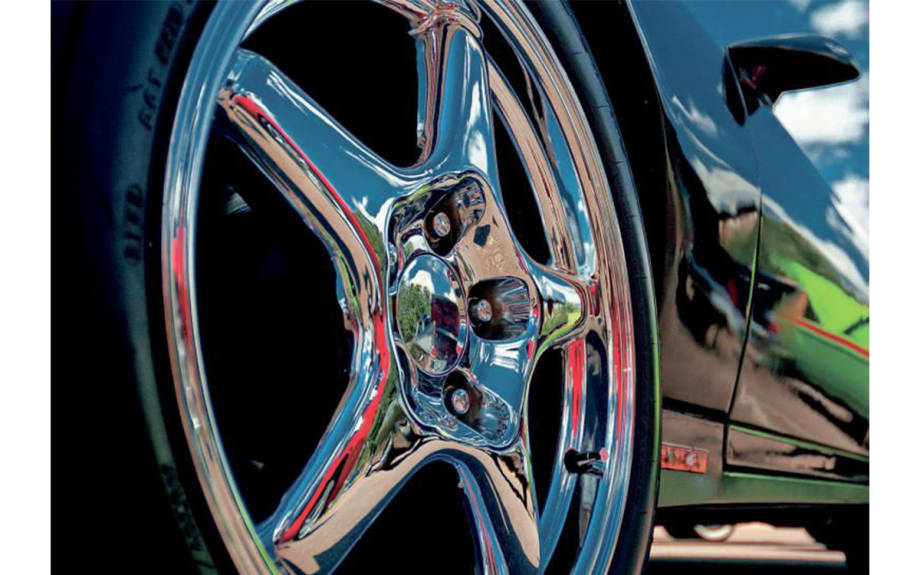
F&I met with ECP to discuss the company’s defining traits.
IMAGE: Getty Images
F&I and Showroom caught up with ECP Inc.’s lead chemist, Nathan Hoffman, to get an inside look at the team and products that make up the company’s line of vehicle protection.
Q: What is special about your team?
A: When it’s your job to create and innovate automotive surface protection coatings, you formulate, you test, you reformulate and keep testing until you’ve pushed the limits of chemistry. At ECP, we have multiple chemists on staff who do just that — we constantly push research- and-development goals and strive to have the best appearance-protection products in the automotive marketplace.
Our chemists are enthusiastic about car care and have a lot of experience detailing cars. This experience has helped our team with knowing what to look for when developing products. Plus, we truly care about the products we are developing.
As a company standard at ECP, our chemists constantly emphasize the importance of product testing — we never put a product to market without having verifiable science behind it, showcasing that the product actually performs as intended. Laboratory testing, both third-party and in-house, must be sufficient in order for us to release a product and offer warranty coverage.
Q: What is something that sets your products apart from others?
A: As part of the Daubert Industries Family, our affiliation with divisions that provide products for original equipment manufacturer assembly plants throughout North America, we are able to gain knowledge regarding innovations planned for future vehicles that allows us to build, test and formulate products before new vehicles arrive at dealerships, we believe a competitive advantage.
The majority of automotive paint protectant applications on the market today use old technologies from the late 1990s and early 2000s that typically consist of heavy oils that, when applied by hand, will simply sit on top of the vehicle’s exterior painted surfaces for a period of time, and will eventually wear off.
Our innovative paint-protection products are easily foamed or sprayed onto the vehicle’s paint and exterior surfaces. Once our products touch the vehicle, they undergo what is called “reactive chemistry” — which means, rather than having a product simply sit on top of the vehicle’s paint, our paint protection products chemically bond to the vehicle’s painted surfaces. As a result of this bond, the vehicle’s painted surfaces become both chemical- and water-resistant. Once cured, these chemical bonds are hard to break, and provide outstanding, long-term protection and performance characteristics.
Given the ongoing material advancements in automotive vehicle surfaces, long-term protective coatings needed to evolve to protect and beautify today’s vehicles. At ECP, we have built on a series of innovative product technologies over the past 10 years to achieve just that.
For modern vehicle paint and exterior surfaces, including wheels, black trim and molding and headlight lenses, we started with a water-based ceramic product that we formulated with nanodiamond particles to ensure a greater shine, reflection, water-beading (since diamonds are naturally hydrophobic or water-fearing) and overall increased protection, as diamonds are the hardest known mineral on Earth. Recently, we incorporated graphene into our product innovation to produce the first-of-its-kind exterior protection product: Diamonds give the entire vehicle exterior a diamond brilliance with tight water beading on all treated surfaces. Ceramics provide long-term strength, durability, and protection to the vehicle’s exterior surfaces. Graphene increases gloss levels by up to 34%, producing a wet-looking, mirror-like shine while achieving excellent anticorrosion, chemical- and abrasion- resistant properties, and a reduction in water spotting and staining. As a result of this new product technology, we are now able to add coverages never before offered in the industry, such as surface corrosion protection and protection from light carwash micro scratches, just to name a few.
Transitioning from paint protectants, our windshield-protection products underwent a similar evolution. For years, we had the technology to provide water repellency for a vehicle’s front windshield. However, we did not want to go to market with a windshield-protection product that offered only watershed protection. About five years ago, we discovered the benefits of carbon nanotubes – unique molecules that have a tensile strength approximately 100 times greater than steel and that can scientifically bond to the pores of the windshield. With this technology, we were finally able to develop a windshield-protection product that’s truly revolutionary — that not only repels water, dirt and grime, but actually strengthens the glass to help prevent chips and cracks on the vehicle’s windshield from road debris.
For modern vehicle interior surfaces, we did the same — up until a few years ago, vehicle interiors typically had three components: fabric or upholstery, carpet and a leather or vinyl surface. Today’s interiors consist of up to 17 different materials — from plastics, to metals, to man-made materials, vinyl and trim, from recycled materials, pleathers or polyurethane-based imitation leathers and various other components. We built on our separate product technologies for leather/vinyl and carpet/upholstered surfaces and combined them into one easy-to-apply product: All- In-One Interior Protection. All-In-One provides superior protection for all of today’s complex interior materials. It eliminates the need for multiple interior protectants, and combines the chemistry required for ultraviolet protection, stain repellency, rips, tears, punctures, and burns into a single product. The simplified application process reduces any confusion with product application while providing time savings and tested results.
Q: You mentioned “nano.” What does that mean?
A: Nanomaterial or nanoparticles are incredibly tiny — 10 million nanometers comprise one centimeter. The benefits of nanoparticles are that they fill, seal and protect every square inch of the vehicle’s paint and exterior surfaces — one billion nano particles can fit onto your fingernail, so we are talking about trillions and trillions of nanoparticles protecting your vehicle.
Nanoparticles also tend to increase the material’s water solubility, meaning we can take technologies that historically have been solvent-based and make them water-based, making our products easier and safer to use.
Q: How did a car-care company decide to start using nano materials?
A: Part of the research-and-development process is learning from what other industries are doing. For example, we have drawn inspiration and have used technologies from both the cosmetics and aerospace industries. We figure if a technology can protect a plane or a rocket, it will also do well in protecting a vehicle.
A few decades ago, nanomaterials were incredibly popular in the aerospace industry, though they were extremely expensive. As we became better equipped to manufacture nanomaterials, they became more cost-effective, allowing us to begin formulating with them and, in turn, yielding their benefits.
Q: How do customers know that your products will work?
A: After we have performed rigorous internal testing to ensure we are confident with a product’s overall performance, we then send the product out for a double-blind study to a third-party testing facility — by third-party, I mean the facility does not know what products they are evaluating, or anything related to the product’s performance. Once we verify through third-party testing that our product is hitting its marks, we then bring theproduct to market.
At ECP, we refuse to offer a product warranty unless there is verifiable science and testing, both in-house and third-party, behind it. The end result for our Diamond Ceramic and Diamond Ceramic Plus with Graphene products is 97.8% gloss retention for 10 years versus 26.2% on untreated panels. All-In-One Interior Protection reduces rips and tears by 34.3% and burns by 50%. Carbon Steel Windshield Protection actually strengthens the glass by 32.93%.
More F&I
New Lifetime Battery F&I Product Meant to Drive Dealer Traffic
EFG Cos. offering is intended to create lifetime auto dealer engagement with customers.
Read More →
The Psychology Behind Menus That Increase Add-On Sales
There is a science to crafting a menu that gives customers confidence in the choices presented, and moving the process outside the F&I office can further boost results.
Read More →
Why Your F&I PVR Is Misleading You
Here’s a handy checklist of the numbers to track in 2026 instead.
Read More →
Auto Consumer Anxiety Presents Opportunity
A survey of U.S. drivers found the majority are concerned about finances and the economy, but those fears make many ready to buy vehicle-protection products.
Read More →
Humble and Hungry: 12 Rules for an F&I Life
Dustin Gingerich, with a decade in the F&I business under his belt, shares his thoughts on leadership, building trust with customers, and the importance of learning and innovation.
Read More →
Focus on the Opening
F&I managers must learn as much as possible about their customers, starting before they walk into their offices. The bulk of today’s consumers expect that, and good results will follow.
Read More →
F&I Reaches for the Sky
The increasingly important profit center continued making gains in the first quarter, according to StoneEagle data, ancillary products proving more popular as consumers hold onto their buys longer.
Read More →
What Market Timing Mistakes Mean for Your Reinsurance Program
When volatility hits, dealer-owned reinsurance programs face a familiar temptation: pull back and wait for calmer waters. New data from BOK Financial shows why that instinct can quietly cost you years of surplus growth.
Read More →
The 90/10 Rule
In this video, Ryan Ruff explains the rule that elite sales professionals use to turn ordinary conversations into unforgettable customer experiences.
Read More →
Your Office Is Talking
What’s the atmosphere saying about you to your customers? You can make minor adjustments and additions that transform your space into one that creates trust with the people on the other side of the desk.
Read More →