



Terms of Service
F&I veteran breaks down the major regulators, acts and provisions governing the way we do business. He also offers his take on their impact so far.

The Fair Credit Reporting Act became known to the industry when dealers began accessing consumer credit reports.

When each of us chose to pursue a career in auto finance, we did so for a number of reasons. But I’m fairly certain studying and adhering to state and federal rules didn’t make your list of considerations. If they did, you probably should have enrolled in law school.
Despite what we think, the rules of the road and the agencies that enforce them were designed with good intentions. The problem is the rules governing our business are getting a little out of control. And one has to wonder if customers are really benefiting from these protections. If they are, at what cost? Because it’s doubtful anyone gave any thought to the negative effects of these laws and regulations. The following is a look at how four major rules and the industry’s two main regulators have impacted consumers and the way we conduct business.
Law No 1.: Equal Credit Opportunity Act
The ECOA gave the Federal Reserve Board responsibility for prescribing, implementing and regulating. The law was supposed to make credit equally available to all creditworthy customers without regard to gender or marital status. That all seems reasonable and fair. There was never a lot of pushback regarding the ECOA and it is serving its intended purpose.

Law No. 2: Fair Credit Reporting Act
The FCRA is a federal law that regulates the collection, dissemination and use of consumer information, including credit information. The law was originally enacted to enhance the Federal Deposit Insurance Corporation (FDIC)’s requirements for insured banks. The FCRA became known to auto dealers when they started accessing consumer credit bureaus. This is where the regulations and their enforcement began reaching into areas beyond the law’s original intent.
Law No. 3: Gramm-Leach-Bliley Act
The GLB requires financial institutions and automobile dealerships to explain how they intend to share and safeguard their customer’s sensitive information. This is the act that began classifying auto dealerships as financial institutions. The GLB gave us more paperwork, more oversight and, in turn, extended the time it takes for customers to take delivery of their new or used vehicle.
Law No. 4: Regulations M and Z
Regulation Z was initially designed to control certain practices related to how mortgage brokers are compensated. It was later extended to other loan originators and has evolved to regulate almost all retail lending and related disclosures.
Regulation M was designed to provide consumers with meaningful disclosures to allow them to compare terms of other lease offers, and, when appropriate, to compare lease terms with terms for credit transactions.
In our day-to-day business transactions, we are required to adhere to these regs. But the way in which we comply varies greatly from the way the laws originally intended.
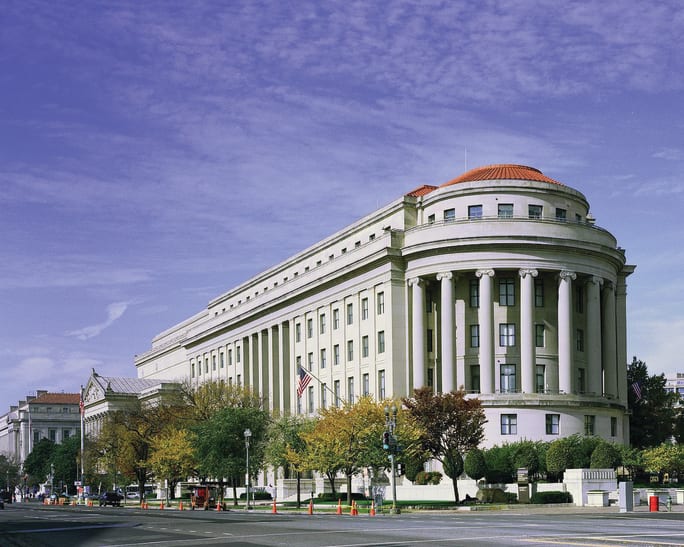
The Federal Trade Commission branched into the automotive segment with the enactment of the Buyer’s Guide Rule.
Regulator No. 1: Federal Trade Commission
The FTC’s primary responsibility is to prevent business practices that are anticompetitive, deceptive or unfair to consumers. What caused the agency to branch out into the automotive segment was the enactment of the Buyer’s Guide Rule, which requires that dealers visibly post warranty information on all used vehicles offered for sale. Most of us comply with this federal disclosure law by asking our customers to sign the Buyer’s Guide to acknowledge that they were aware of the presence of — or lack of — a warranty when they agreed to purchase the vehicle. For the most part, the dealer body and our customers have embraced this process.
Regulator No. 2: Consumer Financial Protection Bureau
The CFPB is the newest regulator attempting to govern the way we and other credit industries conduct business, and it’s attempting to do so in grand fashion. The CFPB’s self-stated mission is “to make markets for consumer financial products and services work for Americans, whether they are applying for a mortgage, choosing credit cards, or using any number of other consumer financial products.”
Fair enough, but the agency’s recent actions are threatening our ability to earn finance reserve. We are professionals and we provide a service for our customers. Professionals deserve to be compensated fairly for their hard work. While the intent of the CFPB’s recent targeting of rate participation is to reduce or eliminate discriminatory lending, I believe the way in which the bureau is going about it is wrong. You can’t take away income from professionals and expect them to perform at the same level.
Today, when a customer with imperfect credit enters one of our dealerships, an in-house finance professional conducts a quality interview with that individual. The F&I manager then takes that information and proceeds to work with a lending institution to attain the best financing program for their consumer.
How many of these customers will be unable to secure financing if the compensation for doing so is dramatically reduced or eliminated? How many of the CFPB’s employees would do their jobs with the same vigor if their compensation was dramatically reduced or eliminated? How many fewer vehicles will we deliver if employees aren’t compensated fairly for securing financing for our marginal consumers?
Even in a time of recovery, many dealers are still struggling to remain profitable. How many of them will go out of business if they are unable to deliver at least the same number of vehicles they are delivering today? How will the loss of dealers affect our economy? And how many agencies do we really need to police us?
These are questions we all must ponder, even if we don’t have all the answers. Even though there is no evidence to support that what it is doing will really help consumers, the bureau continues forward.

Under Director Richard Cordray, the Consumer Financial Protection Bureau warned finance sources this past March that they will be held liable for discriminatory pricing on the part of their dealers.
We need to be guarded, if not alarmed. We also need to prepare for the bureaucracy this agency may enact. We need to follow the CFPB’s actions and do everything we can to prevent the bureau from disabling our ability to conduct business. We also need to continue speaking out until we are heard. And if we stay diligent and participate in all forums available to us, we can ensure the future of our business.
We must protect our investment and our employees and their families that rely on our successes, not to mention our lender and vendor partners and their families. So let’s be sure our voice is heard and that we protect our valued customers, our employees, our partners and ourselves.
Randy Hoffman is senior director of the Ed Morse Automotive Group in Delray, Fla. Email him at randy.hoffman@bobit.com.
More F&I

How AI-Powered Coaching Is Transforming F&I Performance
See how AI-powered coaching can turn F&I customer conversations into actionable insights that support compliance, performance and profitability
Read More →
Sell Value, Build Trust
In this video, Trent White explains why selling on value, not fear, builds lasting customer trust, reduces cancellations, and drives long-term success.
Read More →
F&I Sales Give Dealers First-Half Lift
Product business shored up total profits to avoid an overall revenue tanking as product penetrations held steady, StoneEagle reported.
Read More →
Targeted Training Drives Results
Today’s technology, instead of threatening F&I managers, can actually make them better, according to an industry veteran who’s watched market setbacks roil the unprepared.
Read More →
Double the Change, Double the Chance
When an F&I manager gets a customer refusal, it’s a wise move to tweak more than one thing in the product offering.
Read More →
Just Do It
F&I managers need training, but instead of resisting application or expecting perfection, they should improve by simply acting on what they learn.
Read More →
Dealer Lender Preferences Revealed
When lenders provide consistent, fast service, their overall satisfaction scores with dealers greatly improve, according to JD Power research.
Read More →
Leading with Purpose
In this video, Trent White explains how understanding your people’s 'why' is a key leadership responsibility of F&I professionals and how that mindset drives dealership engagement, trust and performance.
Read More →
Integrating Nontraditional F&I Products
The niche presents a strategic advantage for auto dealerships as they move to adapt to fast-changing consumer expectations in today’s market.
Read More →
Trust Is Personal
Technology, no matter how efficient, can’t replace what the human F&I manager can do, which is to bridge the divide between cyberspace and the in-store experience.
Read More →