



Cash for Clunkers Tests Marketing Strategies
F&I's Gregory Arroyo explains why dealers should take advantage of the federal government's Cash for Clunkers program.

So, I’ve been trying to track down answers to questions many of you have regarding the federal Car Allowance Rebate System (CARS), or what is being referred to as Cash for Clunkers (C4C).
Well, let me start by saying I wasn’t very successful. I called the National Highway Traffic Safety Administration twice, and both times I was instructed to wait until Friday when the rules for C4C are released. So no, I don’t know the requirements for disposing of clunkers, what the rule means when it says voucher payments are taxable, how you’ll be sure a vehicle was registered and insured for a year, and whether the credit will be viewed by lenders as customer income.
Obviously, there’s not much I can tell you about the rules, but I can tell you why you really need to investigate this program.
Yes, it’s difficult to fathom dealers creating a compliant process in time to fully take advantage of the C4C program. Heck, the Red Flags Rule has been around since late 2007, and questions still persist. In the case of C4C, dealers have until Nov. 1, or when the $1 billion runs out (which I predict will happen by September), to take advantage of the program.
However, let’s not forget that this is a once in a lifetime opportunity to move vehicles. As I’ve told all my interviewees for my August story, this is a $1 billion, government-subsidized advertising campaign. Now, I know getting people financed these days is difficult, but there are a lot of customers out there who are standing on the sidelines with a high 700 credit score. In my opinion, this program is our industry’s best chance of getting them off the fence.
But more than anything, this program is really shining a light on the marketing strategies advertising firms are pushing and dealers are employing. And that’s why you should keep an eye out for our August issue. Our cover story will be on the C4C program, but I’m taking a different spin.
See, after I spoke with Mike Warwick, an Internet director for a Massachusetts Ford dealership, for my story, I began thinking that C4C could really reveal what the best avenues are for reaching today’s consumer. We’ve heard people preach the importance of a solid online presence, but are these recommended strategies reaching consumers?
My conversation with Warwick started off with everything his dealership has done to prepare for the C4C program, such as creating a C4C team. But what really got me thinking was his online strategy, which has now morphed into something completely different.
See, there are clunkers out there with stated fuel economy that don’t qualify for the program, but their age and condition would definitely deem them as clunkers. Well, Warwick is now leading the charge to get those rules changed. And it all started with a simple microsite he created with the help of a marketing firm that specializes in automotive search engine optimization. There’s a whole story about this dealer’s microsite, one that involves NHTSA. I’ll tell you all about it in the August issue.
My point in telling you this is because the C4C program represents a chance to breathe life into our industry’s battered entrepreneurial spirit. And if you don’t believe, look at the number of carmakers and marketing companies who are putting out press releases in regards to the C4C program, companies such as Experian Automotive, Pasch Consulting Group, and www.OnlineBKmanager.com. What they see is opportunity, and so should you.
Now, to get you thinking about the program, I’ve pasted an article submitted to me by Robert Davies, president of www.OnlineBKmanager.com. See, his company is set up to help you guys find C4C-qualified customers through direct mail. Anyway, here’s his attempt at translating some of the rules that have many of you scratching your heads.
1. Vehicle Disposal
Bill States: For each eligible trade-in vehicle surrendered to a dealer under the Program, the dealer shall certify to the Secretary, in such manner as the Secretary shall prescribe by rule, that the dealer (i) has not and will not sell, lease, exchange, or otherwise dispose of the vehicle for use as an automobile in the United States or in any other country; and (ii) will transfer the vehicle (including the engine block), in such manner as the Secretary prescribes, to an entity that will ensure that the vehicle (I) will be crushed or shredded within such period and in such manner as the Secretary prescribes; and (II) has not been, and will not be, sold, leased, exchanged, or otherwise disposed of for use as an automobile in the United States or in any other country.
Davies’ Take: Some dealers may have the ability to dispose of or recycle the trade-ins in accordance with the bill themselves. However, most will need to contact a trustworthy recycler and/or junkyard to manage the disposal process. The bill states “the dealer shall certify” the trade-in is disposed of as “prescribe by rule.” Most of our dealer clients have worked out arrangements with local junkyards to pick up and dispose of the Cash for Clunker trades for a small profit to the dealer. The agreement needs to be in writing because if the junkyard does not dispose of a vehicle in accordance with the bill, liability may roll back to the dealer.
2. Dealer Registration
Bill States: The regulations must, among other things: (1) set up a means for registering dealers to participate in the program; (2) set forth the procedures for reimbursing dealers participating in the program; (3) require that dealers use the credit as an addition to, instead of as a substitute for, other rebates and discounts advertised by the dealer or offered by the manufacturer; (4) require that dealers disclose to the person trading in an eligible vehicle the best estimate of the scrappage value of such vehicle and authorize dealers to retain $50 of the amount paid for the scrappage value as payment for the administrative costs of the program.
Davies’ Take: You will need to register with the NHTSA in order to become a participating Cash for Clunkers dealer. The Department of Transportation (DOT) will be sending out a letter to every new-car dealer in the United States explaining the registration process. I have had several conversations with the DOT and they are working diligently to facilitate the registration process for new car dealers.
3) Staff Training
Davies’ Take: Cash for Clunkers is a once in a lifetime opportunity for consumers and new-car dealers alike. Understanding the bill is critical, as not fully comprehending it could mean missed sales opportunities or worse. Inaccuracies on paper work will cost you dearly if guidelines are not followed. Due to the intricacies of this bill, most of our clients are introducing only the basics to their sales staff and designating two or three employees to be the Cash for Clunkers experts. These individuals should include the special finance manager, as early indications confirm a large percentage of the consumers entitled to this program will require non-conventional financing.
4) Advertising
Henry Ford once said, “Cutting advertising to save money is like stopping a clock to save time.” It is no secret dealers are watching every penny these days. Unfortunately, advertising is not exempt from cutbacks. So, how do you successfully publicize your participation in the Cash for Clunkers program? This is a unique campaign. It will only be available for a short period of time to a very select group of individuals, which means campaigns will need to be targeted toward qualifying customers. And while TV, newspaper and radio ads will help get the word out, instituting online strategies and direct mail campaigns is something I recommend.
Robert Davies can be reached at rdavies@onlineBKmanager.com. For more information regarding the Cash for Clunkers program, visit www.cars.gov.
More Blog Posts
Is Sales Punching a Crime?
BMW is the latest manufacturer to be accused of falsifying new vehicle sales reports, a practice that has led to lawsuits and investigations. Are dealers conspirators or victims?
Read More →
You Can Eliminate F&I Managers. You Can’t Eliminate F&I.
The trend toward hybrid sales and finance managers shows no signs of slowing. Dealers who want to close the business office must be sure they don’t shut the door on their customers as well.
Read More →
EVs Cost Even More Than You Think
Mergers and alliances among factories are proliferating as the demand for mass-market electric vehicles increases and the cost to build them makes profitability impossible.
Read More →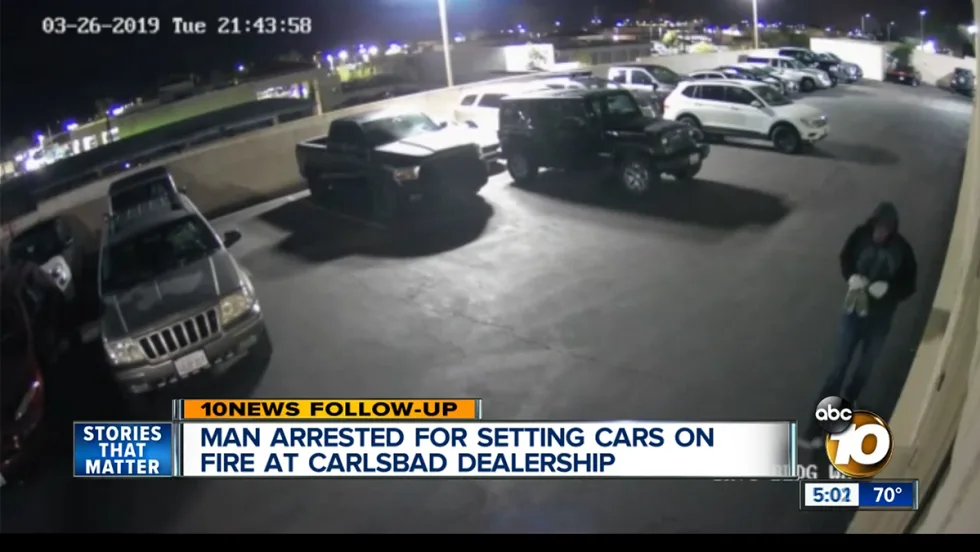
When Dealers Catch Criminals
Noncompliant and outright illegal behavior by dealers, managers, and staff have generated headlines throughout the year. Less heralded are the instances in which dealership personnel took action that led to arrests.
Read More →
A Life of Crime at the Heights of Success
The long list of offenses committed by dealers and other highly successful people proves desperation is not the only cause of criminal behavior.
Read More →
Are We Not Capitalists?
Opponents of franchise laws claim they hang on flawed logic, discourage competition, and benefit dealers to the detriment of consumers.
Read More →
Will Data Put an End to Powerbooking?
A new-to-market, data-driven solution has reignited the discussion over intentional vehicle overvaluation, a form of bank fraud that remains prevalent despite a string of dealer lawsuits and regulatory actions.
Read More →
How to Sell GAP in a Crisis
Mounting losses have compelled many underwriters to jump ship on guaranteed asset protection, but it remains a cornerstone product that continues to perform for customers, dealers, and F&I managers.
Read More →
F&I Is Stronger Than Ever
Fears that F&I would fall victim to advancing technology and bad press appear unfounded as the segment continues to perform for dealers and car buyers.
Read More →
Tesla and the 1% Problem
For all its missteps, Tesla Inc. finally found its footing in 2018, eking out a 1.2% market share and renewing concerns shared by established manufacturers and brick-and-mortar dealers.
Read More →