



Autonomous Tech Won’t Take Over Soon
Forecast says widespread use at least a decade away.

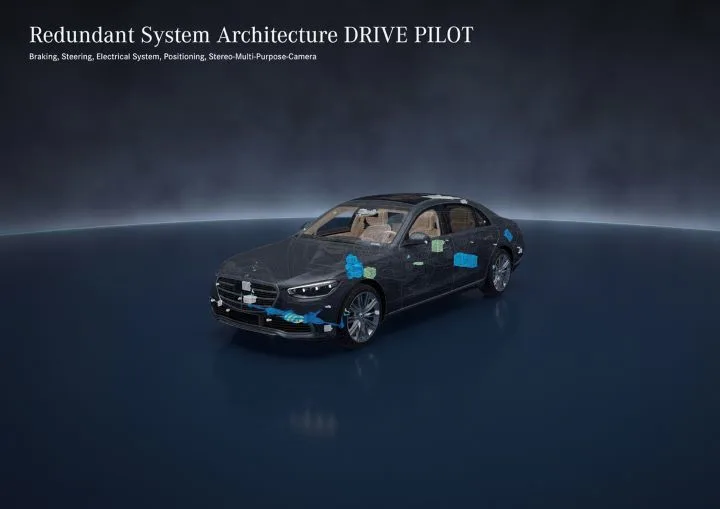
Drive Pilot by Mercedes is a an example of the level-three automous vehicle systems that the forecast says will make up more than 30% of global new-vehicle sales by 2035.
IMAGE: Mercedes
Autonomously controlled vehicles proliferating roads won’t be a reality for at least another decade, a new report says.
S&P Global Mobility’s forecast shows that ultimately, self-driving vehicles and what it calls mobility-on-demand, will be a reality. Widespread use, though, won’t happen for a while.
Expectations for the technology haven’t yet been realized, it says, and in the next 10 years will largely be limited to fleet robotaxis in some urban areas and today’s driver-assist systems that allow only limited autonomy as the driver stays in active control.
For now, vehicles that operate independently won’t be “publicly available before 2035," the report says, “and probably for some time after that," said associate director of S&P’s autonomy practice, Jeremy Carlson in a press release.
About five years ago, the thinking was that the transition would happen much quicker, as have so many other technological advances that have many people’s heads spinning at times to keep up with all the changes.
“S&P Global Mobility presents a more realistic outlook amid this moderated pace of progress while also publishing new data on the intersection of autonomy and mobility-as-a-service.”
The report says that nearer-term development will focus on automated rather than autonomous. Automakers will achieve at least 31% of global new-vehicle sales of models with levels 2-plus and 3 by 2035 – with the driver supervising but hands off the steering wheel or disengaging in specific situations à la Drive Pilot by Mercedes, it says.
“Their functionality also complements driving today rather than fully replacing the driver, making consumer adoption less of a challenge,” Carlson says. “The next several years of wider deployment across brands and vehicle platforms will be a boon for automakers selling these optional features as well as suppliers who continue to build scale and a strong foundation for the future.”
It predicts that less than 6% of light vehicles sold in 2035 will have level-four functioning, with advanced parking features. It said that autonomous fleet vehicles operating today in cities like San Francisco can be “confounded by complex traffic scenarios,” referring to a recent traffic jam in the City by the Bay caused by Waymo taxis.
Originally posted on Auto Dealer Today
More Showroom

New Cars Less Affordable
Buying conditions eroded for American shoppers last month due to inflation and interest rates, though they fared better than a year ago.

October Sales Divided
Inventory trends split between the new- and used-vehicle markets, though prices continued to rise for both in October.

Auto Transaction Prices Hit New Height
October sales of big, pricey models push up the average, even as budget-conscious consumers snag more economical options.

Making the Safe Choice
Kelley Blue Book has turned households with teen drivers onto safe and affordable options for their vehicles of choice

Inventory Holds Steady
September new-vehicle inventory rose slightly month-over-month, but dealer lots are laden with MY2026 vehicles as the typical model year changeover trudges along.

October Auto Sales Fall With the Leaves
A forecast anticipates retail deliveries are down this month as consumers continue to face cost challenges, though more are tapping long loans in order to buy.

California Sees Quarterly Gains
California’s new-vehicle market saw a boost in hybrids in the third quarter and its first overall quarterly market gain of the year.

New-Vehicle Prices Stay Put
Affordability pressures and model availability shaped new-vehicle sales in September, according to an analysis by Kelley Blue Book.

EV Buyer Consideration Shifts
What drives American consumers to purchase an electric vehicle is shifting as the question moves away from Should I?' to 'Which features and experience do I want to have?'

Year-to-Date Auto Sales Holding Their Own
A forecast through August shows that automakers have shifted strategies to keep deliveries and revenues up despite tariffs and other economic challenges.