



AWARE: 75% of Consumers Don't Research Financing Options
Three out of four consumers do not research financing options before making what is, quite possibly, the second largest purchase of their lives, according to a study from Americans Well-informed on Automobile Retailing Economics (AWARE).
Three out of four consumers do not research financing options before making what is, quite possibly, the second largest purchase of their lives, according to a study from Americans Well-informed on Automobile Retailing Economics (AWARE).
AWARE is a group of vehicle financing industry leaders that have joined together to enhance consumer understanding of the auto financing process. F&I Magazine is an Education Ally of the organization.
AWARE suggests that consumers consider the following when researching a new vehicle purchase:
1. Determine what you can afford. If you haven’t already done it, now is the time to create a budget for your family. When trying to determine a comfortable monthly car payment, be sure to adjust other costs as well — insurance, gas and maintenance costs might be different than what you’re paying now, for example.
2. Learn what affects your finance charge. Vehicle financers use a number of factors to determine the finance rate they will offer you. Typically, they review your credit score, which is based on an automated analysis of your credit history. Other factors that may affect the financing offer include: the price of the vehicle you would like to purchase, the availability of manufacturer incentives, the amount of your down payment, your debt repayment options and the length of the finance contract. The rate offered to you may be negotiable.
3. Review your credit report. This way, you will know what creditors will see before they do. This will give you an opportunity to try to correct any errors on your report, and to know if you will be considered a good credit risk. Go to www.annualcreditreport.com for yours.
4. Educate yourself. Learn the difference between leasing and buying. Know the meaning of terms such as "APR," "Guaranteed Auto Protection" and fixed versus variable rate financing. Visit http://www.autofinancing101.org/resources/glossary.asp for a good glossary of financing terms.
5. Research your options. Knowing what financing options are available to you will put you in the best decision-making seat. Call your bank or credit union; talk to dealerships; consider options such as a home equity loan. The current vehicle financing system is intensely competitive, so dealers and other financing sources have every incentive to offer you a competitive rate or risk you going elsewhere. In the end, however, whether you finance through your dealer or elsewhere, there typically are no penalties to refinance if you’re not satisfied.
6. Focus on the overall package. Make a list of pros and cons for every option, including how long you’ll be paying, the total amount you’ll pay over time, how much cash or trade in value can be put toward a down payment, the APR, and any manufacturer incentive programs. In the end, be sure to consider the whole package offered, and not just the monthly payment.
7. Apply for credit within a focused period of time. Generally speaking, multiple credit inquiries can adversely affect your credit score — but not if you limit your applications for auto financing within a 14-day period. Shopping around for vehicle financing may cause multiple lenders to request your credit report, even though you’re only looking for one source of credit. To compensate for this, credit scoring software counts multiple auto financing inquiries in any 14-day period as just one inquiry. Additionally, vehicle financing inquiries made in the 30 days prior to scoring are ignored, so your score won’t be affected while you’re shopping.
More F&I

Why Your F&I PVR Is Misleading You
Here’s a handy checklist of the numbers to track in 2026 instead.
Read More →
Auto Consumer Anxiety Presents Opportunity
A survey of U.S. drivers found the majority are concerned about finances and the economy, but those fears make many ready to buy vehicle-protection products.
Read More →
Humble and Hungry: 12 Rules for an F&I Life
Dustin Gingerich, with a decade in the F&I business under his belt, shares his thoughts on leadership, building trust with customers, and the importance of learning and innovation.
Read More →
Focus on the Opening
F&I managers must learn as much as possible about their customers, starting before they walk into their offices. The bulk of today’s consumers expect that, and good results will follow.
Read More →
F&I Reaches for the Sky
The increasingly important profit center continued making gains in the first quarter, according to StoneEagle data, ancillary products proving more popular as consumers hold onto their buys longer.
Read More →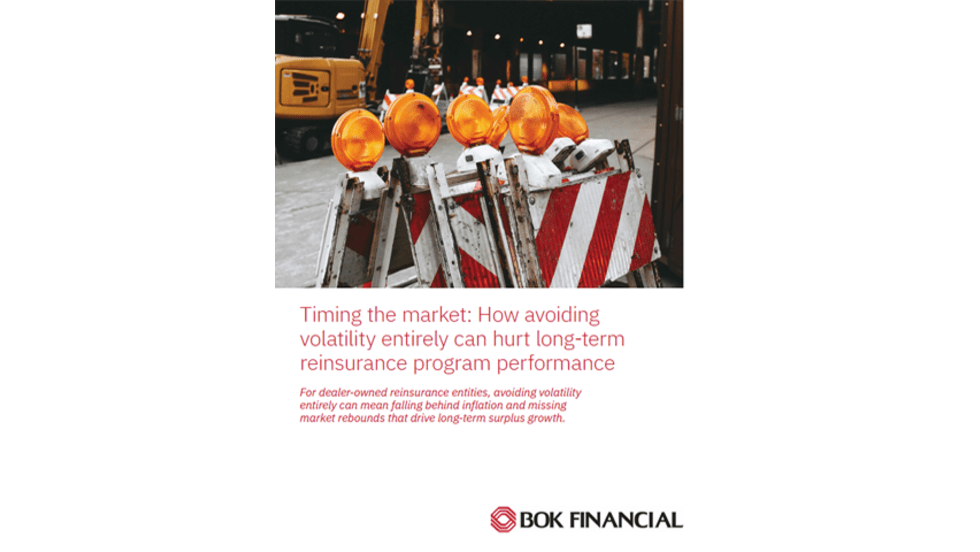
Timing the Market Can Hurt Long-Term Program Performance
For dealer-owned reinsurance entities, avoiding volatility entirely can mean falling behind inflation and missing market rebounds that drive long term surplus growth. Missing just a handful of strong market days can materially impact cumulative returns—an important reminder for long horizon trust and investment strategies.
Read More →
The 90/10 Rule
In this video, Ryan Ruff explains the rule that elite sales professionals use to turn ordinary conversations into unforgettable customer experiences.
Read More →
Your Office Is Talking
What’s the atmosphere saying about you to your customers? You can make minor adjustments and additions that transform your space into one that creates trust with the people on the other side of the desk.
Read More →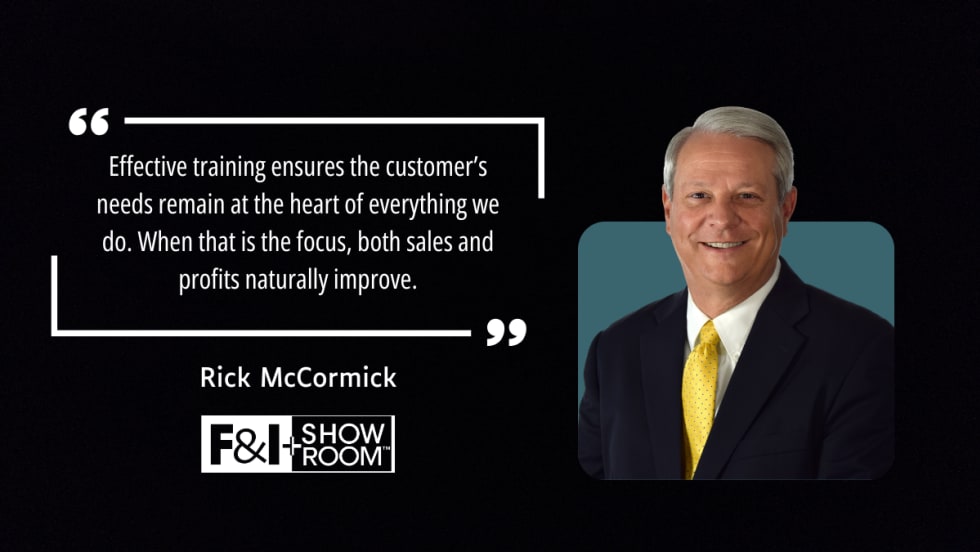
F&I Training Fundamentals
How can auto dealerships help F&I managers fulfill their vital role in the most effective ways? Industry expert Rick McCormick shares his insights on the best ways to train these professionals and help them maintain good habits.
Read More →
Not Just Any Tire Will Do
More consumers and businesses are opting for all-season options for various reasons as safety, sustainability and convenience push practical change.
Read More →