



Biden Administration Announces Federal EV Plan
The proposed strategy includes building 500,000 charging stations for electric vehicles across the country and lowering the cost of electric cars.

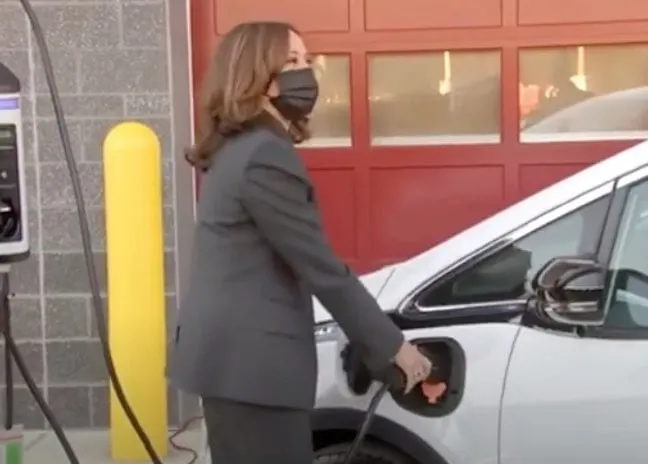
Vice President Kamala Harris
PBS
The Biden administration has announced a federal strategy to build 500,000 charging stations for electric vehicles across the country and to lower the cost of electric cars to transform the U.S. auto industry.
“The future of transportation in our nation and around the world is electric, ″ Vice President Kamala Harris said at an EV charging facility in suburban Maryland.
The $1 trillion infrastructure bill that Joe Biden signed in November authorizes a nationwide network of charging stations and sets aside $5 billion for states to build them. The legislation also earmarks $2.5 billion for local grants to support charging stations in rural areas and in disadvantaged communities.
The Biden Administration’s proposed $2 trillion social and environmental policy bill includes a $7,500 tax credit to lower the cost of electric vehicles.
“We want to make electric vehicles accessible for everyone, ″ Harris said. “Absolutely make it accessible for everyone and easy. Just like filling up your car with gas.”
The auto industry already is moving toward electric vehicles, Harris added: “We need to make the shift faster and make sure the United States drives it.″
Harris pointed out that installing public chargers in rural, urban or suburban neighborhoods makes “it easier for people to go electric.” She stressed the biggest barrier to buying an electric car for most people is “figuring out where and how to charge it. ″
She explained people who live in apartments may not have a private driveway where they can install a plug, while rural residents may have to drive miles to the nearest charger.
Harris visited a maintenance facility in Brandywine, just outside Washington, where she received a demonstration on how chargers work and learned about a plan to electrify the government fleet in Maryland’s Prince George’s County.
The federal government’s new EV charging strategy:
Forms a joint electric vehicles office between the federal Energy and Transportation departments
Provides guidance and standards for states
Ensures consultations with manufacturers, state and local governments, environmental justice and civil rights groups, tribes and others.
The Energy and Transportation departments also will launch an advisory committee on electric vehicles that officials hope will be up and running early next year.
The effort should lower emissions and promote sustainability while helping the U.S. leapfrog China in the plug-in EV market. Currently, the U.S. market share of plug-in electric vehicle sales is one-third the size of that of China.
Biden has set a goal that electric cars and trucks account for half of new vehicles sold by 2030.
The LMC Automotive consulting firm forecasts that U.S. sales of new fully electric vehicles will reach 400,000 this year, almost double last year’s figure. Even so, EVs still make up only about 2.6% of sales. But LMC predicts EV sales will grow to over 730,000 in 2022 and over 2 million by 2025.
Even at 2 million, however, EV sales would only represent about 12% of U.S. new vehicle sales.
Republicans, including some who voted in favor of the new infrastructure law, criticize the Administration’s focus on EVs as Americans content with spikes in gasoline and natural gas prices.
Republicans and Sen. Joe Manchin also are criticizing the legislation’s proposed additional $4,500 tax credit for EVs made in plants that operate under a union-negotiated collective bargaining agreement.
Originally posted on Auto Dealer Today
More Showroom
California Sees Quarterly Gains
California’s new-vehicle market saw a boost in hybrids in the third quarter and its first overall quarterly market gain of the year.
Read More →
New-Vehicle Prices Stay Put
Affordability pressures and model availability shaped new-vehicle sales in September, according to an analysis by Kelley Blue Book.
Read More →
EV Buyer Consideration Shifts
What drives American consumers to purchase an electric vehicle is shifting as the question moves away from Should I?' to 'Which features and experience do I want to have?'
Read More →
Year-to-Date Auto Sales Holding Their Own
A forecast through August shows that automakers have shifted strategies to keep deliveries and revenues up despite tariffs and other economic challenges.
Read More →
Slow to Robo
Ten years of polling consumers shows autonomous vehicles’ profiles have risen considerably, but even more people now want at least some level of control if they go that route.
Read More →
Dealers a Little Down
A third-quarter Cox Automotive survey finds them in a mixed mood, bummed by fallen customer traffic but encouraged by better profits, costs and EV interest.
Read More →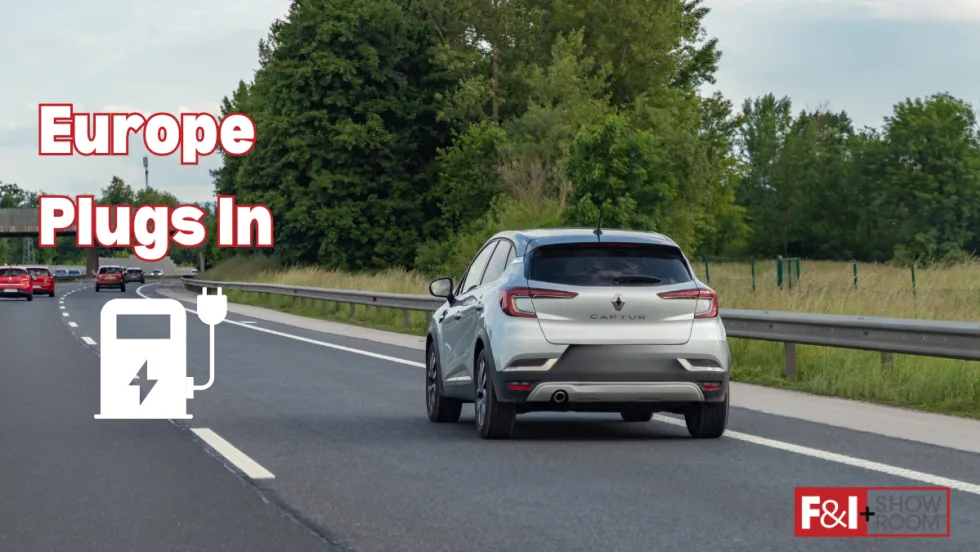
European EV Sales Skyrocket
The EV market on the continent held strong in July with almost 25% of new-car sales being fully electric units, a stark contrast to the U.S., where EV sales declined about 42%.
Read More →
Mitsubishi Unveils U.S. Plan
The automaker announced a strategy that includes an expanded lineup and dealership presence, along with more ‘rugged’ and electric models.
Read More →
Used Lots Getting the Business
Many consumers are seeking out the units to save money, and the demand – higher in July than normal – is keeping supply limited and prices up.
Read More →
Used Market Stabilizes
The Carfax Used Car Index noted a major drop in used-vehicle price increases in July after several months of hikes.
Read More →